What Are You Reading?

Marcia Meara's avatarBookin' It

ghostsinthecanteen

It’s not Friday…I missed that, sadly…but I figure it’s never too late to let you know what I’m reading, especially when it’s something really, really good. So, here it is. This week, I’m reading Jen Rasmussen’s Ghost in the Canteen, and it’s brilliant! Jen’s writing is strong, sharp, funny, and engaging. And great goobley-oobley! This story is scary! Horror fans will love it, for sure, and anyone who likes ghost stories, tales of the supernatural, and unique world building will, as well. Plus, you might learn a thing or two you didn’t know before. Like…what is a switchel ring? In fact, what is switchel? Do you know? I didn’t. But now I do!

Ghost in the Canteenis so good, I’m going to recommend you go right ahead and buy your copy today, even before my full review comes out next week. I don’t think you’ll be sorry.

Now…

View original post 13 more words

Weekend Recap

tnw_weekly_recap

Some great posts this week you really shouldn’t miss. Here’s a recap of a few that were very helpful to me.

What Are Your Writing Rewards by Aimee Easterling
BookBub Explained – Reblogged from Nancy’s Notes from Florida, by Nancy Cohen
Keeping Your Story Focused is a Lot Like Taking an Eye Exam by Ned Hickson
Things I Learned About Keywords by Jen Rasmussen
What I Learned From Erotica Writers by Aimee Easterling

There were also some posts about new releases, including:

My New Release, A Sweet Billionaire Romance by Aimee Easterling
Release Day for Amy’s Choice by Marcia Strykowski

If you missed any of these posts, this is your chance to check them out now. PLEASE remember to share them with your peeps, via Facebook, Twitter, or reblogging. They’ll be ever so grateful, and will do the same for you.

Have a great weekend, everyone!

Please Send A Prayer or Some Positive Thoughts

This blog is very new, but I already feel like we are becoming a family, so I wanted to let you know of some folks who could use your kindest thoughts today. Those of you who follow Ned Hickson’s blog may have already seen his post, but for those who don’t, two young high school friends of Ned’s son were killed this morning on their drive to school. It has hit their small community hard, and Ned & his family are feeling a lot of pain today. It is a stark reminder that we are all here on loan, and may be called at any time, even as young as these kids were. Hold your family close and count your blessings, every single day.

If you’d like to read Ned’s very poignant post, it’s here. He has a way of making you remember what’s really important in this world.

Ned, our thoughts, prayers, best wishes, and love go out to you, your family, your community, and most especially, to the families of these children.

What are your writing rewards? (And a keyword bonus)

Writing notebookWe all live for those days when the virtual ink is flowing so fast it seems to stain our fingertips as we pound away on the keyboard. But what about the slow days when you think you’re stuck and your novel is never going to get itself finished? What about when you’ve written through the glow of the first quarter and are still climbing that story-telling mountain? Or how about (my personal problem for much of this past summer) if you’ve promised your fans a sequel…and you just can’t figure out where to start?

Ever since I was a kid, a brand new notebook has seemed like one of the best presents imaginable. There’s so much potential on those blank pages — I could almost write a novel about the stories that call to my pen. The first word I place on the first blank page fills my heart with so much glee, I often have to open up a word processor so the words can come out of my head as fast as they go in.

Of course, I’m a total cheapskate, so I buy my writing rewards in bulk. That’s right, I haunt back-to-school sales and pick up a dozen one-subject notebooks at five for a dollar. (Of course I opt for the one-subjects — more gleeful beginnings for the buck!) Then I hoard my stationary as if I could never afford another notebook, and when times get really tough, I pull out a new notebook and get to work. (Finally, if all else fails, there’s always chocolate….)

How about you? What do you use to unstick your wheels when you seem to be mired in the mud? Or how do you reward yourself when you reach your daily word count?

Supercharge Your Kindle Sales(As a side note, when I started this post, it was totally going to be a keyword followup. But I realized I didn’t have enough to say, so here’s the cliff notes version:

  • Supercharge Your Kindle Sales includes more nitty-gritty information than I’ve seen anywhere before on the topic of keywords for ebooks. I knew most of it, though, so am glad I only borrowed rather than bought.
  • The author’s method of determining whether enough readers are searching for your keyword phrase involves typing in the beginning and seeing if Amazon autofills. No autofill = nobody cares.
  • As my husband also told me after I set him to work harvesting new keywords for my books, you can find new autofill suggestions by starting with one word on amazon, adding a space, then running through the alphabet. For example, type in “werewolf a” and they’ll suggest “werewolf academy,” “werewolf b” and you’ll get “werewolf books for teens,” and so forth.
  • Finally, from my husband only and not from the book, try using Google’s autofill feature as well. You might find a phrase that will carry over well to Amazon!)

So, there you have it, two posts accidentally merged into one. Clearly, I should have read Ned’s eye-test post more carefully!

And, as a final P.S., don’t forget to go borrow your copy of my sweet billionaire romance! It’s on a roll, but could use more eyes!

BookBub Explained

Loads of info here for those of you considering promoting your books through BookBub.

Nancy J. Cohen's avatarNancy's Notes From Florida

BookBub is a popular reader subscriber service where you can promote your book for a fee. They have four million subscribers. Its readers are 84% women, the majority over 40 years old. 37% are retired. 58% are empty-nesters. 59% read four or more books per month. The devices they read on? 49% Kindle, 26% Apple, 15% Nook, 10% Android. Most use tablets, then e-readers, and then cell phones. 29% read non-genre material. 32% read mysteries and thrillers; 25% read romance; 14% read science fiction and fantasy. 95% of readers have purchased a book from an unknown author because of an e-book promotion. 63% have gone on to order more books by an author due to a price promotion.

When a book goes from $.99 to $2.99, there is a 50% drop in sales. But 77% of subscribers will purchase full price books.

P1030919

Why feature a book on BookBub? Readers get…

View original post 886 more words

Wake-Robins & Other Thoughts

trilliumerec
Wake-Robin (Trillium erecta)

Several people have asked me about the flower on the cover of A Boy Named Rabbit and Wake-Robin Ridge. I thought you might like to see a photo or two. Aren’t they beautiful? The more common white trilliums of spring are lovely, too, but the wake-robin has captured my heart.

2186248291_82de4146c7
Trillium grandiflora

When I think of my springtime trips to the Blue Ridge Mountains, trillium and dainty bluebells are what come to my mind. And if you haven’t ever been to that part of the Appalachian chain (the oldest mountains in the world), you really owe it to yourself to go someday. Beautiful at any time of year, of course, but absolutely breathtaking in the autumn. Why…someone ought to write a book…or two…set there! 😉

If you have any photos that inspired a book you’ve written, or are writing, please feel free to share them with us. I know I’m always interested in what sparks a writer’s imagination, and I’m sure others would be, as well.

Have a great day, folks. It’s Thor’s Day, and if you’ve ever visited Bookin’ It, you know what that means! Jokes will be appearing over there shortly.

A Boy Named Rabbit Cover Reveal!

Woohoo! I’m so excited to share the cover of my next book in the Wake-Robin Ridge series, A Boy Named Rabbit. As always, my cover GODDESS, Nicki Forde, has done exactly what I wanted with this one. All I had to do was say “waterfall” and “silhouette,” and she nailed it.

A Boy Named Rabbit_kindle cover1

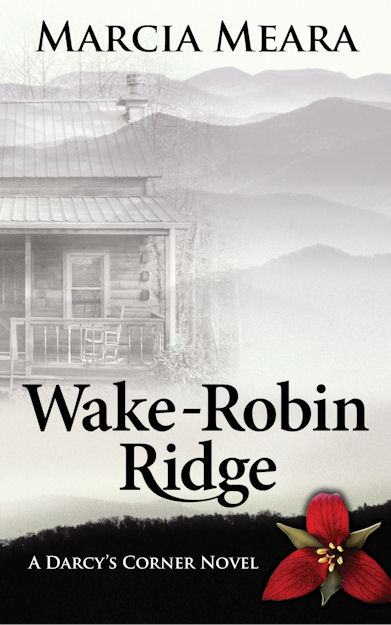
For those who aren’t familiar with Book 1 in this series, Wake-Robin Ridge, here’s a shot of that one, so you can see our intent with the series is to keep the same basic layout, and just change the middle image to something appropriate for each book. And thus, a bit of branding occurs. Hopefully. So what do you think? Do you like the new cover? Are we on the right track when you see the old one? (Oh, and for those who aren’t familiar with North Carolina wildflowers, a wake-robin is the red trillium on the cover, and the springtime bloom for which the ridge is named.)

coverat25%


PLEASE Remember to Retweet!

If we are going to help each other get the word out, we need to be willing to Tweet, post on Facebook, or Reblog each other’s posts. If you enjoy a post or learn something new from it, please share it. It takes only a second to get the drop down menu from the Share Button on the Comments Page. Send these wonderful posts out into the world. And most especially, please Tweet any promotional posts to all your friends and followers. Then, when you have a promotion, the rest of us will do the same for you. We can make a difference!

Remember, it’s Writers Helping Writers here. Spread the word. You’ll be glad you did. 🙂 (You could start with Aimee Easterling’s post about her newest book. She won’t forget you when it’s your turn.)

Have a great day, you folks!

My new release, a sweet billionaire romance

Despite the Billionaire's RichesI’m excited to share my newest book with you! Despite the Gentleman’s Riches: A Sweet Billionaire Romance just went live, and I’m keeping the ebook price at 99 cents for the first two weeks so friends and family can get a good deal. If even that sounds like too much, all of my books are enrolled in KDP Select, so you can borrow them for free if you subscribe to Amazon Prime or Kindle Unlimited. I hope you’ll consider making my launch a success by downloading a copy!

Here’s what a couple of my early reviewers had to say:

“I read the whole book in one sitting because I could not leave it unfinished.” — Sharon H. McConathy

“This book is staying on my Kindle as a “LOVED” story, and I will re-read again and again.” — S. Chia

Several others told me that I made them cry, which I guess is a good thing….

I’ll be back next week with some more helpful information, but now I’m off to relentless self-promote elsewhere. Thanks for reading!

(Oh, but before I go, is anyone else joining NaNoWriMo? I didn’t mean to, but went ahead and set up an account last weekend…and have since written 10,000 words. I guess it’s pretty effective after all! If you do join, I’d love it if you add me as a writing buddy so we an spur each other on.)

Keeping your story focused is a lot like taking an eye exam

image By Ned Hickson

Each week, Marcia graciously allows me to share some of the the writing wisdom gained from 16 years as a newspaper columnist — knowledge which, until now, was only available by reading the yellow Post-It on my desk. And while all of you are certainly welcome to visit my desk at any time, I think we know that isn’t very practical. Especially since most of you probably couldn’t read my handwriting. In fact, I have a hard time reading my own writing. For example, today’s tip was almost about how finding your story’s focus is a lot like taking a colorectal exam. How I got “colorectal” from “eye” tells you just how bad my handwriting truly is.

Because I’m sure none of us wants to delve any deeper into this than we already have, I suggest we get to this week’s writing tip. Agreed? Yep, just as I figured; everyone except for the proctologist in the back row.

As for the rest of us, let’s talk about how the same steps taken in an eye exam can also help bring your writing into focus.

Ummmm… You three? we’re over here.

After this blog post, I want the three of you of you to promise me you will go directly to the nearest optometrist for an actual eye exam. You know who you are. If you aren’t sure, reach straight ahead. Feel that? It’s a microwave, not a computer monitor. I only point this out because, aside from the fact that I care, trying to shove a microwavable burrito into your monitor could be frustrating and potentially dangerous.

At this point I think it’s safe to assume some of you have probably forgotten why you’re here. I know I have. Ironically, this is the same feeling a writer gets when they realize they have lost focus with their story — or in some cases even a blog post. That’s when it’s time to stop and regain focus by giving yourself a simple, three-step “eye exam” in order maintain your story’s true vision.

Step one: Test your visual acuity.
We’re all familiar with the Snellen chart, which is the chart you stand 20 feet from while trying to decipher a series of letters which, as they get smaller, begin to resemble the ingredients listed on a bag of Cheetos. The objective is to determine how far a person can get from a particular point before losing focus. The same goes for writers. In the same way a person may not realize how bad their vision has become until they are using a urinal that’s actually a display refrigerator on the main floor at Sears, writers can slowly lose their story’s focus until it has become blurred by extemporaneous passages of description, too many characters, sub plots or dialogue that doesn’t advance the story.

How can you test to make sure your story’s vision is still clear?

Stand 20 feet away from your monitor. If you can still read it without squinting so hard it appears you’re having a stroke, forget writing and become a sharpshooter. In leu of that, follow the “20/20” rule of writing: If after reading every 20th paragraph in your story (or in the case of a short story, every 20th sentence) you still have a clear idea of what’s happening, who the central characters are and the major plot points, you’re writing’s vision is “normal.” If after several of these 20/20 paragraphs you begin to lose focus, stop and go back to where you lost sight; chances are your story began to blur somewhere between the first line and those Cheetos ingredients.

Step two: Test your peripheral vision. This is the part of the exam where your optometrist tells you to keep looking ahead while he moves an object from behind you toward the front of your head, at which point you’re supposed to acknowledge when you see it in your peripheral vision. Keep in mind that this is also when your optometrist stands behind you and makes faces or plays air guitar without you knowing it. Regardless, having good peripheral vision is important for writers, too. Your “writing peripherals” are those things that run parallel to the main action and include expendable characters, foreshadowing and some unanticipated secondary themes that develop through character interaction and plot development. This is all good stuff because, if done well, can add a sense of immediacy, spontaneity and unpredictability that keep readers invested in the story.

However, just like that optometrist playing air guitar behind your back, it’s easy to lose sight of what’s going on if you don’t keep your peripherals in check. In optometry, the ideal measurement is at least 70 degrees of vision in the horizontal meridian. From a writing standpoint, this means the peripheral elements of your story shouldn’t account for more than about 30 percent of your story development. Put another way: If you’ve written 70 pages and more than 30 of them revolve around the actions of secondary characters, themes or developments not directly related to your main characters, they are just playing air guitar. It’s time to re-evaluate the focus of your story, and whether the secondary characters/themes are becoming blurred with the main plot and characters.

Step three: Check for depth perception. Optometrists often check for this by tossing something at the patient, such as a Nerf ball, to determine binocular (two-eye) vision, which allows us to see in three dimensions. As a kid, I thought I had monocular vision because of how horrible I was at dodgeball. After a visit to my optometrist I was relieved to find out I was just really uncoordinated. In terms of writing, a 3D world is also important, although not having it won’t lead to bruising. Unfortunately, unlike the previous steps, there is no real “formula” to determine if you have created a three-dimensional world in your writing; you either do or you don’t. What I can tell you as that, as writers, we tend to fill in the blanks ourselves and, as a result, it’s easy to envision more on the page than is actually there.

So how can you see if your writing vision has depth? Take a chapter and eliminate all the dialogue. Then read it or, better yet, read it to someone. The objective has nothing to do with plot or character, it’s about whether or not your descriptive vision has made it onto the page. When you’re done, have the person describe what they saw. If it resembles what you envisioned, chances are you’re writing in three dimensions. If they can’t describe things clearly, then throw something at them. Ha! Just kidding! Get your optometrist to do it.

Then go figure out how to make your vision clear…

imageNed Hickson is a syndicated columnist with News Media Corporation. His first book, Humor at the Speed of Life, is available from Port Hole Publications, Amazon.com or Barnes & Noble.