The Three Musketeers… Who Do You Write With?

three musketeersI have two very close friends I write with. Together, we are The Three Musketeers, complete with banter, wordplay and plans to take over the world that would probably scare you if we shared them in a public capacity. We bounce ideas off one another, share our work as we write it, giggle and snort a lot, watch Monday night TV together on Tuesdays, and offer support in all the best ways possible. I don’t know how I’d get through most of my first draft foibles and tantrum flails, much less the rest of every day, without these two ladies, and I feel so very lucky every day they are a part of my life.


Besides having an incredible support system, which is a given as far as best thing ever goes, the sharing of ideas between us is a virtual godsend. Last month, one of my fellow musketeers shared the link to Adagio Teas and urged us to make blends for the books we were working on. Sound the Siren, Mr. Pounce and Calming the Storm teas were all born that weekend, orders for delicious reading tea were placed and I now have some super sweet swag to give away to my readers during pre-order stages.

I guest hosted on another friend’s Facebook Launch Party at the beginning of the month for her flipped fairy tale, Shadows on Snow, and had instant swag to give away to her readers beyond copies of my books. Readers love swag, almost as much as they love the books the swag comes with. The best part about that, other than making a few new friends and picking up a few new readers was that I would never have come up with the idea without the help of my friends.

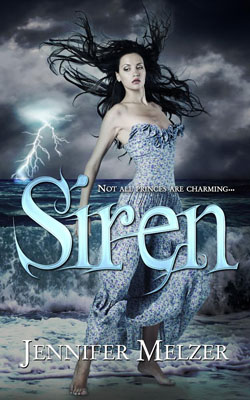
I’m trying some new things on the promotional front with Siren, which means stretching outside my comfort zone. I would not be able to stretch so far without a good support system. I’m working to expand my reading audience before launch day with a few pre-order incentives. This morning I launched my first pre-order promotion giveaway on my site. Every Wednesday for the next four weeks I will be giving away a collection of Siren-inspired tea samplers with adorable, original artwork (created by my fellow Musketeer, who is an incredible artist, btw,) adorning the tins. If you happened to pre-order, you are eligible to enter this giveaway and can find details over on my website: Siren Pre-Order Giveaway!

They say writing is a solitary experience, and for the most part I think they’re right. You have to go deep inside your head, get lost among the reeds there while leaving trails of breadcrumbs for your imaginary friends so they follow you back to the page. But I will say this: having friends who get me, who understand what I’m going through, who bolster me, support me and lend their creative genius to my efforts… it really is the best thing there is.

So here’s a toast to my gals!  All for one, one for all!

Tell me about your support system in the comments section below. I’d love to hear all about them.

If I Missed Your Comments, I’m Sorry

WordPress is once again failing to send me notices of new posts or comments on this blog! It’s making it very difficult for me to keep up with things, and I apologize if you’ve commented or asked questions, and I haven’t responded. Luckily, you guys are doing a lovely job of chatting with each other already, so it’s not quite as critical as it would be on my other blogs. But darn! I like to be in the mix, too, and they aren’t making it easy for me. I’ll try redoing the settings ONCE AGAIN, and see if I can fix it. Just know I’m not ignoring you.

That’s it. As you were, folks! 🙂

Teaser Tuesday: Siren Promo

I mentioned in my last post that despite being up to my eyelids in NaNoWriMo word count, I am also in the midst of promoting my upcoming urban fantasy book, Siren, which is set to release on January 5, 2015. It’s currently available for pre-order on Amazon, so I’ve been working some new strategies for promotion to try and reach a wider audience before it actually goes live.

What I’m doing is certainly nothing new. A lot of authors I know, both indie and traditionally published, release little images like this, but promotion is often a huge pain, so maybe we don’t always put as much effort into it as we should.

I was really proud of how this turned out, and thought I’d share it with all of you.

Every Tuesday until January, I’m going to be releasing a new teaser image with a little snippet from the book on my website, my Facebook author page and a few other social media haunts I frequent from time to time. Here’s the first one.

I’d love to hear what you think! I’d also be delighted if you took a minute to share a few of your own personal promotion strategies in the comment section below!


If you’re a writer without a rejection letter, you’re doing something wrong

image By Ned Hickson

I’d like to open this week’s post on writing tips by sharing a few passages from the many rejection letters I’ve received from publishers over the years:

“You are a gifted wordsmith. Try somewhere else.”
(Were they saying I was overqualified?)

“We don’t publish new authors.”
(If all publishing houses felt that way, there wouldn’t be any new material since The Book of Genesis)

“We were close to accepting your submission but decided to pass. Good luck.”
(That made me feel so much better. Like that time I got that HILARIOUS winning lottery ticket that was fake.)

“Very good. Keep trying.”
(With what? Better stationary?)

“As Mr. Hefner’s attorney, I’ve been asked to order you to stop writing the girls. You’re only 14 and it’s creepy.”
(Oops! Wrong kind of rejection letter.)

I could go on and on with rejection letters, but it won’t change the fact that, even at age 14, I had a certain level of maturity which I think the Bunnies could recognize and…

I did it again, didn’t I? Sorry! Where was I?

Oh yeah: rejection.

I really do have a cabinet drawer at work full of rejection letters from newspaper editors and publishing houses. Many are for my column when I was first starting out. Others are in response to a murder mystery I wrote back in the late 1990s.

Here is my collection of rejection letter, which my "thumbs down" is pointing to.

Here is my collection of rejection letter, which my “thumbs down” is pointing to.

And one is from Miss October 1978.

In spite of the negative connotation a rejection letter conjures up in the mind of most authors — fine, every author — don’t overlook the more important aspects of what it represents.

To begin with, it means you’ve completed a written work. Given a choice between writing a 500-word essay or being tased in the buttocks, the average person would rather drop their pants than pick up a pen. The fact that you aren’t rubbing a bruised rear means you are a writer (Depending on your genre, of course). No number of rejection letters changes that. Regardless of whether its a 400-page novel or an 800-word opinion piece, you have honed and polished your words to the point you are ready to send it out to the world, either in the form of sample chapters, a query, or by pushing the “publish” button on your blog or website. And make no mistake: The “comments” section on your social media site is just another form of “acceptance” or “rejection” notices.

It’s also important to remember that actually receiving a rejection letter, by email or otherwise, means an editor or publisher thought enough of your work to take the time to respond. Even if it’s a letter saying “No thanks, we’ve already committed to publishing a book on Hobbit erotica, but keep shopping this around,” it says something about your writing ability. And maybe the need for professional help — and I don’t mean from an agent. Bottom line: Most editors and publishers are like us, overworked and understaffed. Sending a letter or email takes time and effort. It’s more than just a rejection; it’s also a compliment.

Occasionally, you may even receive some suggestions or advice in your rejection letter, such as “Blowing up the world and having everyone die at the end seemed excessive. I’d suggest finding a more satisfying end to your children’s book.” Keep in mind that I’m not saying you have to agree with any suggestions you’re given. Hey, it’s your novel, short story or magazine article, and you will always reserve the right to have the final word on how it appears in print. I’m just pointing out that if an editor or publisher was engaged enough in your submission to offer some insight, it’s quite a compliment. On that same note, if you keep receiving the same suggestion from different publishers, be willing to at least consider the idea of having “Sally” and “Stubs the Legless Gopher” steal a rocket and depart from Earth before it is reduced to space dust.

Lastly, don’t discard your rejection letters. Keep them somewhere safe as a reminder of your commitment as a writer — and eventually as testimony to what it took to get to where you are. As a father, I’ve shown all my kids my rejection file at some point. When they didn’t make the team; when they were turned down for the dance; when they didn’t get the grade they expected; after I’ve had too much to drink and go on a crying jag about why my mystery novel still hasn’t been published…

You get the idea. We’ve all heard the saying about how you can’t get to where you’re going unless you know where you came from. Or maybe I just made that up. Regardless, rejection letters are as much an indicator of that journey as seeing your work in print. It means you have sacrificed, persevered and believed in yourself. Possibly even threatened to run over an editor or two.

You know, on second thought, I might get rid of those letters. Just in case.

imageNed Hickson is a syndicated columnist with News Media Corporation. His first book, Humor at the Speed of Life, is available from Port Hole Publications, Amazon.com or Barnes & Noble.)

Don’t Pity Me, or, Why You Need a Paperback

As some of you know, because I whined about it really loud, I had a technical glitch put a few bumps in my launch last week. (The Kindle store lost my book on day 3, right as the algorithms started kicking in. They didn’t fully resolve it until day 7. We don’t need to relive it.) I was cranky and I was whiny and I was annoying. Seriously.

In the meanwhile, I don’t pay much attention to paperback sales. For one thing, that’s still tradpub’s territory; indies mostly rise or fall on ebook sales. For another, the picture of my cover that CreateSpace gave Amazon is blurry and awful and in my opinion kind of screams SELF PUBLISHED. I asked them if they could do better, and they said no. Hey, I appreciate their honesty. And finally, I have a few friends who still read paper books (can you imagine?) so I knew I’d get a bump there at launch that wouldn’t last.

So long story slightly less long, I didn’t check my paperback sales all day today, despite the obsessive way I check the Kindle sales graph. Do you remember the Seinfeld where George’s father was selling something out of his garage and the one guy would ring the bell every time he got a sale? My husband keeps threatening to get me a bell, is how often I check the KDP graph. But I check in with CreateSpace maybe every other day, at most. I didn’t really notice that the paperback–which was not affected by the glitch–did a small but steady business throughout my launch. Today I sold a couple more. And as of 8:28 EST it’s got a 15k sales rank, it’s the #59 best seller in dark fantasy, and the #17 hot new release in dark fantasy. Not incredible numbers, no, but not bad for a first book from a total unknown, either.

This isn’t a major victory: it’s not a very big category, and it won’t last. Books in the print store yo-yo in the rankings with alarming speed. By the time you read this I’ll probably have a sales rank of 225,000 again and you’ll think I made the whole thing up. And none of it shows at all from the ebook side.

But for the short time it does last, that’s maybe a few more eyeballs on my book, which could potentially bring more attention to the ebook as well. Which brings me to the portion of this post that is not about me. I know right?

I considered not doing a paperback version at all, at least not at the same time I released the ebook. From what I see around forums and blogs and such, that’s a pretty popular sentiment. Launches are busy, CreateSpace is a headache in many ways, and most people’s paperback sales are what, 5% of their total sales? It doesn’t always seem worth it.

But you should still do one. Because you never know. This seems unlikely to have a big effect on the overall success of my book, but who wouldn’t take any boost they can get, right?

(Also I feel guilty because I’ve been crying on Marcia’s shoulder so much, when all the while there was a bright side that I was completely ignoring.)

Why I Do NaNoWriMo Every Year

Hey everybody! I’m Jennifer Melzer. This is my first blog here at The Write Stuff, and since we’re about 1/3 of the way through the month of November, I want to talk about a topic near and dear to my heart: National Novel Writing Month, otherwise known as NaNoWriMo.

nanowrimo 2014I have a non-writer friend who rolls his eyes at me every October and asks, “Why do you do this ridiculous NaNoBlahBlah thing? It drives you crazy, stresses you out and makes you super grouchy. I think you should stop doing it, and just do the same thing you do every other month… Write.”

Maybe he has a really good point. I spend the other eleven months of the year writing until my keyboard smokes like it’s no big thing. Then November starts to draw near. I get a little itchy under the skin and start plotting mayhem because despite my ability to write like mad every other month, for some reason November is pure madness. I don’t know if it’s because of the impending holidays, maybe Daylight Savings Time, or some other rare cosmic alignment I’m completely unaware of, but it is really difficult to finish a short novel for National Novel Writing Month (NaNoWriMo).

edgelanders coverI know this, but every year I open up the site, start filling in the details about the novel I’m going to write and boom! It’s on like Donkey Kong. There’s hair pulling, tons of whining, flailing and even a few tantrums that are downright childish, but I almost always manage to push through it ahead of the game. In 2013, I changed novels midway through the month, throwing my entire word count out the window and starting from scratch. It was absolute madness, but in the last two weeks of November, I wrote just over 50,000 words. In 2012 I wrote the first 60,ooo words on my epic fantasy novel, Edgelanders, and shared it chapter by chapter while I was writing it. It was chaos, pure insanity every single day, but there was something about it that sang to my soul.

siren email promoI love writing under pressure. I love the weight of a deadline pressing down upon my shoulders while the muse yaps incessantly in my ear. This year it’s extra chaotic. I have editing clients I’m working with, I’m in the middle of promoting my upcoming novel, Siren (which is now available for pre-order on Amazon!),  there’s a game I’m really looking forward to playing coming out next week, I am in serious need of a haircut and it’s darn near time to cook a turkey, but I’m ahead of schedule on my NaNoWriMo novel. I’m moving right along, and I know I’m going to finish the requirements, and the first draft of my urban fantasy novel, Promises, Promises.

And THAT is why I do NaNoWriMo every year. Because I love, love, love the pressure and the chaos.

I blog about NaNoWriMo every single day in November! Drop by my site, subscribe to the feed and feel free to join in the conversation! I’d love to have you there.

Write one, edit two

Despite the Billionaire's RichesMy copy editor and beta readers tell me I write clean. Ha! What they don’t know is that I’m an obsessive editor who tends to go over every chapter with a fine-tooth comb approximately three (sometimes four or five) times before I let anyone else see what I’ve written.

The first editing pass is meant to clean up my far-too-quickly-written prose. I write the way I read — fast — which means that I leave out connecting words, explanatory sentences, and sometimes whole paragraphs. It’s all in my head — can’t you see it too? So, the first time I edit a chapter, the task takes nearly as long as it took to write the chapter in the first place, and I tend to add about 10 – 20% to the length in the process. (Yes, this makes me a putter-inner instead of a taker-outer). The result is pretty much like a normal writer’s first draft — still rough, but at least now the sentences flow and make sense.

For the last couple of novels, I’ve been editing the previous day’s chapter before starting to write the current day’s chapter, which works well since I’ve only 20% forgotten what I meant to say by that point. In a perfect world, I edit before/during/after breakfast, then walk the dog to figure out what I’m writing about next, and finally settle in for a relaxing morning of writing (my reward for pushing through the daily edit). But, with my current work in progress, I’ve been trying out a new method, where I edit the previous two days’ chapters before starting to write. This does result in cleaner work (and will hopefully mean that the agonizing first full edit will go more smoothly), but the technique has the unfortunate side effect of giving the dog time to go off and start hunting snakes before I get around to starting her walk.

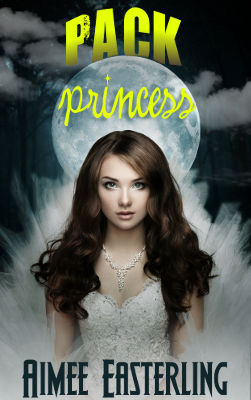
Pack PrincessEditing round three will come once the first draft is fully completed. This is where I read the whole book through at once, fixing big-picture problems and once again cleaning up the flow. Then, after getting corrections back from the copy editor, I read through one more time on KDP’s previewer window just in case there’s something my nearly-as-anal-as-me editor missed, and then I finally let the book go out into the world alone.

While I’m still on the fence about the write one, edit two method, I highly recommend write one, edit one. A writing book I read recently reminded me that editing is a learned skill just like writing and that we get better at it by practicing every day. Maybe in a few years, I’ll be fast enough to get all of my editing done before my dog gives up hope and starts rustling up her own breakfast?

(As a side note, how do you like the new cover for my upcoming novel, Pack Princess? I decided to outsource this one to a pro, and I love the result! But it can still be tweaked, so if you hate it, please let me know.)

Changes in Publishing: Who Will Survive?

Another great one from Nancy Cohen! Enjoy. (And perhaps follow Nancy’s blog while you’re there.)

Nancy J. Cohen's avatarNancy's Notes From Florida

Hugh Howey: The Publishing World is Changing. How Can You Keep Up?
Novelists, Inc. Conference Day 2, St. Pete Beach Oct. 2014

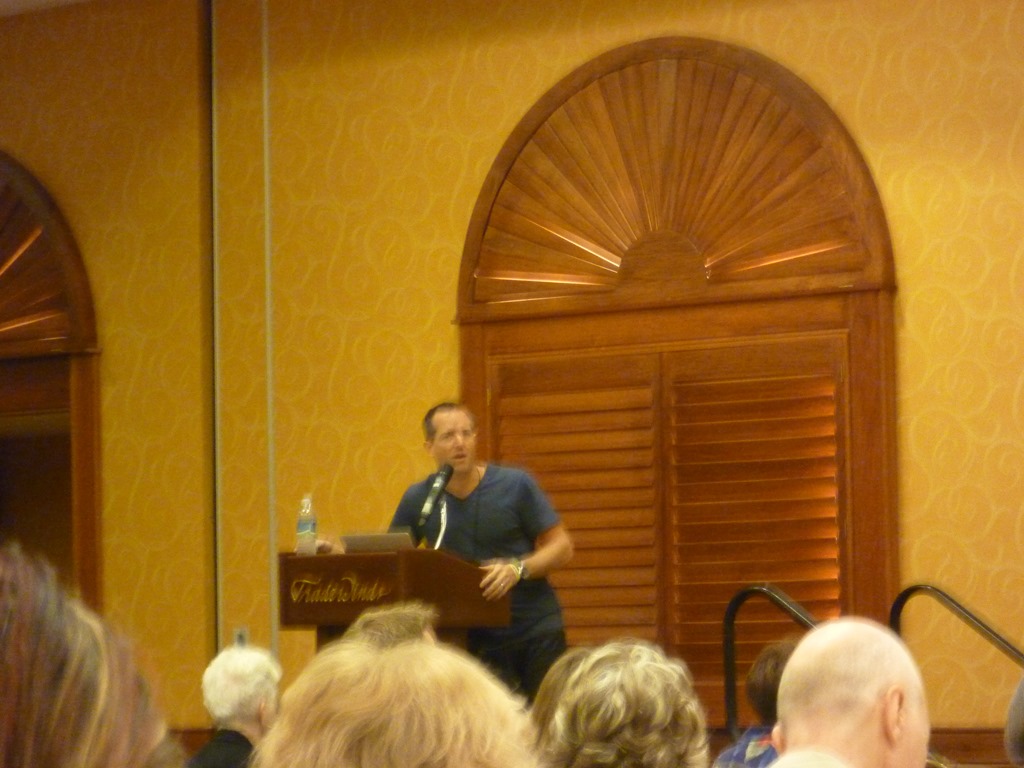
Hugh Howey began his presentation by showing slides on “A history of storytelling.” The order goes this way:

Oral tradition
Written tradition
The first cubicle workers, i.e. monks transcribing by hand
Movable type
Offset and digital in 1990
Electronic publishing 2007

P1030921

He recommends reading “The Storytelling Animal.”

Bar codes revolutionized sales in that data could be tracked. This led to massive discounting. In 1995, Amazon went live. In 2014, indie bookstores see a 20% growth in openings since 2007.

Book selling is like the game: scissors, paper, rock. You have the big-box chains, online retailers, and indie bookstores. Amazon beats the chains. Indies beat Amazon on their location, curation, and community. Publisher profits have risen, but digital is subsidizing print. Business costs and author royalties for digital are…

View original post 367 more words

The Best Writing Tips

One of my most popular blog posts included quotations by famous authors, so I thought I’d share them again on The Write Stuff. The original post (with pictures and more text) can be found here: Writing Tips

“You can’t wait for inspiration. You have to go after it with a club.” Jack London

“Don’t try to figure out what other people want to hear from you; figure out what you have to say. It’s the one and only thing you have to offer.” Barbara Kingsolver

“If you want to be a writer you must do two things above all others: read a lot and write a lot.” Stephen King

“Beginning writers must appreciate the prerequisites if they hope to become writers. You pay your dues—which takes years.” Alex Haley

“Writing a novel is like driving a car at night. You can see only as far as your headlights, but you can make the whole trip that way.” E.L. Doctorow

“Get it down. Take chances. It may be bad, but it’s the only way you can do anything really good.” William Faulkner

“You must want to enough. Enough to take all the rejections, enough to pay the price of disappointment and discouragement while you are learning. Like any other artist you must learn your craft—then you can add all the genius you like.” Phyllis A. Whitney

“Not that the story need be long, but it will take a long while to make it short.” Henry David Thoreau

“My aim is to put down what I see and what I feel in the best and simplest way I can tell it.” Ernest Hemingway

“I write as straight as I can, just as I walk as straight as I can, because that is the best way to get there.” H.G. Wells

“Good writers are those who keep the language efficient. That is to say, keep it accurate, keep it clear.” Ezra Pound

“No tears in the writer, no tears in the reader. No surprise in the writer, no surprise in the reader.”
Robert Frost

“Good writing is supposed to evoke sensation in the reader—not the fact that it is raining, but the feeling of being rained upon.” E.L. Doctorow

“As for the adjective, when in doubt leave it out.” Mark Twain

“Don’t tell me the moon is shining; show me the glint of light on broken glass.” Anton Chekhov

“Every character should want something, even if it is only a glass of water. Every sentence must do one of two things—reveal character or advance the action.” Kurt Vonnegut

“Cut out all those exclamation marks. An exclamation mark is like laughing at your own joke.” F. Scott Fitzgerald

“If you are using dialogue—say it aloud as you write it. Only then will it have the sound of speech.” John Steinbeck

“There is no satisfactory explanation of style, no infallible guide to good writing, no assurance that a person who thinks clearly will be able to write clearly, no key that unlocks the door, no inflexible rules by which the young writer may steer his course. He will often find himself steering by stars that are disturbingly in motion.” E. B. White

“When you get in a tight place & everything goes against you, till it seems you could not hold on a minute longer, never give up then, for that is just the place & time that the tide will turn.”  Harriet Beecher Stowe

“Shut down the internet, set a timer for 15 minutes, and write. Hopefully, when the timer goes off, you will be involved in your story enough to keep going.” Marcia Strykowski