Paid book promotions worth their salt, part 1

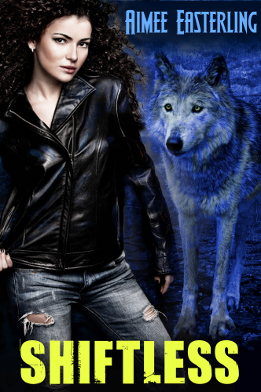
ShiftlessI started to write this post last week…and it quickly grew way too long and never got published. So, I’ve decided to break my rundown in half. This first post will cover why and how you might choose to pay for book advertising, and the next post (whenever I once again need a break from my work in progress) will dive deeper into the nitty gritty of specific advertising platforms that have and haven’t worked for me. So, I apologize in advance for any questions you might still have unanswered when you hit the bottom of this page! More is to come.

Why pay for advertising?

I should start this post by telling you that I’m a skinflint (if you haven’t already figured that out). So, when I started reading kboards and heard everyone going on about paid promotions, my first thought was, “No way am I spending money on book promotions.” My my second thought was equally unkind: “And isn’t that gaming the system?”
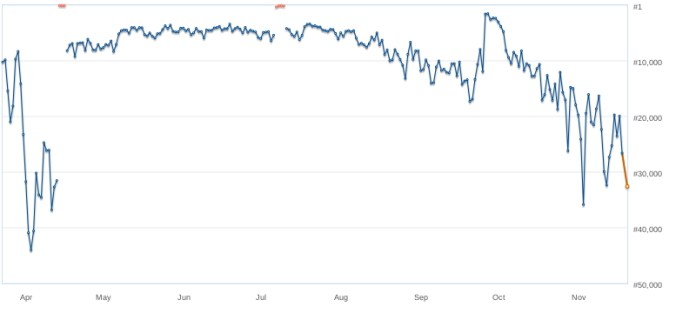
Results of a free run

But the truth is that the old-fashioned method of gaining exposure — setting your book free and then notifying unpaid websites that report on free books — is starting to show diminishing returns. The chart above shows my excellent results for a free period  (orange dots) during Shiftless‘s early days. Pre-promo, the 99-cent ebook sold a few copies, but quickly drifted down in the rankings. But I notified a few sites before my free period, gave away several thousand copies, and suddenly Shiftless started taking off organically. With no further promotion, the book began ranking around 5,000 in the Amazon store and stayed there (with the help of another free run) until I raised the price to $2.99 in August. (I may change my mind about that price hike, especially now that I almost have another book in the series nearly ready to go…but that’s fodder for another post.)

Anyway, to cut a long story short, free periods used to be golden…but their efficacy is much more hit or miss lately. Part of the problem is that Amazon’s affiliate program now reduces earnings for affiliates who send too many free-book buyers their way, so fewer and fewer sites are willing to list free books pro bono. Also, once you’ve had one or two really good free periods, you’ve somewhat saturated the market, and you’re less likely to spike into the top-100 free, meaning that you’ll catch many fewer eyes and won’t get as much of a boost from the promo.

So, what’s the solution? Well, writing more books is key since each launch will boost sales of previous books. But we can only write as fast as we can write, so many authors turn to paid promotions in the interim.

How (not) to pay for advertising
Watermelon SummerWhen I talk about paying for advertising, you  may think of buying a billboard or signing up with google ads. But most readers find books via word of mouth, so these untargeted advertising campaigns don’t seem to work very well. (That said, one kboarder reported having great results with a very specific facebook advertising campaign, which might be worth a try if you spend a lot of time on facebook and want to leverage what you know.)

So, what does work? Book recommendation email lists. As a reader, I’ve signed up for several, but have settled on using Bookbub as my primary way of finding free books worth reading — something about Bookbub’s method of choosing titles seems to select for quality, and it’s much easier to comb through three daily freebies in the genres that I enjoy than to browse the entire Amazon free lists. Bookbub also lists books reduced in prize to 99 cents (or, sometimes to $1.99 or $2.99), and I assume the less skinflinty readers use my same methodology but actually pay money for these sale books.

Bookbub is the big dog in the book-recommendation world (and I’ll write about them more in a later post), but there are many smaller options for those of us with less ready money. In fact, some of the email lists will showcase your book for free…although you often get what you pay for. Here’s a sampling of the top services that will list sale books without asking you for a dime:

Awesome Gang — I actually paid for their $10 option, which I’ll report on in my next post, but they have a free option as well.

Books on the Knob — Didn’t list me.

Discount Books Daily — Charges for some genres. I paid and will report on them in my next post.

Ereader Cafe — Didn’t list me.

Ebook Hounds — Free until January 2015. I had quite good results from their listing — 8 sales and 1 borrow in 24 hours. While this doesn’t sound like much, nine units moved in a day can give a new book a leg up in the rankings.

Ebooklister — I was listed but sold 0 books.

Manybooks — Didn’t list me.

The Midlist — I’ve heard great things about the results of this free service, but I kept getting rejected at first. I do have a listing scheduled with them for January, though, so I’ll report back then. Although free, The Midlist is considered to be one of the medium-sized dogs — it’s worth changing your promotion date to match their openings if you can get one.

The Naughy List — Despite the name, this service lists all flavors of romance, including sweet, and they have given me quite good results – 5 additional buys and two borrows in 24 hours.

Reading Deals — I’ve never tried them because they require you to tweet first, and I don’t have a twitter account. But some kboarders consider them to be in the middle to upper tier in terms of quality. Edited to add: I either got my wires crossed when I first wrote this (most likely), or Reading Deals has changed their twitter policy. During a promotion in December 2014, a free Reading Deals listing resulted in 1 additional borrow.

SciFiFantasy Freak —  Will start charging in January 2015. I think their list is very small at the moment, though, because I didn’t see any sales at all from their ad on Shiftless (although I also hadn’t reduced the price).

Okay, I suspect that’s enough for you to digest, so I’ll finish up this rundown on paid promotions in a second post. Stay tuned for Part 2: How to decide if you’re ready to pay, and who to pay. And, in the meantime, thanks for reading!

Wednesday Author Interview: Karen Yankosky

What a fun interview this was! Enjoy, and please remember to share with your peeps! 🙂

Marcia Meara's avatarBookin' It

23499988

Today, it is my pleasure to introduce you to humor writer, Karen Yankosky. Welcome to Bookin’ It, Karen.  Let’s start by finding out a bit about how you became a writer. When did you decide that’s what you wanted to be, and what steps did you take to prepare for a writing career? 

KY: The only two things I ever really did to become a writer were read voraciously and write constantly. I’ve been doing both for my whole life. Sometimes my writing took the form of long, story-filled letters and emails to friends, and I still write with that same voice. I’m not fortunate enough to call writing a career –yet—but it is a passion. I didn’t attempt anything formal with my writing until 2012, when my divorce led me to go bald. No wait, that’s not quite what happened. I only tore out some of my hair. And…

View original post 1,780 more words

Every writer needs perseverance. And maybe an angry monkey

image By Ned Hickson

Since mid August, I’ve been working on a project collecting the last two years of my “Nickel’s Worth on Writing” posts into an eBook that is part writing tips, part writer’s survival guide. What some of you may not know is that I have the technological IQ of a chimp.

Ok, ALL of you knew that — and you’re probably right: I shouldn’t assume all chimpanzees are incapable of creating an eBook.

Regardless, the process has reminded me of how important perseverance is as a writer and how, as writers, having a chimpanzee capable of tearing apart a laptop with its bare hands could be really therapeutic.

I’ve come to see my eBook-creating experience as a smaller version of the trials and tribulations every writer goes through in the quest for publication (Except hopefully with less cursing.) Every writer begins with a manuscript: Pages with thousands of words, each specifically chosen through a painstaking process aimed at creating imagery, setting a mood and conveying information methodically doled out to establish the perfect pace. Does it make you any less a writer if it doesn’t get published?

Of course not.

That’s like saying you aren’t a singer if you only reach for those high notes while in the shower. It doesn’t matter what you do to hit those high notes, and I’m pretty sure the rest of would rather not know. The important thing is that you don’t need a recording contract to be someone who sings, any more than you need a published book to consider yourself a writer. If you spend time on a regular basis writing your thoughts down while searching for just the right words — whether in the form of a novel or personal observations — you’re a writer.

It’s that simple.

Although if you spend hours in the shower reaching for those high notes, it starts to get complicated.

That said, it’s the hope of every writer to share their words with others. While blogging has streamlined this process and allowed more people than ever to make their words accessible to the world, the printed word — virtually in an eBook or physically on actual paper — still holds a special significance. Admittedly, seeing the title of my first book in the Dewey Decimal System at the library was a thrill. It didn’t matter that I’d probably never be able to find it again by actually using the Dewey Decimal System, or that my identifier on the spine of the book is “HICKS” in all-caps.

Apparently, there are a lot of HICKS around here.

Apparently, there are a lot of HICKS around here.

To become an overnight sensation has taken me 15 years.

And counting, actually.

That’s because, aside from you and readers of my newspaper column, I remain virtually unknown in most parts of the world and to a select group of state law enforcement agencies (which I’d like to keep that way, thanks.)

Did having a book published make me more of a writer? Did it open the door to fame? Fortune? A table at Waffle House without a reservation? Yes! But only to that last one. Although I’m pretty sure you only need a reservation there if you ask for gluten free waffles or meatless sausage. Then there is a three-hour wait.

My point is, published or unpublished, overnight success or one-night wonder (I’d rather not get into that), a writer writes because it is part of who they are. It’s as second nature and as necessary as breathing and eating, although I should warn you that inhaling while eating a powdered donut can be dangerous. Did the fact that I once dropped face-first onto a table at Big Dog Donuts while choking on powdered sugar keep my from having another donut? No way. That’s because as writers we persevere. We brush off the proverbial powdered sugar dust and take another bite.

So as I keep cursing at diligently working on the eBook collection of my Nickel’s Worth on Writing, rest assured I will — like all of you — rely on my perseverance as a writer until it is complete.

Unless a monkey eats my donut.

image

Ned Hickson is a syndicated columnist with News Media Corporation. His first book, Humor at the Speed of Life, is available from Port Hole Publications, Amazon.com or Barnes & Noble.

You know you’re a bit groggy from NaNoWriMo when…

…you refresh your own stats rather than those of your writing buddies. Perhaps I was trying to figure out how much I’d written in my sleep?

Sadly, no matter how many times I hit refresh, my word count remained the same. Guess I’d better go fix that….

Some Possible Answers

images

Been poking around on WordPress’s Help page, and it looks like maybe there’s no way for me to receive notices on posts that aren’t mine.. Perhaps if I Follow the blog again, I’ll get notices of new posts by other authors, and can then check the button at the bottom to be alerted to any comments on those. Will give this a try. Still not sure what the issue is on Bookin’ It, or my other blogs, but I’m working on it. Could one or two of you reply to this, so I can see if MY OWN posts will trigger a notification? I’d appreciate it, thanks! Sorry for the inconvenience, but multiple authors or not, I have to be able to keep up with this blog, if it is going to grow like I hope it will.  Thanks!

Utilizing Goodreads As An Author

Whether you’re independent or traditionally published, a good chunk of the promotion for your novels is going to fall to you, and while I live by the philosophy that the best promotion is your next book, I do enjoy some of the little things I get to do as an author to help spread the word about my stories.

goodreadsOne of my favorite tools is Goodreads because I don’t just love to write books, I also love to read them. I love to talk about the books I’m reading, and if I am really into a book and want others to know all about it, Goodreads is a great place to do that. There are communities and forums on Goodreads for every type of reader, which means you can virtually gather with fellow fans, share good conversation and recommendations, and even make new friends.

From an author standpoint, Goodreads has a lot of neat tools to help you connect with your readers.Maybe you already know about them, maybe you don’t, but here are a few of the things I love about being an author over there!

Once you establish yourself as a Goodreads author, you take control of your author page and gain access to some of the perks that come with being a Goodreads Author. You can add author pictures, your biography and links to your online sites. Encourage fans to add you to their favorite authors list. There is an “Ask the Author” feature, which allows fans and readers to submit questions for you to answer and then display on your page. There is an option to either blog on Goodreads, or link to the RSS feed on your blog, so every time you post it goes into your Goodreads feed and draws more attention to you, your work and your website. And, of course, there is a space to add samples and excerpts with the potential to draw others to your existing work. You have the option to add intriguing and/or profound quotes from your books. You can host paperback book giveaways, which often draws hundreds, if not thousands of potential readers to your page. The options are limitless.

This morning I set up the Goodreads page for my upcoming urban fantasy book, Siren so people can add the book to the ‘Want to Read’ shelf. I can start gathering potential fans and readers to the page, improving my visibility and potentially reaching a wider audience for a book that will be released in January.I can offer samples and snippets, post about giveaways I’m hosting and get people excited about the release. Because I’m excited about the release, and I want to share that excitement with others, so having a place beyond my blog and Facebook Author page to do that is a beautiful thing.

As with any promotional effort, it can be a lot of work, but connecting with your readers on the social front in a place where you can talk about the one thing that brought you together–books–is a beautiful thing. Readers love being able to see who you are beyond the pages of your books, and Goodreads is a great place to start.

It’s worth the effort, in my opinion, because one of the things I miss the most about university days is sitting in a classroom full of other people who love words as much as I do and having good discussions about the books we were reading.

Hello, 50K…

Today is day number fourteen in the NaNoWriMo calendar for 2014, and this morning I reached my first 50,000 words for the month of November.

I’m excited! Partly because I won NaNoWriMo, but mostly due to the fact that I made it halfway to my overall goal for November before the actual middle of the month. I set myself up to write at least 100,000 words because that’s just a little less than I like my short, quirky novels to be, and it felt like a reasonable goal to get the majority of the project I’m working on, Promises, Promises, as close to first draft fabulous possible before the end of November. 100,000 words would give me time to work on other things, like editing for clients, blogging, and promotion on my other books, while still granting me plenty of wiggle room to write all the words I wanted to write.

Because despite the chaotic, hectic spiral of my schedule sometimes, I have to write every single day.

She Hulk 2

Cover of She-Hulk (vol. 1) #1, textless variant. Art by Adi Granov. (From Wikipedia)

I set really high writing goals for myself every month because I go a little mad if I don’t put words to the page and give the voices in my head a trampoline to bounce around on. I feel edgy and raw, stir crazy and anxious. It starts to feel crowded inside my mind, and when it gets crowded in there, I get really stressed out. Getting stressed out means I don’t sleep, and not sleeping pretty much ensures grouchiness. Grouchiness leads to a really bad attitude that more or less turns me into She-Hulk, and people don’t like me very much when I get angry. They start shoving Snickers bars at me, which just makes me grumpier, and that’s no good.

This month feels really good. I feel like I have a good handle on my project, (though if you read through my daily NaNoWriMo blogs, it looks like I nearly threw the manuscript out the window.) The story feels strong to me, the characters compelling and I’m still super excited about it after more than 50,000 words. Huge bonus!

Do you write every single day? If so, what keeps you motivated? If not, is it because you don’t have time? I’d love to hear your thoughts in the comment section below.

A True NaNoWriMo Story

photo-327

When I lived in France, November was a special month for me.

November was the literary season with awards and prizes.

November was the arrival of the Beaujolais Nouveau, a young wine that you don’t keep in your cellar but drink in the weeks that follow.

November was also my birthday month.

When I moved to the United States I adapted and adopted new celebrations and traditions.

I was happy that Thanksgiving happened to be in November.

Many stores now carry also the French Beaujolais Nouveau.

And I could participate to the infamous NaNoWriMo.

I have mixed feelings about this crazy race.

  • Seriously, 50 000 words sound a lot.
  • Honestly, who writes every day?
  • Really, the idea of a new draft is tempting.
  • Definitely, pressure isn’t a bad thing for writers.

So, am I doing NaNoWriMo 2014?

I am and I am not.

I started a new YA story.

I won’t have 50 000 words by the end of the month but I have the beginning and the ending and enough elements to know that it’s a manuscript that I will finish.

How do I know that I can turn this bud of a draft into a completed manuscript?

I have been a NaNoWriMo participant in the past. Three times I have clocked my 50 000 words.

One of the drafts became my recently published Middle Grade novel Chronicles From Château Moines.

photo-331

One of the reasons I know that I won’t get 50 000 words is also because of this recent publication.

Writing is one thing.

Marketing is another.

So while I would like to Write new Stuff, I’m actually working at promoting a NaNoWriMo baby, while plotting the birth of a new one. Because you just never know where 50 000 words will take you.

Good luck brave NaNoWriMo people!

Preorders: Boon or bane?

Submitting a book for preorder on Amazon

If you’ve been publishing on Amazon lately, you probably noticed a new feature rolled out this summer — preorders. In a nutshell, indie authors can now join the big dogs and sell copies of their books before release. Unfortunately, while this technique is a major bonus for established authors, my three experiments have suggested that small-scale authors might be shooting themselves in the foot by taking advantage of preorders. But before I got into the bad, let me start with the good.

A review from the preorder period.Preorders are very handy as a launch-management tool. You can create your book page up to three months before your title goes live, which makes it simple to write blog posts and emails with the correct links in preparation for the big day. In addition, if you design a paperback version of your book using createspace, you can get the paperback and ebook to link before launch day. Even better, reviewers can start leaving reviews on your paperback right away, and those reviews will show up on your ebook page (although not as verified purchases). Which all means that you can go into your launch-day buzz with reviews already in place, making people more likely to take a chance on your new book!

Doesn’t that sound splendid? No wonder I tried preorders three times before telling myself I really shouldn’t do it again. Why the change of tune? Well, if you don’t have a big following, people are significantly less likely to take a chance on your book during the preorder phase. Not only does the potential buyer have to wait to download their purchase (no immediate gratification!), they also can’t look inside and see if the book is worth a read. Which is why I seem to only be able to garner 20 to 30 preorders even over a couple-of-month preorder period.

But those are 20-to-30 sales I wouldn’t have gotten otherwise, right? So I should clearly stop complaining! Well, not so fast. Unlike most retailers, Amazon doesn’t save up your preorder sales and give you a big spike in rankings on launch day, so preorders don’t help you move to the top of the charts. Instead, small-to-mid-sized authors will find that preorders start you off at a low rank and then dilute your launch-day boost. Remember how people are less likely to take a chance on a preorder than on a published book? That means my one sale every other day or so resulted in Despite the Billionaire’s Riches hitting launch day with two months of 150,000 rankings to dig its way out of. And, since I’d already emailed my list about the book and a few people had preordered, I didn’t get as many purchases on day one as usual, which again dragged the ranking down. In my opinion, your primarily goal during the launch period is to get enough sales so your book hits a top-100 list and sticks there, and preorders seem antithetical to that process.

Preorder sales rank

So, will I never use the preorder feature again (at least until I quadruple my fan base)? Maybe. I’ve yet to try a preorder period with the second book in a series, which should see higher preorder rates than a standalone in a different genre like my previous experiments. And I’ve yet to try a short, two-week preorder, which should make the lowered-rank effect less striking. Plus, if you get creative like Jennifer Meltzer and built buzz throughout your preorder period, you might come out ahead. (Jennifer, please do keep us posted about how your experiment works out!)

So, maybe I’ll try preorders one more time… But I recommend you do as I say, not as I do — if you’re not moving a hundred or more books per day, eschew preorders for the foreseeable future.

And if you did preorders and want to dig yourself out of that hole, stay tuned for a post in a week or so about paid promotions.

Ghost in the Canteen by Jen Rasmussen

Just put up my review of Jen’s book on my blog, Bookin’ It. PLEASE consider tweeting either the original post, or this reblog. Let’s get keep trying to get the word out for each other. THANKS!!

Marcia Meara's avatarBookin' It

ghostsinthecanteenMy Review: 5 of 5 Stars
This is a difficult review to write. How can I tell you how terrific Ghost in the Canteen is, without giving away anything of importance? Should be easy, but the trouble is, everything in this story is of importance. Nothing is a throw-away, and it all ties together so very nicely, I’m left floundering for something to say. (Alert the media! She has nothing to say!)
Okay, I do have a few things to say. First, Jen Rasmussen’s writing is first-rate. The story pulled me in immediately, and the characters were interesting and engaging, especially the snarky heroine, ghost hunter Lydia Trinket. Lydia’s been doing her job of sending recalcitrant spirits through to the Other Side for years. Or so she thinks. Turns out, Lydia has been somewhat misled about what she’s actually doing, and therein lies a tale. A really scary tale.
The…

View original post 226 more words