#InspirationBoardSunday #SundayBlogShare

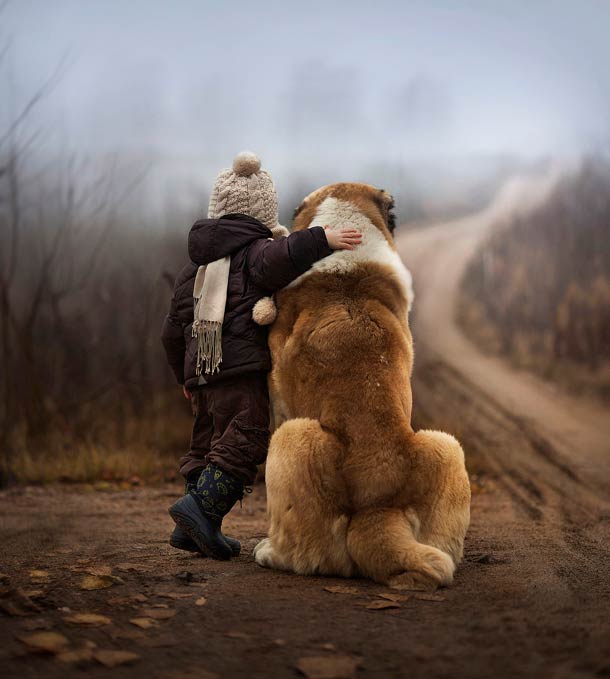
Short and sweet today. Sometimes the photos on my Inspiration Board are there because they look like a good jumping off place for a new story, and sometimes they are there simply because they are so beautiful, and beauty is its own inspiration. Here are six favorites of mine. Hope they speak to something in you. 🙂

304d0d23963171_5632bc4a47c89

1682

ahermin21

Beautiful-Photography-By-Martin-Marcisovsky

Elena-Shumilova-photography-11

bestof-1500x1000

#EpicFantasy ‘THE PRINCE’S MAN’ #0.99 #sale

And does changing your price on Amazon trigger some visibility?

Thanks to Marcia, for the excellent sharing space here on The Write Stuff, and please, bloggers, do share as well, on Social Media, and if it fits, on your own blogs too.

First up, my  award-winning epic fantasy, THE PRINCE’S MAN is on sale this week for $0.99 (or the equivalent) in ALL outlets across all countries where it is available – if you haven’t yet picked up a copy, now is your chance – one week only.

rsz_pm-ebook_flat_2

Rustam Chalice, dance tutor, gigolo and spy, loves his life just the way it is, so when the kingdom he serves is threatened from within, he leaps into action. Only trouble is, the spy master, Prince Hal, teams him up with an untouchable aristocratic assassin who despises him.

And to make matters worse, she’s the most beautiful woman in the Five Kingdoms.

Plunged into a desperate journey over the mountains, the mismatched pair struggle to survive deadly wildlife, the machinations of a spiteful god – and each other.

They must also keep alive a sickly elf they need as a political pawn. But when the elf reveals that Rustam has magic of his own, he is forced to question his identity, his sanity and worst, his loyalty to his prince.

For in Tyr-en, all magic users are put to death.

Award winning novel, THE PRINCE’S MAN, has been described as ‘James Bond meets Lord of the Rings’ – a sweeping tale of spies and deadly politics, inter-species mistrust and magic phobia, with an underlying thread of romance.

   AMAZON       NOOK    iTunes   KOBO     SCRIBD    PAGE FOUNDRY    GOODREADS

Here are a couple of snippets from recent reviews:

“I enjoyed this book – particularly the gorgeous detail that painted a beautiful picture of the world without slowing down the pace of the story. There are several areas where the description simply blew me away, like the world of Shiva. Ooh, so pretty.”

“This newly created world is firm, there are no gaps or jumps of reasoning. One creature, idea, magic or bit of history flows right into the next. Characters that appear substantial at the beginning of the book do nothing but grow and evolve as their backstory unfolds behind them.”

My pricing question

My question is this: how does a book suddenly gain visibility as a result of a price change?

The reason for my question is this: it has been a very long time since I made any promotional effort on behalf of THE PRINCE’S MAN, for a number of reasons:

  • Time. I’ve been working feverishly on the sequel.
  • My marketing efforts have all been targeted on my urban fantasy books, because they are in KDP select, which is far easier to produce a quick promo than a book that is published in many different places.
  • THE PRINCE’S MAN has, until recently, been a good, consistent seller all on its own.

Toward the tail end of last year it began to slide down the Amazon rankings. As a result, it lost visibility, and come last month, for the first time ever, it didn’t sell a single copy, so the time has come to give it the nurturing it deserves. I duly set about arranging this promo (the first in nearly 2 years for this title), and, as a result of previous issues with price changes and world time differences meaning I lost a couple of booked ad slots (not for this title, but still annoying), I decided to drop the price in plenty of time. Every outlet takes a different amount of time for such changes to filter through, so I initiated the price drop on Tuesday evening, ready for the first ads on Friday.

And guess what?

In no time at all, it began selling again! No ads, no promo, nothing obvious to start the ball rolling, other than the actual price change.

I have absolutely NO idea how it happened, and if anyone has the answer, please share!


#FabulousFridayGuestBlogger @ThorneMoore

FFGB Graphic

Known Knowns and Unknown Unknowns

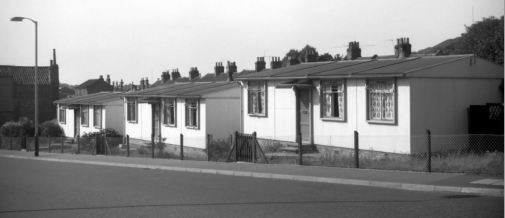
“Write about what you know” is useful advice. I thought it would be very easy to follow, when writing my latest book, The Unravelling, which will be published in July. First of all, I would be looking at the world as seen through the eyes of a 10-year-old, in the mid-1960s. She would be living in a town quite similar to Luton, on a council estate that was just beginning to replace the prefabs, which had been thrown up to provide quick emergency housing, after the war.

 I was a ten-year-old in the mid-1960s, living on the edge of a council estate in Luton, and, walking to school, I witnessed the demolition of the prefabs, including the one my grandparents had lived in. Simple.
Thorne1

Post war prefabs

It is remarkably easy to remember every little detail of my world, 50 years ago, from the cotton frocks our mothers made for us, to the pink custard served up at our seriously stodgy school meals. I remember the posters on the classroom walls, the smell of the corridors (a mixture, I suspect, of polish, vomit, urine and very strong disinfectant). I remember the streets, dark lanes and open parks I would walk through on my way, to and from school – a serious walk, but no one would have dreamed of being taken to school by car. I remember the shops, and the sweets they sold – sherbet flying saucers, fruit gums, penny chocolate bars. I remember the kitchen wallpaper my parents put up, as horizons began to expand, covered with exotic vegetables like aubergines (eggplants), courgettes (zucchini), chard and red peppers – vegetables we never saw in the shops, but rumour had it that foreign people ate them and may even had liked them.
thorne2

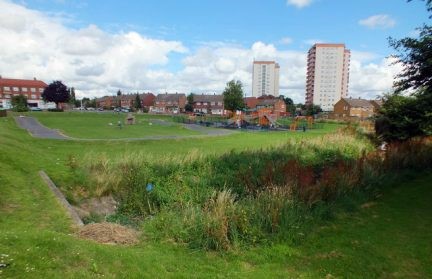
The estate where I grew up. I watched the tower blocks go up as I walked to school.

So much for the 1960s. I then had to look at the turn of this century. The Millennium. Equally easy, I thought. Everyone knows some of the events that happened then, and others are easy to check. It was only 15 years ago, and I lived through it as a mature adult. Surely I can remember just how it was. Wrong. It is next to impossible for the memory to keep pace with the technological changes that are sweeping past us, establishing themselves so quickly and firmly that we can’t believe they haven’t been around for at least 30 years.

How did you search for someone, in 2000, as my heroine has to do? You use the internet, of course. Except that, in Britain, broadband connections only began in 2000, and nearly everyone was reliant on impossibly slow dial-up modems, with rocketing phone bills and shouts of fury from other people in the house who wanted to use the phone. Have I really only had proper access to the World Wide Web for 12 years? Then, finding someone today, you might try Facebook. But there was no Facebook. Or you could Google them. But back then, Google was a new boy on the block and everyone used Yahoo, or Alta Vista, and the chances were, you wouldn’t find anyone anyway. People didn’t have an on-line presence. You want to trace a marriage that happened 30 years ago? Today you do it with the click of a mouse. In 2000, you got on a train.

I used my own early researches into family history in my first book, A Time For Silence, in which my heroine tries to track down details of her grandfather and aunt. Now I know that today, you simply go to Ancestry.com or FreeBMD, and have it all at your fingertips in minutes. When I first started researching my family history, there was no internet, and searching meant getting on a train to London, to trawl through huge tomes of indexes. Not so bad, when I only lived 30 minutes from London. When I moved to Wales, I found that the National Library of Wales, in Aberystwyth, had similar records, and I spent many happy hours going blind, trying to decipher blurred microfiche and microfilm records. I gave my heroine the same pleasure.

thorne3

My eyes hurt, just thinking about it

However much I use my own experiences to write, some research is nearly always needed. In A Time For Silence, I had to write about life in rural Wales in in the 1930s and 40s. Before my time, but there were plenty of people around me who could remember it well enough, and I was able to trawl through local newspapers of the time. That was so absorbing, I couldn’t resist letting my heroine do the same.

But the trick, with research, is to know how much of it not to use. It’s so tempting, when you become immersed in a fascinating topic, to want to filter it all into your story. A Time For Silence features a German prisoner of war, and I wanted to know more about the POW camp, which was set up a few miles from where I now live. I knew, as everyone round here knows, that it began as a camp for Italian prisoners, who decorated one of the Nissan huts as a Catholic Chapel, which had been preserved.

But after the surrender of Italy, the camp was used for German prisoners, many of whom worked on the local farms. I needed some basic facts for my story, such as when exactly the camp closed, and who was kept there, so I finished up appealing for any information about Henllan Camp from the National Archives. What I received was a huge collection of official inspection reports for the War Office, which give a riveting insight into army and bureaucratic behaviour.

The site remained open until the spring of 1947, and many of the German prisoners were rounded up and taken there after the war. The function of the camp was to assess how Nazified they were. They were allowed to apply for repatriation and then they were classified as white, grey and black Nazis. The white were simply Germans caught up in the war, with no ideological commitment, and could be allowed home. The grey were believers who were open to persuasion that they had been deceived, and could go home as soon as they were sufficiently re-educated. The black were committed Nazis, who would never be swayed in their beliefs. They were to be kept.

At regular intervals, the government sent inspectors to report on conditions in the camp, number of prisoners, state of discipline etc. This was obviously a box-ticking exercise. Each inspector reported that the camp was well run by its commander, accounts were properly kept, and order was smoothly maintained by a splendidly efficient sergeant major. Then, just before the camp closed, a new inspector arrived – one who was less of a box-ticking pen-pusher and more of a perceptive psychologist. His report explained that while the commander loftily fulfilled his duties, blithely unaware of any trouble, the sergeant major, who dealt personally with the prisoners, was a rabid German-hater, looking for revenge for his brother, who had been killed in North Africa, and he had been systematically destroying the prisoners’ written requests for repatriation.
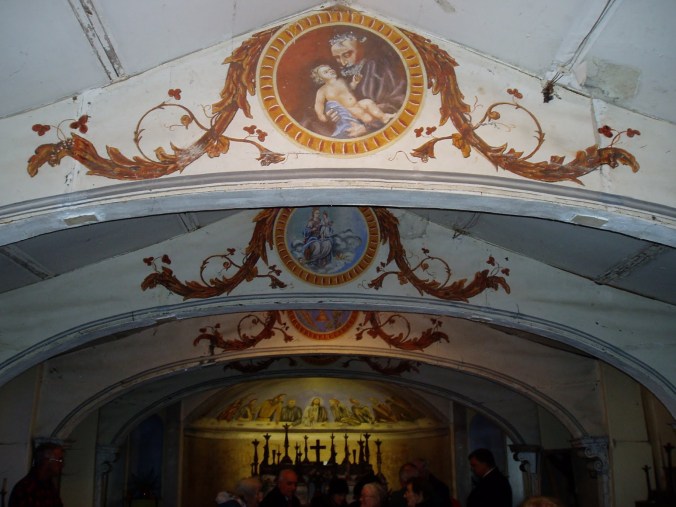
thorne 4

The Italian chapel at Henllan

 This was a great story, that I just had to use – but I didn’t, because it wouldn’t have been relevant to my story. The key to using research is to know which bits of it matter to my characters and to get details right, when they are needed, but to let the bulk of it lie beneath the surface, just out sight. And there’s always the possibility of another book that might put my research to deeper use.

thornemoore
Author Thorne Moore

Thorne Moore was born in Luton, near London and the sludge of the Thames estuary, and now lives in Pembrokeshire on the Atlantic coast, with a lot of hills (small, but we call them mountains), woods (we call them forests) and villages (other people would call them road junctions with a house or two). No cities anywhere near.

She was advised to study law, so she studied history instead, in order to avoid a future career as a lawyer, as she was obviously going to be a writer. Since it took her forty years to get published, she filled in the time working in a library, running a restaurant, teaching family history and making miniature furniture (Pear Tree Miniatures). Her first book, A Time For Silence, was published in 2012. Motherlove followed in 2015, and her third, The Unravelling, will be published July 2016. She lives in a Victorian farmhouse, which occupies the site of a Medieval mansion. Several cats share the house and several woodpeckers share the garden.

Mlcover     Timeforsilence

Motherlove (Amazon UK)
Motherlove (Amazon.com)

A Time For Silence (Amazon UK)
A Time For Silence (Amazon.com)

Thorne’s Amazon Page
Website
Facebook
Twitter
: @ThorneMoore



#MidWeekPOV – #wwwblogs Small Miracles

wood-stork-xxximg_0222mw
Wood Stork on the Wing

Some years ago (too many to count), I developed a little habit I call “looking for the miracle.” It started as a small superstition that if I saw something truly beautiful or uncommon at the start of a long car trip, it was a sign all was well in the world, and I’d get where I was going, unscathed. Yeah, I know it was silly, but it made me feel surprisingly good, and you know what else? I found that when I was actively watching for them, small miracles showed themselves to me nearly everywhere I looked.

bald_eagle_stock_by_crystalsm

Of course, with my long-established love of nature, I often looked for special birds or wildlife along the roadside, as an omen of good luck. I’d spot a bald eagle soaring overhead (always an inspirational sight), and say to myself, “There! That’s this trip’s miracle.”

0052-121-800-750-80-wm-right_bottom-20-DougLittle-255-255-255-20

Or I’d see the summer’s first swallowtail kite, my very favorite bird of prey, and feel so happy, I just knew it was good omen, and my trip would go smoothly.

B9317081945Z_1_20150422173109_000_G4IAJ4HG4_1-0

Over the  years, I’ve spotted all sorts of interesting animals and birds along the highways and byways of my travels. A flock of wild turkey is always a good sign, to me . .  .

10b-1101

. . .  and my first Florida sighting of a half-grown black bear made me smile for the next twently or thirty miles.

3572680404_ca66aba192_z

Over time, I saw other things that I counted among my miracles. Rainbows are always good, and double rainbows mean my trip home will go well, too.

phlox_10-04-0718

A solid purple field of wild phlox takes my breath away as it announces its miracle status in no uncertain terms.

CrestedCaracara14

A crested caracara sitting in a tree,

grazing2

deer grazing in a field,

bunch-of-baby-donkeys-600x350

a baby donkey standing in the front yard of a farmhouse–all have given me a sense of the magical, the beautiful, the miraculous, at one time or another.

You may count other things as your good omens, but whatever speaks to you in that way, I promise if you make it a point to look for the miracles around you, you’ll find them. And whatever you’re doing at the time will suddenly seem happier, taking on new significance.

Miracles abound, if we but open our eyes. Try it. You just might be amazed.

Facebook ads for books

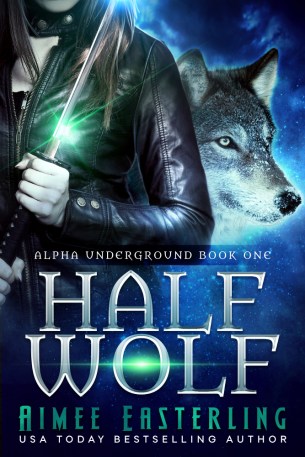
halfwolfThe hottest topic around the writers’ water cooler in recent months has been using facebook ads. The upshot? You can get email list subscribers for as low as 35 cents a pop by giving away free books. Then it’s a simple matter of massaging your new readers to turn them into buying (or at least reviewing) fans.

If you want to learn more, I recommend checking out Mark Dawson’s free video series for a basic introduction. You’ll have to commit significant time to tweaking, though, and will also want your website to be in top-notch shape before beginning. So I only recommend embarking on the project if you’re willing to take some concerted effort away from writing to make it happen.

Is it worth it? I’d say so. Building up my email list helped me launch my newest book into the 3,000s on Amazon as well as track down 15 five-star reviews during launch week. (Okay, setting the price at 99 cents for the launch period has helped too.) Now I’m trying to continue that momentum with a simple boosted facebook post (a technique that can give you even cheaper results than a fancier facebook ad if you get enough people to like and comment on the post).

Want to help out? I’d love it if you liked, commented on, or shared my new-release facebook post. Remind me when your next book is live and I’ll do the same for you. Thanks in advance!


#InspirationBoardSunday #SundayBlogShare Sunrise, Sunset

tropical-sunrise-wallpaper-wallpaper-2

Why is it that we revere the beginning and end of each day so much? Is it only because of the flaming colors that spread across the sky? Or is there something deeper inside us that recognizes each one marks the arrival and then the passing of another day in our lives? I’m not sure, but I find one filled with the hope of new things to come, and the other filled with the knowledge that it’s time to put down my work and gather strength for what the future brings next.

I’ll be leaving in a bit to speak at an afternoon tea, but I wanted to leave you with some lovely images to inspire you. Hope they make your heart soar. Enjoy! Continue reading