At the risk of being pushy, getting another stellar review for That Darkest Place has just made my morning! Hope some of you will find time to check out Judith’s review, and share with the Immediate World. 😀 THANKS!
Miscellaneous News

Book Review: Swamp Ghosts by Marcia Meara
Wow, what a great review from Staci Troilo. I started my next Riverbend story yesterday, and Staci’s words have inspired me to work harder than ever. Hope you’ll check this out, and pass it along! THANKS!!

Marcia Meara, author of the popular Wake-Robin Ridge books, sets her second series in the sleepy little town of Riverbend, Florida, where the hungry creatures swimming in the dark waters of the St. Johns River aren’t nearly as dangerous as those walking along the quiet neighborhood streets.
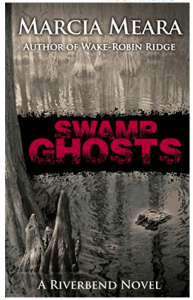 Wildlife photographer Gunnar Wolfe looked like the kind of guy every man wanted to be and every woman just plain wanted, and the St. Johns River of central Florida drew him like a magnet. EcoTour boat owner Maggie Devlin knew all the river’s secrets, including the deadliest ones found in the swamps. But neither Maggie nor Gunn was prepared for the danger that would come after them on two legs.
On a quest to make history photographing the rarest birds of them all, Gunnar hires the fiery, no-nonsense Maggie to canoe him into the most remote wetland areas in the state. He was…
View original post 420 more words
Share this:
Commas and how to use them (Part 1)
Take a look at Harmony’s post on Story Empire. A great lesson on proper usage of commas, with more to come.

 Hello SErs! Harmony here 🙂 I hope this finds you all well. Today, I’d like to take a look at commas. For such a small punctuation mark, it has a big impact on how well or not our sentences read. Though we use commas a lot of the time, few of us understand them fully.
What is a comma? What does it do?
According to the Oxford English Dictionary: ‘A comma marks a slight break between different parts of a sentence. Used properly, commas make the meaning of sentences clear by grouping and separating words, phrases, and clauses.’
The different types of comma: Listing (Standard or Oxford), Introductory, Joining, Gapping, Bracketing, and other comma uses.
One thing that can make commas so confusing is that sometimes you have options, especially with the Listing and Gapping commas.
Because there is a lot to cover on this topic, I have split it…
View original post 797 more words
Share this:
The Liebster Award
Look who just won a Liebster! My congratulations to Mae Clair for this award, and my thanks to her for nominating me, as well. (I’ll be participating in a day or so, as soon as I’ve wrapped up a deadline project). Check out Mae’s post, and learn some fun things about her. Then pass it along so others can “meet” her, too. Thanks!

 Hey, friends! It’s been a very long while since I’ve done an award post or been nominated for one, so I was honored to be nominated for the Liebster Award by Jessica Bakkers. Jess has a great blog with a wide variety of content, including her ongoing posts about INFJs, the topic that connected us initially. If you don’t know Jessica, I highly recommend you check out her spot in the blogosphere and say hello. Lots of fun happenings over there! 🙂
For the Liebster Award, the rules are:
- Acknowledge the blog who nominated you and display the award.
- Answer the 11 questions the blogger gives you.
- Give 11 random facts about yourself.
- Nominate 11 blogs
- Notify those blogs of the nomination.
- Give them 11 questions to answer.
The eleven questions Jessica sent my way are:
What is your favourite childhood memory?
Sitting under the stars with my father and…
View original post 580 more words
Share this:
Spotlight: Olga Nuñez Miret Author/Translator
Meet Olga Nunez Miret, a TWS friend who has been a supporter of this blog, and each of us individually, from the earliest days. Lovely to see her being featured! Let’s share far and wide!

The devil whispered in my ear,
“You’re not strong enough
to withstand the storm.”
Today I whispered in the devil’s ear,
“I am the storm.”

I introduce to you today Hurricane Olga Nuñez Miret. Author, Psychiatrist, translator, blogger––these titles do not begin to describe the woman. It is difficult to keep tract of all of Olga’s accomplishments, believe me, there are a plethora of deeds. I am certain that you will take pleasure in getting to know Olga Nuñez Miret as much as I have because apart from being a talented author and fascinating woman, she’s also a lovely human being.
Olga is a great supporter of fellow authors, writers and bloggers. On her blog you’ll find many book reviews and author spotlights, so please be sure to check it out.
**Click on the picture below to read about a book event she and her mom helped organize in Madrid…
View original post 463 more words
Share this:
The Eight Stages of Editing – by Grant Snider…
A Saturday smile for you Horror Writers. (And some of the rest of us, too.)
Share this:

Fantasy and the problem with Tolkien

Painting: Sue Vincent
It has to be said that Tolkien causes problems. Quite apart from being so addictive that, once read, you are likely to go back and read the books again, you may never find anywhere quite as rich as Middle Earth within the pages of another book.
Anyone whose introduction to fantasy is via The Hobbit and Lord of the Rings, will have a fabulously detailed, multi-layered and multicultural world permanently established in their imagination. Especially if you go on to read The Silmarillion too and become aware of the rich complexity and authenticity of the languages, histories and mythologies he created as the backdrop for his world. Tolkien’s elves, orcs and wizards will quickly become the standard by which all others are judged. The sheer scope of the story means that just about every possible trope is used, and every mythical or magical species is covered, along with a goodly armoury of magical weapons and the central motif of the Ring of Power.
Is there any reason to read or to attempt to write fantasy any more? It is almost impossible to write high fantasy these days without being accused of stealing ideas from Tolkien. For aficionados of Middle Earth, it is even harder to read fantasy without drawing comparisons. While creating what is arguably the best fantasy ever, the author has also inadvertently ruined the very genre he brought to popularity.
Or has he?
Our teacher read The Hobbit to the class of eager listeners in junior school, but I did not read Lord of the Rings until I was in my teens. Even though the Narnia stories of C.S. Lewis were already so well-thumbed that the books were disintegrating, it was not until I read Tolkien that I heard of fantasy as a genre. There were only stories, fairytales, myths and legends. Oddly enough, that did not stop me from enjoying them all equally. I was reading tales of giants and talking trees, elves, trolls and goblins long before I came across hobbits. Although perfected by Tolkien, the lineaments of such characters were already drawn in my mind by the fairy-tales of early childhood. The quest is a familiar concept in myth and Excalibur is surely the most famous sword with which to prove kingship, even more so than Andúril, while the popular version of Merlin must surely outrank even Gandalf.
The first officially designated fantasy I read after Tolkien was Stephen Donaldson’s Lord Foul’s Bane, the opening book of the Chronicles of Thomas Covenant. Lo and behold, the hero, Covenant, had a magical ring whose powers could save or damn the world. The ring was both feared and sought by the dark Lord Foul as Covenant traversed a land peopled with both characters and situations that could have been lifted directly from Tolkien. The parallels are striking in places, from the tree-city to the goblins, the extra-special horses to the healing vegetation. Yet the writer managed to make me forget all that by his creation of the Land. This is no Middle Earth… and the parallels that at first seemed gratingly familiar, soon diverged and developed into a rich tapestry of a tale with its own unique character and ‘feel’. Other fantasies followed, each creating a landscape and feeling entirely different from the last… and each sharing something with the reader that was unique in spite of a common heritage.
The truth is, we cannot blame it all on Tolkien. He himself drew heavily upon myth and legend, particularly the Norse myths. Most of the characters and storylines he uses so magnificently are familiar from our oldest tales. Even the Ring was not his idea. Odin, the Norse god, had a magic ring, although admittedly, Draupnir was an arm ring. Plato speaks of the Ring of Gyges that conferred invisibility on its wearer. Wagner’s Ring Cycle tells the story of a magical ring whose power resides in the ‘denial of love’ and can bring the entire world under subjugation. And every mythology has its Dark Lord in one form or another.
Fantasy is not just a way to escape reality for a while, it offers a means of exploring, understanding and explaining it. The battle between ‘good’ and ‘evil’ is something we see played out on both the world stage and within our own natures every day. The sustaining qualities of the Quest, such as loyalty, endurance and vision, are those that serve us, while the betrayals and obstacles mirror our own. Just as stories reflect our own so do our own lives reflect the greater life around us. Just as we played at being grown-ups when we were children, fantasy allows the mind to experience a new mode of being in a symbolic landscape that can enrich our lives and present us with questions we might never otherwise consider. Without realising, we may learn much from a well-crafted tale.
Does it matter if it has been ‘done before’ no matter how brilliantly, when all our stories follow threads that lead back to the beginning of mankind’s fascination with storytelling? Stories have always taught through entertainment, by capturing the attention and imagination, engaging the emotions and settling themselves firmly in memory. Each tale appeals to something within us that answers with its own voice. Every storyteller brings something of themselves, something unique, to the tale.
Share this:

My best promotional source
An interesting post on blogging from Craig Boyack, at Story Empire. Some good advice, here.


Craig here today. I’ve read it before, but years of experience cements the comment: Your blog is your best promotional opportunity. Let’s talk about how it works, because it may not be how you think.
There are a couple of things you have to accept in order to make this work. Blogging is a form of social media, and you are the brand. You may think your book(s) are the brand, but that isn’t true.
I recommend not opening a book-titled blog. While this is curable over time, you might want to avoid this trap. What happens if you write a second, or subsequent book? The book isn’t the brand, you are.
Pick a title that has more longevity. I call my personal blog Entertaining Stories. (Shameless plug there.) You can see that it allows me to expand my content into multiple books, even multiple genres without the need…
View original post 1,106 more words
Share this:
Experiment
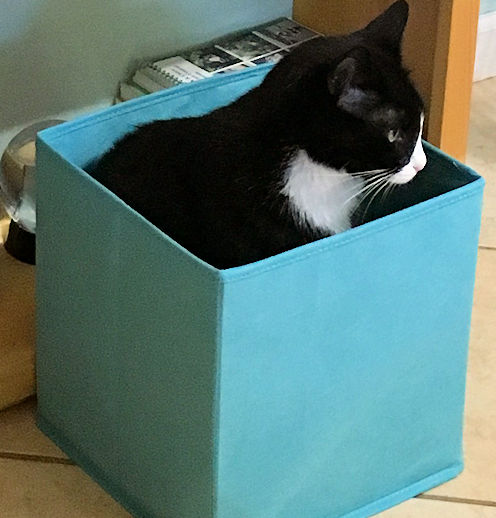
Bear with me. I’m trying to see why I couldn’t add a title of any sort to my Memorial Day image. So, here’s an experimental image, instead. This is Harry Blackstone Copperfield Dresden the Wizard Cat. He won’t mind if I experiment with him. He’s already sulking over our new kittens! 🙂
Share this:

Question
Does anyone know why I can’t add a title to my posts today? In either of WordPress’s editors? I’m getting very frustrated!
NOTE: Okay, this one worked, so maybe it has to do with the image I posted. Perhaps I’ll try another. GAH. I hate it when my tech doesn’t work!!
 The Write Stuff