Author Interview: Marcia Meara

Check out the fun interview I did with Caitlin Stern today!

Caitlin Stern's avatarcaitlinsternwrites

My Writer Lady friend, Marcia Meara, is here to talk about her most recent book, A Boy Named Rabbit (make sure you read book 1 first), a story about love, family, and redemption, set in the beautiful mountains of North Carolina. And she’s having a giveaway this weekend. Let’s hear it for free books!

Marcia Meara is the author of three novels:

 Wake-Robin Ridge Series:

Wake-Robin Ridge A Boy Named Rabbit

 Riverbend Series:

Swamp Ghosts;  Hunter (due out in early fall 2015)

~   *   ~   *   ~   *   ~   *   ~

“The extraordinary little boy called Rabbit has the power to change the world for everyone he meets, and the resourcefulness to save himself from the one person his grandparents had hoped would never find him. His dangerous and bittersweet journey will touch you in unexpected ways, and once you’ve let…

View original post 676 more words

Tools for thought… or food for your toolbox… or something like that

image By Ned Hickson
A while back, I talked about three of the most important tools a writer wields when it comes to establishing their voice. Does anyone remember what they were?

For the sake of time, let’s just assume all of you remember what those tools were and, in a series of uncontrollable outbursts, begin shouting out:

TIMING!

TRUTHFULNESS!

and…

CUERVO!

No, the third tool is RELATIVITY — not Cuervo. Even though I think we can all agree Cuervo does have a way of making even the most abstract things seem relevant.

In this case, however, Relativity means ensuring the reader can relate to what we’re writing about. This is especially true when it comes to personal experience and family anecdotes. For example, that hilarious story about how Aunt Frida got mad and stomped through the garden won’t be nearly as entertaining to readers as it is to you unless, like you, they already know Aunt Frida was a mule. I realize that’s an overstatement, but unless you take time to lay the foundation of your story in a way that involves the reader, they will likely sit down and refuse to follow.

As for Timing and Truth, they’re pretty self-explanatory. In a nutshell, Timing is the use of punctuation and sentence structure to create a rhythm that enhances your storytelling, while Truth is exactly that: writing about what you know and, whenever necessary, doing the research to educate yourself about a topic before presenting it to your readers. For example, when I wrote about the first wedding proposal in space, I prepared myself by going through NASA’s extensive astronaut training program.

OK, fine. But I did do my research before writing about how awful the food would be at a space wedding, with puree’d roast beef and cedar-plank salmon from a tube, and how throwing rice would be a big mistake since, thanks to zero gravity, the wedding party would spend the rest of the evening surrounded by clouds of floating rice. And how do you spike the punch when it’s served in a squeeze box?

Now that we’ve re-summarized those first three important writing tools, here are two more:

Vocabulary
Economy

Vocabulary seems straight forward, right? A knowledge of words. But more important than knowing a lot of words — or big words — is knowing the perfect words. Think of it as the care you put into choosing the words to express your love for someone. Or quite possibly while trying to get out of a speeding ticket. In either case, there’s a lot riding on your word selection. One wrong word, or too many of them, and you could find yourself in hand cuffs. (I realize for some of you that might be the objective in the first case, but just play along.)

Let’s take a look at the last sentence a few paragraphs ago, about educating myself at NASA. What if I had written it like this:

…when I wrote my column on the first person to propose in space a while ago, I learned about the subject by participating in the astronaut program at NASA.

Here’s what I went with:
…when I wrote about the first wedding proposal in space, I prepared myself by going through NASA’s extensive astronaut training program.

The breakdown:
1) “…when I wrote my column” versus “…when I wrote about…” In the second instance, I’m assuming you already know it’s “my column.” I wanted to avoid another “me” reference and also improve the flow.

2) “…on the first person to propose in space a while ago…” versus “…the first wedding proposal in space…” We all know it’s a person who is proposing since there has been no reference to aliens or talking animals, so I didn’t feel it was necessary to refer to “the first person” proposing. Instead, I went with “first wedding proposal in space” since the proposal is the subject. Now, if alien or talking dog proposals were common place, then yes, I would make sure to clarify it was a person proposing. Hopefully to another person and not a talking dog. And I chose to completely drop “a while ago” because it really doesn’t matter when I wrote it, and trimming it cleans up the sentence.

3) “…I learned about the subject by participating in the astronaut program at NASA” versus “…I prepared myself by going through NASA’s extensive astronaut training program.” To get to the action of this sentence, I dropped “learned about” and “by participating in” and combined it into “preparing myself by going through,” then moved “NASA” closer to the action as a way to bring those two images together much faster. From that point, I built on the satire by describing what I did as “extensive astronaut training.”

Are you having flashbacks from eighth-grade sentence diagramming? Sorry about that. I hope the breakdown was helpful in offering at least some insight into the thought process of choosing the right words or, if nothing else, why my daughter won’t let me anywhere near her book reports.

Our last writing tool, Economy, is directly related to Vocabulary because choosing the right word can often mean fewer words. Economy is big part of the revision process, when you take a hard look at what can be eliminated from the literary structure you have created while maintaining its integrity. While this isn’t as important in novel writing, it is critical for columnists, short story writers and journalists. Every story requires being as concise as possible by using an economy of words. Ironically, as I say this, I just realized the current word count makes this my longest post ever.

Fortunately, Hypocrisy isn’t one of the tools we will be talking about today.

Alfred Hitchcock once said everything in a movie must have purpose and propel the story. If it doesn’t, it needs to be eliminated — which could explain the number of murders in his films. In short, when it comes to Economy, think of Alfred Hitchcock.

But probably not while you’re in the shower.

_____________________________________________________________________________________________________

imageNed Hickson is a syndicated columnist with News Media Corporation. His first book, Humor at the Speed of Life, is available from Port Hole Publications.)

50 Ways To Murder Your Fictional Characters

While I’m neck deep in other things I thought I’d share a popular post of mine. You can get the full .pdf by clicking the image or following the link.

Enjoy!

Sue Coletta's avatarCrime Fiction Writer Sue Coletta

The time has finally arrived!

50WaysToMurder with caption

I’ve been working on this 4000+ word booklet, 50 Ways To Murder Your Fictional Characters for weeks and it’s finally done. In it you’ll find different murder methods with commentary on how your killer can use the technique effectively, and what to look out for when he does. I’ve also shared details, like how the detective can catch the killer if he isn’t careful.

So you can better understand the great resource you’ll have with 50 Ways To Murder Your Fictional Characters I’ll give you a sneak peek…

Stabstab

Killers who know their victims often like the up-close and personal touch. The killer can look his victim in the eyes and watch the life drain from her body. Now, you don’t need to use a knife. Be creative. A pair of scissors, a toothbrush melted and filed down, even a pen could turn into a…

View original post 1,014 more words

The poet speaks

A lovely interview of Callum McLaughlin. I enjoyed it, Callum, and wish you great success with Seeking Solace!

Kay Kauffman's avatarSuddenly they all died. The end.

callumWith me today is Callum McLaughlin, author of The VesselFalse Awakening, and Seeking Solace.  He’s graciously agreed to talk poetry with me, and I hope you’ll have as much fun reading about his work as I did. 🙂

KK: So, how long have you been writing poetry?

CM: I’ve been writing in virtually every capacity since childhood. My earliest memory specifically associated with poetry is when I won a school competition aged 10 and I’ve been interested in the art form ever since. The poems included in Seeking Solace were written throughout the last couple of years, which is when I’d say I started really taking it seriously and falling more and more in love with it.

KK: We have something in common there – I wrote my first poem at age ten for a summer homework assignment. 🙂  What got you interested in poetry?

View original post 577 more words

Interview with Jen Rasmussen

interviewsBanner

Jen Rasmussen, one of our wonderful members here at The Write Stuff, has posted an interview with me this morning. Hope some of you will check it out, and perhaps consider doing one with Jen, yourself. It was great fun!  My Interview with Jen Rasmussen  And if you have an interview you’ve done and would like to share, please feel free to do so. (Contact me directly, if you need to.)

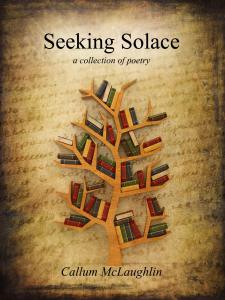
Seeking Solace | Cover Reveal

Seeking Solace

I recently shared the cover art for my upcoming poetry collection, Seeking Solace. I’m incredibly excited to see this project coming to fruition and appreciate wholeheartedly all the support I’ve had thus far.

Callum McLaughlin's avatarCallum McLaughlin

Seeking Solace Seeking Solace

I’m incredibly excited to be able to share the cover for my newest book and first poetry collection, Seeking Solace. I’m really happy with how it turned out and hope you like it.

The book should be available in both Kindle and paperback formats within the coming week or so – I will of course keep you updated here on my blog.

It’s been a long time in the making and as much as I’m looking forward to having a neat, documented way to look back at a significant portion of my poems for my own benefit, I can’t wait to also share it with anyone out there kind enough to spare their time to read what I have to say.

View original post

A few things writers and superheroes have in common

image By Ned Hickson
As I’m sure you’ve already gathered from the title of this post, yes: I look really great in tights and a cape. At least on paper. In fact, all writers do. However, the power writers wield with words (such as using four “w” words in a row) — whether (make that five) for inspiration, contemplation or revulsion — got me thinking about the things writers and superheroes have in common. And I don’t just mean how often people confuse me for Chris Hemsworth. At least on paper.

To begin with, like any superhero, every writer experiences a transformation process before going into action. Sure, it doesn’t involve hastily peeling your clothes off to reveal a fancy costume (depending on your genre and dedication to research), or a blinding flash that changes you from street clothes to colorful tights — something for this reporters in my newsroom are extremely thankful. However, while not as dramatic, there is a transformation that takes place as a writer’s body language, facial expression and overall focus shifts from “earthbound” to “alternate universe.” Ever see a photo of yourself immersed deep in writer mode? It’s like looking at someone else. Which, in my case, is often mistaken for Chris Hemsworth. I mentioned the alternate universe part, right?

Speaking of which, like Thor’s mighty hammer, Spiderman’s web-shooters, Green Lantern’s ring or Hulk’s endless supply of purple pants, writers wield their own super-powered tool for getting the job done. I’m talking, of course, about a cranky editor. Haha! Just kidding! That will be next week’s NWOW topic: Things Editors and Super Villains Have in Common. Naturally, the super-powered tool I was referring to is the computer or tablet a writer wields as a defender of the written word. I realize some of you might be saying:

“I don’t write on a computer, so that’s not entirely accurate.”

And I suppose you’re right. The again, Moses was technically the first person to use a tablet, but let’s not split hairs.

Another characteristic that writers and superheroes share is having their powers thrust upon them. Like any superhero, a writer discovers their gift and realizes “With great power comes great responsibility to pick up a second job.” There’s no avoiding who your are, the powers you have been given, or finding the best way to use them. Bruce Wayne, Peter Parker, Jean Grey, Bruce Banner, Clark Kent — they all tried to deny their powers and the responsibilities they carried as a result of what fate had bestowed upon them. In each case, they came to realize they were only living within a shadow of who they were meant to be. The same goes for writers; they return to action because they can’t stop being writers.

So, does all of this mean you should should expect a call from The Justice League or S.H.I.E.L.D.?

Probably not. But as a writer, rest assured you are in the company of some really super friends.

(P.S. This one was for you, Marcia!)

_______________________________________________________________

image Ned Hickson is a syndicated columnist with News Media Corporation. His first book, Humor at the Speed of Life, is available from Port Hole Publications, Amazon.com or Barnes & Noble. He ic currently working on his next book, Ned’s Nickel’s Worth on Writing: Pearls of Writing Wisdom from 16 Years as a Shucking Columnist.

Resource Menu

sharing

Finally getting back to setting up our Resources Menu at the top of the page. I’ve listed several links to sites that will promote your books for you, some free, and some for a nominal fee. It varies from site to site, as do the requirements for acceptance. Be sure to read carefully so that what you submit will be accepted.  I’ve gleaned these from various posts, and hope I haven’t missed any. Would  like to have a great selection for us to choose from. And if you have links to more sites like these, please let me know. I’ll be happy to list them, as well.

Getting to Know You

getting-to-know-you-200x200

Since it’s been a slow week, I thought maybe I’d start a new series of posts aimed at getting to know each other better. My dream is that this site will not only become a great resource for you all, but a place to foster friendships among writers. To that aim, I’m throwing out my first Getting To Know You question. I’d like to get a feel for the group as a whole, so I’d like to know what genre you usually write, and which genres you usually prefer to read. Hope you’ll take a minute to reply. I’ll go first.

1. I write Romantic Suspense, some of which has some paranormal aspects. (Ghosts, The Sight, Appalachian/Celtic legends like the Black Dog), and some which does not…but which might have even scarier aspects, considering the shocking cruelty of human nature, from time to time.

2. I read everything, but in recent years have been particularly enjoying all the great Urban Fantasy out here. My favorite UF series is The Dresden Files. My favorite authors, overall,  include Daphne du Maurier (NOT a UF writer, for those too young to know her work), Marisa de los Santos for sheer lyrical romance, Dean Koontz for the truly scary, Edgar Allan Poe, for the infinitely macabre, Lee Child, for creating the force of nature known as Jack Reacher, Terry Pratchett for making me laugh so hard at the Wee Free Men, Neil Gaiman for a delicious Creep Factor, Maggie Stiefvater for making YA disturbingly dark and profound, and Jim Butcher, Ilona Andrews, Kim Harrison, Rob Thurman, Rachel Caine, and many, many more, for making Urban Fantasy so much fun. And oh yeah, Larry Correia, for making it so very, very kick-ass!

Your turn. Share as much as you like. You’re among friends!

Greetings!

Thank you, Marcia, for inviting me to be a part of your wonderful blog site.

A little info on myself. My name is Louis, formally Louis K. Lowy. A former firefighter, I sometimes feel as if I jumped from the fire into the frying pan when I took up writing as a means to fulfill my passion to create characters and worlds that I longed to inhabit or longed to avoid. I also play the bass guitar, but not as frequently as in the past–somethings gotta give when you take up writing.

I’m a recipient of a State of Florida Individual Artist Fellowship, my work has appeared in, among others, New Plains Review, The MacGuffin Magazine, The Chaffey Review, and the anthology Everything Is Broken. My first published novel, Die Laughing, is a humorously dark sci-fi adventure set in the 1950s.

My forthcoming novel, Pedal, is due to be released in the spring. It’s the story of a 49-year-old elementary school music teacher who is fired and struggles to reclaim her life back through bicycle racing. My third novel—Anatomy of A Humachine: Book 1 To Dream—is another sci-fi story, though of a complete different nature. It’s scheduled for publication in March 2016.

I’m looking forward to sharing insights, resources, and some plain, good ol’ conversation.

My website is www.louisklowy.com

Twitter @louisklowy

Facebook/Louis K Lowy

Pinterest/louisklowy