#Twitter Work-Out from 30 mins A Day #Bloggers #Writers #Authors @rosieamber1

TWITTER Work-out From just 30 minutes a day.

Recently I’ve been working hard to increase my readership and Twitter following, here is what has been working for me.

Amber rose

Blog – When you write a blog post add Hashtags and Twitter @ Handles in the title, it makes them SUPER easy to share.

Twitter– When you write your tweets always use Hashtags and Twitter Handles.

Search for an author/guest twitter Handle on Twitter, or Goodreads (under their Author info) or Amazon bio.

TIP – Authors, make your Twitter handle easy to find, make it as close to your pen-name as possible, make sure you have a profile on Goodreads and Amazon (Profiles need to be added to each different Amazon site you wish to be found on)

SHARING IS CARING – Building your audience and your platform requires SHARING. Make every tweet and share WORK. ADD Hashtags and Twitter handles to ALL the posts YOU share. YES is takes a little effort but get into a routine and it becomes easier. Others will then share your Tweets. In RETURN you must start sharing more, aim for 10-20 shares each time you go on social media.

Tip – when possible work from a computer where you can have several tabs open at once then you can search Twitter or Goodreads for the info you need easily.

One step further – For everyone who directly shares your post or tweet on twitter, go share one of theirs, often they have a tweet pinned to the top of their profile page, share this one.

Pinned Tweets – Keep your profile pinned tweet FRESH – seeing a pin with a date which is six months old is boring. Change them weekly at least.

Sunday

Post on a Sunday and make sure your blog title contains the Hashtag #SundayBlogShare this is a big blog share day and gets lots of views. Tweet your post with the Hashtag, re-share other posts you have done throughout the week and add this Hashtag too.

Remember to search and share 10- 20 other posts you like which use the Hashtag. Twitter is all about the Re-Tweet.

Tip – follow those who share your post and follow those whose new posts you choose to share

#WeekendBlogHop #WeekendBlogShare are also useful.
rosie gardening 02 facebook wp

Monday

Monday posts can use the #MondayBlogs if your post is about writing, BUT you are asked not to use it for any book promotion, be it reviews, cover reveals offers etc

Tuesday

Use #TuesdayBookBlog (created by the Rosie’s Book Review Team) for all your Tuesday BLOG posts about books, all we ask is that it isn’t a straight link to the Amazon page, it must be from a blog post which includes more than the book cover, book description and buying links. It can be reviews, interviews, guest posts etc. We help share relevant posts.

Wednesday

Use #wwwblogs (Women writing Wednesday) for blog posts written or about women.

Thursday

Thursday can be a quiet day, I use #IndieThursday for book reviews from Indie authors.

Friday

I use #FridayReads to share books I’m reading, have read or am going to read, plus I share book posts from others and add this hashtag.

Saturday

Saturdays can be used for #ArchiveDay any post you’ve posted previously can be re-shared using this Hashtag today.

Also #WeekendBlogHop and #WeekendBlogShare can be used and shared from today.

Your time is valuable – make it work, don’t get bogged down and distracted by non-relevant posts and Tweets in your 30 min work-out. Make a note of any of interest and return later in your leisure time.

Find me @rosieamber1

Useful Tips for the author, writer and blogger in you #WriterTips

Over on my blog, I recently ran a series of posts dedicated to helping others, mainly from a reader’s point of view.  Check out the links of ones which interest you.

Rosie's Notebook


May 6th 2015 – Checking your WordPress is linked to your Twitter helps others share your posts http://wp.me/p2Eu3u-7L2

May 13th 2015 – Writer’s Craft books by Rayne Hall full of REALLY useful tips http://wp.me/p2Eu3u-7Ma

May 20th 2015 – Hyperlinks, Short links and Linkys http://wp.me/p2Eu3u-7Rl

May 27th 2015 – Making your post titles easy to share on Twitter to maximise views. http://wp.me/p2Eu3u-7SA

June 17th 2015 – Creating Twitter pics that fit http://wp.me/p2Eu3u-7Y4

June 24th 2015 – Creating a slideshow on WordPress http://wp.me/p2Eu3u-7Yo

July 1st 2015 – Getting the most out of Google+ posts http://wp.me/p2Eu3u-7YM

July 8th 2015 – Automated Tweets, LOVE ‘EM or HATE ‘EM? make use of them http://wp.me/p2Eu3u-7Za

July 15th 2015 – What’s Your Book Genre? http://wp.me/p2Eu3u-84S

July 22nd 2015 – Should you write dreams into your work? http://wp.me/p2Eu3u-84Q

July 29th 2015 – What can I read in the first 10% of your book? http://wp.me/p2Eu3u-84W

August 5th 2015 – Dialogue – he/she said http://wp.me/p2Eu3u-87T

August 12th 2015 – Creating Twitter Lists – http://wp.me/p2Eu3u-8ck

August 19th 2015 – Making best use of your Twitter “Thank-You” http://wp.me/p2Eu3u-8cn

POWER those blog post titles for social media sharing #BookBloggers #Writers

Amber rose

Twitter is a great place to share blog posts, with just a few easy steps your tweet will work better.

Everyday twitter feeds are full of tweets which are empty of hashtags, pictures and purpose. These get passed-over by most readers.

First make your blog title work. If you add all the Hashtags and Twitter Handles of those your post is about in your title, sharing is easier.

If you use WordPress, lots of blog readers share via the sharing buttons at the bottom of your post, 2 clicks and they have shared and moved on. They won’t add anything extra, so provide all they need to begin with.

Here is an example of a weak blog title, “Twitter Tips”

To this; Add the WOW factor to your tweets, try a strong word like; NEW, WONDERFUL, BRILLIANT or KICK_ASS and add a hashtag such as #TwitterTip #Amwriting. Think of other strong words, but be careful don’t overuse them in every tweet.

Change this; “Diana by L Card”

To this; WONDERFUL #Bookreview DIANA by @LCard A modern day Goddess? Or #Greek #Tragedy? (and add you blog post link)

There are others who personalise each tweet, it takes effort to “Live” tweet but they spend time thinking about how to present blog posts on Twitter, particularly on the hashtag days, with a catchy headline that will make people click, and pictures if relevant – you need to leave 23 characters for the picture. With books, you need to say what it’s ABOUT either in a few relevant words or some genre Hashtags.

I believe every tweet needs to work hard for you with a link back to a blog post or a page or Goodreads/Amazon link to a book. Even if you are thanking someone for sharing your post, get a link in for instance “Thanks for sharing the review of my book (Link)”

Add a .(full stop) before the name of the @person like this .@person and others can eavesdrop on your conversation and might click on your link.

Make use of the new Twitter facility to “add a comment” when re-tweating and you can make sure there is a link to your post or book.

Pictures on Twitter get much more attention than a post with just words. Find out how to add a picture that doesn’t cut off half your book cover. I use “paint” I set up a template 1024 pixels wide by 512 high and fill it with pictures and words, getting away with lots more than 140 characters because my picture only takes up 23 characters of space. Do make sure of copyright rule when using pictures.

Finally here is a great article for those of you who are tempted to use a re-tweeting service,

http://terrytyler59.blogspot.co.uk/2014/02/robots-retweeting-robots-to-no-one.html

No way am I an expert on Twitter but I love learning and sharing what I find, what great tips can you pass on?

Forget that image of Bruce Jenner and start writing

write write write copy By Ned Hickson

I’m going to open with a simple truth:

Step one to being a writer: Write!

That advice seems pretty straight forward. The kind of obvious straight forwardness that carries you with complete confidence toe-first into a brick. Like most advice we’re given, the wisdom behind it is simple; the problem comes in the execution.

And while there are countless books out there offering tips on everything from how to get inspired and avoid writer’s block to the kinds of foods that promote creative thinking (which, judging from what I read, you will be doing mostly while on the commode), all of those books essentially come down to one universal truth:

Nothing promotes and stimulates writing better than…

You guessed it:

Excessive drinking.

But let’s suppose you don’t want to become an alcoholic? Does that mean you’re not truly committed to being a writer? Could it jeopardize your dream of becoming a novelist, columnist, short story writer or inner city tagger?

Let me answer those questions by answering the single most important question you’re probably asking yourself right now:

Has HE been drinking?

Of course not. At least not yet.

I have four children, remember?

Regardless, my point is that the other universal truth to writing is this:

The fastest way to jumpstart the writing process is to put your fingers to the keyboard and just start writing.

I purposely sat down to write this post without any preparation. I did this to 1) challenge myself, and 2) because I really had no idea what I was going to write anyway, so it seemed like a good plan. To that end, I started putting words on the screen.

Did I take a wrong turn or two?

Absolutely.

But the beauty of writing is that — like the Kardashians — nothing is permanent, and you can easily fix imperfections by injecting or removing the things you don’t like. And many times, what you thought was going to be a wrong turn or dead end leads to a doorway you hadn’t expected — or at least a window you can jump out of.

Especially if you walk in on Bruce Jenner getting a body wax.

OK, in an effort to move on quickly from that image, how about a show of hands from anyone who has ever found themselves staring at a blank screen with their fingers poised over the keyboard, even if they have applied my advice?

Seriously, I’m watching, so get them up.

I ask this because, in spite of my advice, there are still times when you need to jump-start your jump start.

Something I’ve discovered from writing a daily blog is that the interaction with other writers on blogs and websites — whether replying to a comment or leaving one on another writer’s site — is a great way to grease the creative process.

… Great, just when we had gotten past that image of Bruce Jenner…

Sorry, everyone.

Anyway, starting your day with some social interaction at your computer not only gets you into writing position at the keyboard, but can get the creative process started by reading others’ work, getting inspired by it, and formulating responses or comments in a creative frame of mind.

Warning: Set a time limit!

As I can attest, it’s easy to lose track of time, or become so caught up in commenting and replying that your momentum is carried in the wrong direction. I usually give myself until I finish my first cup of coffee.

Which, by the way, I have switched from the giant 128-ounce Big Gulp size to a standard mug. Not only because I was using it as an excuse to blog until noon, but also because I discovered my bladder only holds 120 ounces.

Bottom line, once you’ve established a writing routine, solidify it by putting words on the page — whether for your actual writing project or during a social network warm-up — each time you sit down at the keyboard. Before you know it, your writing will be waiting for you in your mental queue at the same time each day.

Assuming you can get the image of Bruce Jenner out of your mind.

Again, my apologies for that.

_______________________________________________________________

image

Ned Hickson is a syndicated columnist with News Media Corporation. His first book, Humor at the Speed of Life, is available from Port Hole Publications, Amazon.com or Barnes & Noble.

When to go wide

KDP Select

One of the thorniest decisions in self-publishing today is — enroll in Amazon’s KDP Select program (which requires that your book remains exclusive to Amazon) or go wide and try out all of the different publishers. So far, I’ve used the first approach, which has lots of benefits:

  • 5 free days or 1 countdown deal every three months, which (if done right) can really increase your exposure to new readers while also keeping the rank of your book high
  • Eligibility for being borrowed via Kindle Unlimited, which helps with exposure and can also increase your income (although the amount you get per borrow has been dwindling rapidly in recent months, from $2 to $1.50 to $1.33 and some authors report lower overall income as a result)
  • Keeping all of your eggs in one basket means that all readers have to go to Amazon to buy your book, which means your book is likely to have a higher rank than if some of your readers bought elsewhere
  • Simplicity, with only one file to upload, one system to learn, etc.

On the other hand, you’re obviously eliminating the possibility of making sales on other retailers if you go all-in with Amazon. And, while the majority of indie authors find that Amazon is the much easier nut to crack and thus that they make most of their money on Amazon even if they go wide, you might just be the exception to that rule. I hear rumblings now and then of authors who sell more books on non-Amazon sites, particularly All Romance Ebooks (if you write romance), Google Play (for children’s books and perhaps some other genres), and Barnes and Noble (for erotica and romance).

And then there are international sales. While Amazon does have branches nearly worldwide, if you appeal to a Canadian market, you’re shooting yourself in the foot by staying out of Kobo, the dominant Canadian ebook retailer. Similarly, iBooks and Tolino are reported to be big in Germany, where Amazon only has 40% of the ebook market according to Joanna Penn. Of course, once you start branching out beyond English-dominant countries, you also have to start considering whether it’s worthwhile to get your books translated, which is fodder for another post. But 7% of my Amazon income last month came from outside the U.S., making me wonder if I could turn a couple of hundred dollars a month into much more if I learned to leverage other platforms.

Burgling the DragonThe final point in favor of going wide with your book distribution is perma-free. The accepted method of getting a book listed for free on Amazon is to list it through Smashwords or Draft2Digital (both of which distribute to many of the non-Amazon retailers), setting the book at a price of $0 through the distributor and waiting for Amazon to price match. But if you’re going to have the first book in your series up for free on other platforms while keeping the other books in the series only on Amazon, you’re spitting in reader’s faces. I know that if I was a nook user, if I downloaded and loved a free book, and then I found out that I’d have to change devices in order to read the rest of the series, I wouldn’t be very pleased.

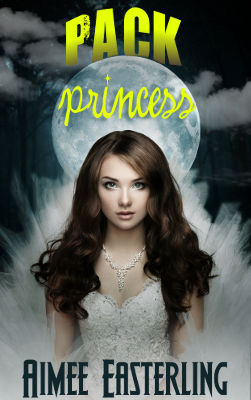
Which is probably why most of the self-publishing heavy-hitters recommend going wide once you have more than one or two books in your arsenal. I thought long and hard about that decision as I prepared to launch Pack Princess, the second book in my Wolf Rampant series, and I’ve decided to stay in KDP for now…at least until I publish book three. At that point, I might decide that making the first book perma-free is the best way to get exposure for the growing series, making it worthwhile to pull out of KDP Select and explore other retailers.

In the meantime, I’d love to hear your thoughts on the topic. Are you in KDP Select? Why or why not? And, if you’re still reading, I hope you’ll take a minute to snag my middle-readers fantasy novel, Burgling the Dragon, which is free today. (Gotta take advantage of those KDP Select benefits!)

A True NaNoWriMo Story

photo-327

When I lived in France, November was a special month for me.

November was the literary season with awards and prizes.

November was the arrival of the Beaujolais Nouveau, a young wine that you don’t keep in your cellar but drink in the weeks that follow.

November was also my birthday month.

When I moved to the United States I adapted and adopted new celebrations and traditions.

I was happy that Thanksgiving happened to be in November.

Many stores now carry also the French Beaujolais Nouveau.

And I could participate to the infamous NaNoWriMo.

I have mixed feelings about this crazy race.

  • Seriously, 50 000 words sound a lot.
  • Honestly, who writes every day?
  • Really, the idea of a new draft is tempting.
  • Definitely, pressure isn’t a bad thing for writers.

So, am I doing NaNoWriMo 2014?

I am and I am not.

I started a new YA story.

I won’t have 50 000 words by the end of the month but I have the beginning and the ending and enough elements to know that it’s a manuscript that I will finish.

How do I know that I can turn this bud of a draft into a completed manuscript?

I have been a NaNoWriMo participant in the past. Three times I have clocked my 50 000 words.

One of the drafts became my recently published Middle Grade novel Chronicles From Château Moines.

photo-331

One of the reasons I know that I won’t get 50 000 words is also because of this recent publication.

Writing is one thing.

Marketing is another.

So while I would like to Write new Stuff, I’m actually working at promoting a NaNoWriMo baby, while plotting the birth of a new one. Because you just never know where 50 000 words will take you.

Good luck brave NaNoWriMo people!

Write one, edit two

Despite the Billionaire's RichesMy copy editor and beta readers tell me I write clean. Ha! What they don’t know is that I’m an obsessive editor who tends to go over every chapter with a fine-tooth comb approximately three (sometimes four or five) times before I let anyone else see what I’ve written.

The first editing pass is meant to clean up my far-too-quickly-written prose. I write the way I read — fast — which means that I leave out connecting words, explanatory sentences, and sometimes whole paragraphs. It’s all in my head — can’t you see it too? So, the first time I edit a chapter, the task takes nearly as long as it took to write the chapter in the first place, and I tend to add about 10 – 20% to the length in the process. (Yes, this makes me a putter-inner instead of a taker-outer). The result is pretty much like a normal writer’s first draft — still rough, but at least now the sentences flow and make sense.

For the last couple of novels, I’ve been editing the previous day’s chapter before starting to write the current day’s chapter, which works well since I’ve only 20% forgotten what I meant to say by that point. In a perfect world, I edit before/during/after breakfast, then walk the dog to figure out what I’m writing about next, and finally settle in for a relaxing morning of writing (my reward for pushing through the daily edit). But, with my current work in progress, I’ve been trying out a new method, where I edit the previous two days’ chapters before starting to write. This does result in cleaner work (and will hopefully mean that the agonizing first full edit will go more smoothly), but the technique has the unfortunate side effect of giving the dog time to go off and start hunting snakes before I get around to starting her walk.

Pack PrincessEditing round three will come once the first draft is fully completed. This is where I read the whole book through at once, fixing big-picture problems and once again cleaning up the flow. Then, after getting corrections back from the copy editor, I read through one more time on KDP’s previewer window just in case there’s something my nearly-as-anal-as-me editor missed, and then I finally let the book go out into the world alone.

While I’m still on the fence about the write one, edit two method, I highly recommend write one, edit one. A writing book I read recently reminded me that editing is a learned skill just like writing and that we get better at it by practicing every day. Maybe in a few years, I’ll be fast enough to get all of my editing done before my dog gives up hope and starts rustling up her own breakfast?

(As a side note, how do you like the new cover for my upcoming novel, Pack Princess? I decided to outsource this one to a pro, and I love the result! But it can still be tweaked, so if you hate it, please let me know.)

The Best Writing Tips

One of my most popular blog posts included quotations by famous authors, so I thought I’d share them again on The Write Stuff. The original post (with pictures and more text) can be found here: Writing Tips

“You can’t wait for inspiration. You have to go after it with a club.” Jack London

“Don’t try to figure out what other people want to hear from you; figure out what you have to say. It’s the one and only thing you have to offer.” Barbara Kingsolver

“If you want to be a writer you must do two things above all others: read a lot and write a lot.” Stephen King

“Beginning writers must appreciate the prerequisites if they hope to become writers. You pay your dues—which takes years.” Alex Haley

“Writing a novel is like driving a car at night. You can see only as far as your headlights, but you can make the whole trip that way.” E.L. Doctorow

“Get it down. Take chances. It may be bad, but it’s the only way you can do anything really good.” William Faulkner

“You must want to enough. Enough to take all the rejections, enough to pay the price of disappointment and discouragement while you are learning. Like any other artist you must learn your craft—then you can add all the genius you like.” Phyllis A. Whitney

“Not that the story need be long, but it will take a long while to make it short.” Henry David Thoreau

“My aim is to put down what I see and what I feel in the best and simplest way I can tell it.” Ernest Hemingway

“I write as straight as I can, just as I walk as straight as I can, because that is the best way to get there.” H.G. Wells

“Good writers are those who keep the language efficient. That is to say, keep it accurate, keep it clear.” Ezra Pound

“No tears in the writer, no tears in the reader. No surprise in the writer, no surprise in the reader.”
Robert Frost

“Good writing is supposed to evoke sensation in the reader—not the fact that it is raining, but the feeling of being rained upon.” E.L. Doctorow

“As for the adjective, when in doubt leave it out.” Mark Twain

“Don’t tell me the moon is shining; show me the glint of light on broken glass.” Anton Chekhov

“Every character should want something, even if it is only a glass of water. Every sentence must do one of two things—reveal character or advance the action.” Kurt Vonnegut

“Cut out all those exclamation marks. An exclamation mark is like laughing at your own joke.” F. Scott Fitzgerald

“If you are using dialogue—say it aloud as you write it. Only then will it have the sound of speech.” John Steinbeck

“There is no satisfactory explanation of style, no infallible guide to good writing, no assurance that a person who thinks clearly will be able to write clearly, no key that unlocks the door, no inflexible rules by which the young writer may steer his course. He will often find himself steering by stars that are disturbingly in motion.” E. B. White

“When you get in a tight place & everything goes against you, till it seems you could not hold on a minute longer, never give up then, for that is just the place & time that the tide will turn.”  Harriet Beecher Stowe

“Shut down the internet, set a timer for 15 minutes, and write. Hopefully, when the timer goes off, you will be involved in your story enough to keep going.” Marcia Strykowski

Green Light Lady

fall-smoky-mountain-colors-leaves

Just wanted to share this link with you today. Green Light Lady is a gardener, poet, and budding novelist. Her blog is always inspirational and uplifting, and her poetry and photos are lovely. She has some very good advice for those of us who spend far too many hours sitting at our computers, writing. I’m going to implement it today! Enjoy! (Be sure to keep scrolling and read the entire post.)

Red October In My Garden