My Featured Post on Story Empire today – #WhyWriteWrong? –

Hope some of you guys will stop by Story Empire today (in between cookouts and other celebrations) and check out my post in my #WhyWriteWrong? series. Would love to see you there, as I explain the correct usage of a couple more words I often see misused. Also, please consider passing the post along in case others might find it helpful, too. THANKS! And HAPPY MEMORIAL DAY!

#WhyWriteWrong on Story Empire


Smorgasbord Blog Magazine Weekly Round Up – 17th – 23rd May 2020 – Rainbow Fairies, Sound of Music, Books, Guests and Funnies

An extra-fantastic Weekly Round Up from Sally Cronin on her Smorgasbord blog today! Stop by and check it out. (Some really fun videos, too.) And then, if you would, please consider passing it along so others can enjoy it, too. Thanks so much, and thanks to Sally! Rock on, my friend! 🙂 ❤

Smorgasbord Book Reviews – #Fantasy #Paranormal – Viral Blues by C.S. Boyack

Looking for a fun and unusual read? Check out Sally Cronin’s review of C. S. Boyack’s Viral Blues on her Smorgasbord blog today. If the review and blurb don’t rouse your curiosity, I can’t imagine what would! And please consider passing this along on your social media so others can learn about it, too. Thanks, and thanks to Sally as well, because, you know … she ROCKS, and all. 😀 ❤

How to Publish with KDP: Part Nine

In her 9th post on How To Publish with KDP, Harmony Kent takes a close look at the sometimes intimidating KDP Dashboard. This is one of the most thorough and helpful posts I’ve seen explaining just what’s what on that page, I highly recommend stopping by Story Empire today to check it out, especially if you are new to self-publishing. And then, please consider passing it along so others can learn, too, thanks! And thanks to Harmony for a terrific and helpful series! 🙂 ❤

Harmony Kent's avatarStory Empire

Hello SErs. Harmony here.  As promised, here is  part nine in the post series dedicated to taking a step-by-step look at how to get your finished manuscript from your computer and on sale on Amazon in both ebook and paperback.

If you’d like to take a look back at the previous posts in this series, please click on the links at the end of this post.

So, here’s Part Nine: An overview of your KDP Dashboard.

So, after my last post ( HERE), you now have a KDP account set up. Today, we’re taking a look at what your KDP dashboard looks like, and what the different options offer. Below is an image of your dashboard area >


At the very top of the page, you will see four options … Your Account, which we looked at in part eight…

View original post 586 more words

Smorgasbord Cafe and Bookstore – Author Updates -#Reviews – #Thriller Paulette Mahurin, #Fantasy Marcia Meara, #Mystery J. A. Newman

So excited to find my 4th Wake-Robin Ridge book, The Light, included in Sally Cronin’s Author Updates #Reviews post today, along with authors Paulette Mahurin and J. A. Newman. Hope you’ll stop by and check out the reviews and blurbs for all three of us, and help us spread the word by sharing the post with the Immediate World. I’m thrilled with what Deborah had to say about Rabbit’s latest adventures, and I now have two new-to-me writers to check out, as well. Thanks everyone, and thanks to Sally for all she does to promote her fellow writers. (You do know she ROCKS, right?) 😀 ❤

EIGHT, Count ‘Em, EIGHT More Weeks Until #PeaceTalks is Released!!

It’s getting closer, folks, and I’m getting more and more eager! Of course, you do realize if this book turns out to be lousy, I’ll be the most disappointed person on the planet! 😯 But Jim Butcher’s writing hasn’t let me down yet, even if I have been driven half mad by this long wait. (Can we say it all together, Boys and Girls? SIX YEARS!! Ahem. Thanks.)

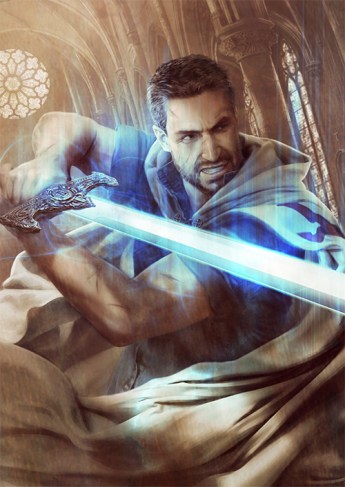
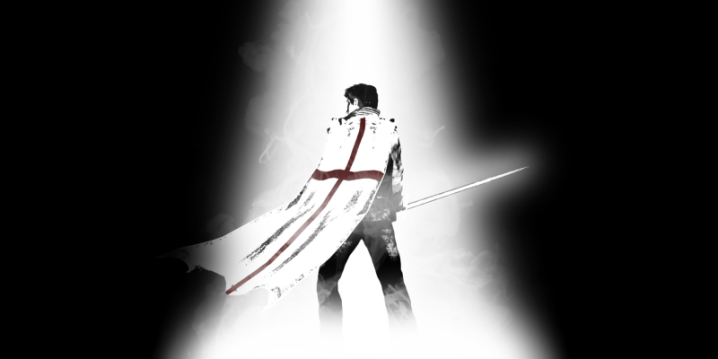
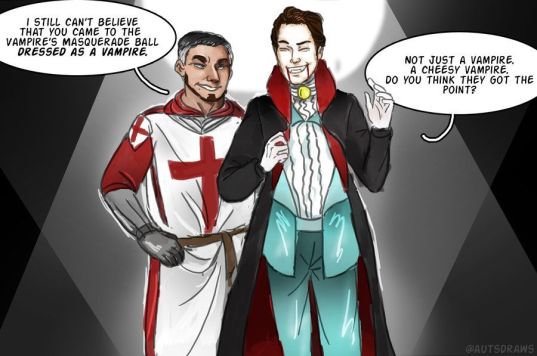
My choice for Dresden Files character of the day is Michael Carpenter, a close and trusted friend of Harry Dresden. He is a devout Catholic, and a Knight of the Cross, who wields a mighty sword called Amoracchius. 

This is my favorite fan art representation of Michael, and it looks
pretty much exactly as I imagine him.

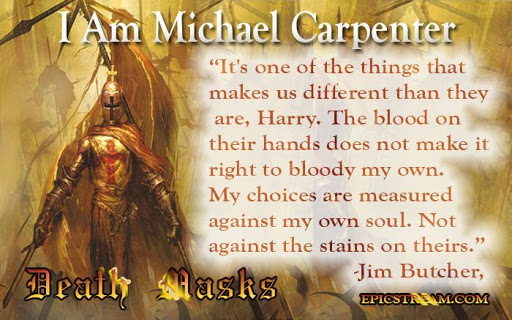
Michael’s own words give you a pretty good picture of who he is.

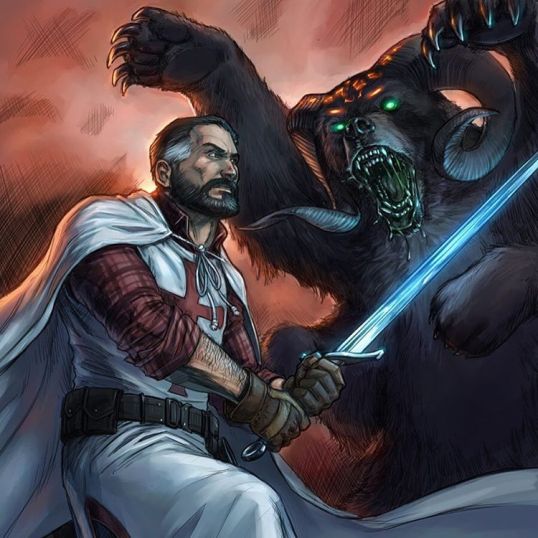
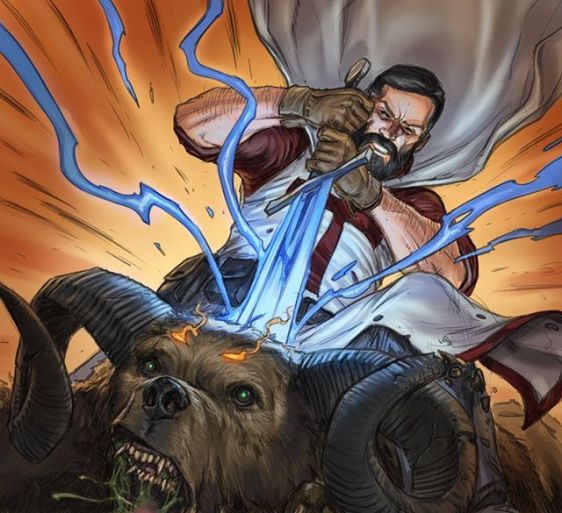
As you can see from the next two paintings,
Michael is a handy person to have on your team,
as Harry well knows and appreciates.

As the series progresses, Michael’s role in Harry’s life
grows in importance and scope, but rest assured,  he never
flinches from doing what he believes to be right.

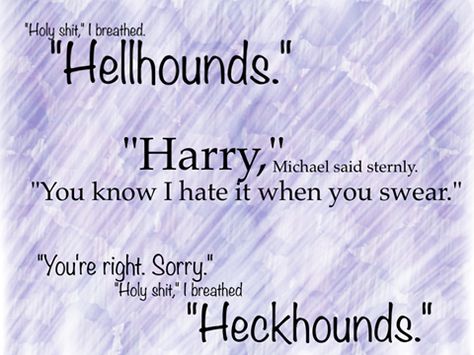
 A FEW MICHAEL AND HARRY MOMENTS TO MAKE YOU SMILE
(With a teeny bit of mild “language.”)

The Gang’s All Here!
😀

That’s it for this week, folks, but not to worry. I’ll be back next Tuesday with another glimpse into the world of Harry Blackstone Copperfield Dresden–if the bridge don’t go, an’ the creek don’t rise, that is.  

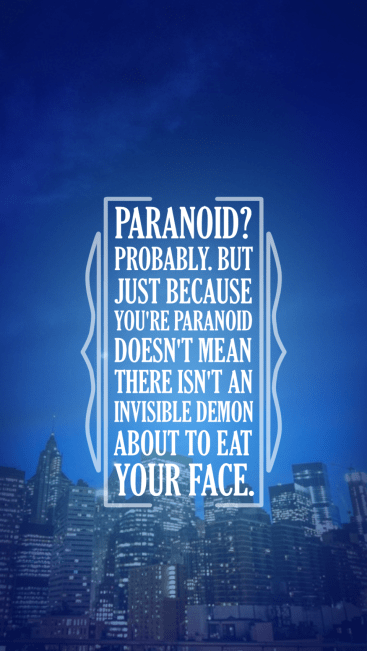
ONE LAST WORD FROM HARRY.
REMEMBER:

Why Authors Should Read Reviews

Do you read reviews? Yours or those of other authors you’re planning to read? You should, and P. H. Solomon’s post on Story Empire today explains exactly why. Check it out to see what he has to say. It’s good stuff! Then consider passing it along, if you would, so others can learn from it as well. Thanks, and thanks to P. H. for reminding us how much we can learn from reviews. Great post! 🙂

P. H. Solomon's avatarStory Empire

Good morning, everyone, PH with you here today, wishing you a wonderful day. I don’t know how many times something serendipitous happens with you and then you gain a better perspective or find a better way to do something but it happens to me often. Recently, I came across an inconsequential blog post and, as I read it, I realized something very helpful.

man sitting on bench reading a book. Bench surrounded by tall grasses, sun shining, portion of lake visible in backgroundMany of us authors spend a lot of time seeking out reviews. After all, a review can be very helpful to readers and validate our books. A glowing four or five star review can also make your day we. Reviews can also be hard to generate but they are gold when received. Personally, I should probably do more to seek them from bloggers than I have. It’s something else to work at in my spare time, spare time being twist of words for me these days.

However…

View original post 476 more words

Smorgasbord Blog Magazine Weekly Round Up – 10th – 16th May 2020 – Relationships, ABBA, Ink Fish, Italian Tomato Sauce, Books and Laughter

Yes, it’s time for another wonderful Weekly Round-Up from Sally Cronin at Smorgasbord blog! This one is really jam-packed with good stuff and friends old and new. And whatever you do, be sure to check out the videos! The one with the dogs and the baby kitten is amazing! Once you’ve enjoyed everything included this week, be sure to pass it along so others can as well, thanks. And thanks to Sally yet again for another super week full of goodies! (Should I say it, folks? Oh, why not! Sally, you ROCK!) 😀 ❤

#FirstLineFriday Submissions Are Now Closed! Here’s the Answer to Our Quiz

Submissions for #FirstLineFriday are officially closed now. My thanks to all who emailed me with their guesses. I knew this one would be difficult, but I had hoped one or two of you would get it. Alas, no one did this week, so without further ado, here’s the answer to today’s quiz:

“The stranger came early in February, one wintry day, through a biting wind and a driving snow, the last snowfall of the year, over the down, walking as it seemed from Bramblehurst railway station, and carrying a little black portmanteau in his thickly gloved hand” is the opening line from The Invisible Man, a science fiction novel written by H. G. Wells in 1897.

Originally serialized in Pearson’s Weekly in 1897, it was published as a novel the same year. The Invisible Man the title refers to is Griffin, a scientist who has devoted himself to research into optics and invents a way to change a body’s refractive index to that of air so that it neither absorbs nor reflects light and thus becomes invisible. He successfully carries out this procedure on himself, but fails in his attempt to reverse it. An enthusiast of random and irresponsible violence, Griffin has become an iconic character in horror fiction.

While its predecessors, The Time Machine and The Island of Doctor Moreau, were written using first-person narrators, Wells adopts a third-person objective point of view in The Invisible Man. The novel is considered very influential, and helped establish Wells as “the father of science fiction.”

 Wells said that his inspiration for the novella was “The Perils of Invisibility,” one of the Bab Ballads by W. S. Gilbert, which includes the couplet “Old Peter vanished like a shot/but then – his suit of clothes did not.”

The Invisible Man has a wealth of progeny. The novel was adapted into comic book form by Classics Illustrated in the 1950s, and by Marvel Comics in 1976. Many writers and filmmakers also created sequels to the story, something the novel’s ambiguous ending encourages. Over a dozen movies and television series are based on the novel, including a 1933 James Whale film and a 1984 series by the BBC. The novel has been adapted for radio numerous times, including a 2017 audio version starring John Hurt as the invisible man. The cultural pervasiveness of the invisible man has led to everything from his cameo in an episode of Tom and Jerry to the Queen song “The Invisible Man.”

EARLIEST FILM VERSION:
The Invisible Man is a 1933 American pre-Code science fiction horror film directed by James Whale. Based on H. G. Wells’ 1897 science fiction novel The Invisible Man and produced by Universal Pictures, the film stars Claude Rains, in his first American screen appearance, and Gloria Stuart. The film was written by R.C. Sherriff, along with Philip Wylie and Preston Sturges, though the latter duo’s work was considered unsatisfactory and they were taken off the project.

As an adaptation of a book, the film has been described as a “nearly perfect translation of the spirit of the tale” upon which it is based. The first film in Universal’s Invisible Man film series, it spawned a number of sequels and spin-offs which used ideas of an “invisible man” that were largely unrelated to Wells’ original story.

Rains portrayed the Invisible Man (Dr. Jack Griffin) mostly only as a disembodied voice. Rains is only shown clearly for a brief time at the end of the film, spending most of his on-screen time covered by bandages. In 2008, The Invisible Man was selected for the United States National Film Registry by the Library of Congress as being “culturally, historically, or aesthetically significant.”

PERSONAL NOTE: The image of the man covered by bandages (so you could see him) is why the phrase “thickly gloved hand” made me think of this movie as soon as I read the opening line. While I haven’t read the book, I’ve seen the early version of the movie (not when it was released in 1933, though. Even I’M not that old! 😀 ) and several adaptations over time.
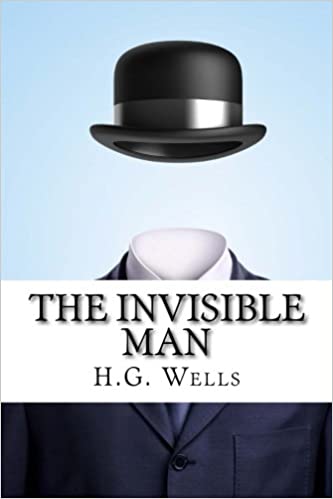
 

Buy The Invisible Man HERE

And that takes care of our #FirstLineFriday for this week. This was a tough one, and I’m not surprised that we didn’t have a winner. However, I hope you enjoyed taking a look at that extraordinarily long and comma-filled opening line, and contrasting it with what most of us would do today.

Thanks so much for taking part, and I’ll be back with another #FirstLineFriday quiz in a week or two. (Still catching up, here.) See you then!


To Oxford or Not to Oxford?

Check out today’s Story Empire post, wherein Joan Hall discusses the use of the Oxford comma. It’s a great reminder of just how important punctuation is in our writing, especially when using it incorrectly can completely distort an author’s intent. Check it out, and then please consider passing it along to others, thanks, and thanks to Joan for another super post! 🙂 ❤

Joan Hall's avatarStory Empire

Hey, SE Readers. Joan with you on this Friday in May. Can you believe it’s the middle of the month already?

My last few posts have been more on the “how to” level. Today I thought I would write something a little lighthearted, although the subject has become controversial among many writers.

I’ll be the first to admit I’m not the best at punctuation. For instance, those pesky little commas often get the better of me. It’s been a long time since I was in school, and English wasn’t my favorite subject. Do I always insert a comma before a conjunction? Or only when each part can be stand-alone sentences? Not to mention all the other rules that come with its usage.

But there is one thing I’m staunch about the use of, and that is the Oxford (or serial) comma. Consider the following:

  • I invited my parents, John Lennon…

View original post 342 more words