More Info on #DeltonaAuthorsFair Please Share!

logo

Deltona Regional Library hosts Authors Book Fair

Forty authors will take part in a free book fair Saturday, April 2, at the Deltona Regional Library, 2150 Eustace Ave, Deltona.

The authors represent a wide range of genres including children’s literature, Florida and American history, mysteries, spirituality, memoirs, poetry and outdoor guides.

Authors and potential authors can attend the following half-hour classes:

  • 9:30 a.m.: “Keep the creative juices flowing” with Kimberly Cline, a published author, photographer and owner of Funky Trunk Treasures in DeLand
  • 10 a.m.: “Traditional vs. self-publishing” with Melinda Clayton, who has published numerous books and owns Thomas-Jacob Publishing
  • 10:30 a.m.: “Marketing your book on social media” with Gerri Bauer, an author and member of Romance Writers of America
  • 11 a.m.: “Getting organized to write” with Linda Sacha, a life coach and published author
  • 11:30 a.m.: “Getting your book edited, illustrated and ready to be published” with Kathleen Rasche, a professional writer, published author and owner of Plum Leaf Publishing

The public can meet the authors and buy signed books from 1 to 4 p.m.

The book fair is sponsored by the Friends of Deltona Library. For more information call Christy Jefferson at 386-218-4087.

#MidWeekPOV #wwwblogs Recharging Creativity

85a80ce7c53efb60fd6097879907a83e

Ever sit down to write and discover your creativity has closed up shop for the day? Oh, I don’t mean the so-called writer’s block, wherein you don’t know what to write next. I’m thinking more in terms of knowing exactly what you want to write, but the words showing up in front of you are looking really tired and uninspired. Maybe that IS a type of writer’s block, but whatever you call it, it’s darn annoying. Especially when you’re on a deadline, and you’re already running behind.

What do you do? How do you recharge and forge ahead, happy with your day’s writing again?

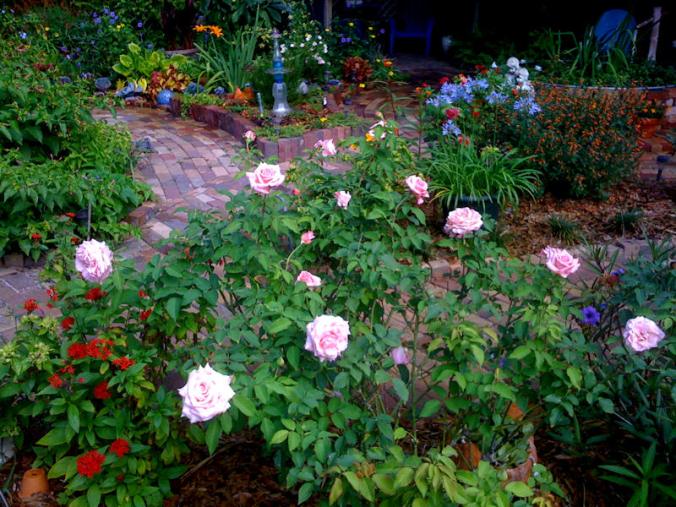
I have several old standbys that usually seem to work. I find great comfort in my garden. My backyard was a large, empty canvas when we moved into this house twelve years ago. Thanks to my husband’s beautiful brick pathways, it is now a series of patios and beds, with nary a blade of boring (to me) green grass anywhere.  Two years ago, before I started to spend every waking minute writing, it was really very pretty. Roses, salvias, honeysuckle, jasmine, and hanging baskets full of color were everywhere. Now, it’s a disaster, but I find cleaning it up and restoring it still works wonders for my creative renewal.

belindasdream2
My garden, BEFORE I decided to become a writer!

Getting out on the St.  Johns River is always good for my soul, too, and restores some equilibrium when my days have gotten out of control, and my brain feels fried. These days, I’m more apt to go out on the Naiad, the eco-tour boat that was my inspiration for the Undine, in Swamp Ghosts, rather than in my own canoe. (Old back, new pains.) But a boat ride with Captain Jeanne Bell, and her photographer husband, Doug Little, goes a long way towards sorting out my head.

boat on tourThe Naiad, plying the waters of the St. Johns River

And last, but by NO means least, I read. Losing myself in someone else’s fictional world is still my very best escape, and always will be, I expect. And the more complicated the real world gets, the more fantasy I lose myself in. For the first time in my life, I find myself moving past even URBAN fantasy, and into the epic stuff. I’ve been reading Brandon Sanderson and Robin Hobb for the last year, having decided magic in other worlds is just what my heart needs at the moment. And dragons, of course. Who knew how much I’d love them? I’m currently in the midst of reading our own Deborah Jay’s The Prince’s Man. Yep, fantasy is a great way to think about things far removed from the day’s headlines.

rsz_pm-ebook_flat_2
Escaping into fantasy, and loving it!

I’m leaving shortly to do lunch with a new friend, which is in itself, another way to restore humor and sanity to my life. But, before I go, I wanted to ask what you folks do when your creativity gets sluggish? How do you recharge? Your turn! Come on, tell us. Inquiring minds wanna know.

Call For #FabulousFridayGuestBlogger

14914aaeaf2fe5a4b02b5b0c3fa22c3b
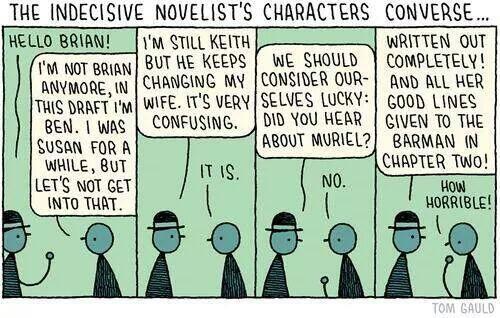
This picture has nothing whatsoever to do with this post.
I just have a feeling it’s going to be one of THOSE days!
~~~

As of today, I have plenty of Fridays (like all of them!) open for guest bloggers. If you’d like to be one, please contact me, and let’s pick a date for your post. Remember, you can write about anything you wish, humorous or serious, with the only exceptions being no politics, no religion, and nothing overtly erotic. (I try to keep this a safe place for everyone.)

We have had some fabulous posts, indeed, over the past months, and we’d love for yours to be added to the archives. And don’t forget, you’ll have space for your book covers and buy links, and your bio, whether your post is about your writing or not. So, let me hear from  you, folks. We’ll share your post with the immediate world! I promise.

#BeReal – NED HICKSON

Whenever my favorite funny man decides to get serious, it’s always worth the read. This is no exception. Check it out!

hastywords's avatarHASTYWORDS

My #BeReal guest today is Ned Hickson.

FullSizeRender

As a humor columnist, I get paid to be a truth-stretcher. An embellisher. A chronicler of life blown out of proportion. And I get to do it without living in Washington D.C. It’s a skill my mother will tell you I began honing at a young age — usually as a way of getting out of trouble. Again, it’s a wonder I didn’t go into politics. However, I decided to use my skills for the greater good by becoming a writer instead.

Early in my career, I was in a very unhappy marriage. It lasted 15 years because I got good at not being real. Often, I wrote about my married life in a humorous way by portraying myself as the bungling husband always falling short of his smarter, more capable wife. It kept the peace and also gave me an escape. But…

View original post 765 more words

Deltona Authors’ Fair & Other Events

bigblue

Just a reminder that Saturday, April 2, there will be an author’s book fair at the Deltona Library. It’s a great chance to meet authors, get signed books from them, and support the library. I’ll be there, so if you get a chance to stop by, come say hi!

Also coming up for me, a “Self-Publishing for Beginners” workshop (reservation only) at DeBary Hall, on Saturday, 4/23, from 1:00 to 4:00, and a Power Point Presentation at the Heritage Museum in Enterprise Florida, entitled “Swamp Ghosts: Using the Wildlife and Rivers of Central Florida as the Setting for a Romantic Suspense Novel.” The presentation will start at 1:00pm. Hope to see you at some of these events. 🙂

Poster with Speakers

#InspirationBoardSunday #SundayBlogShare

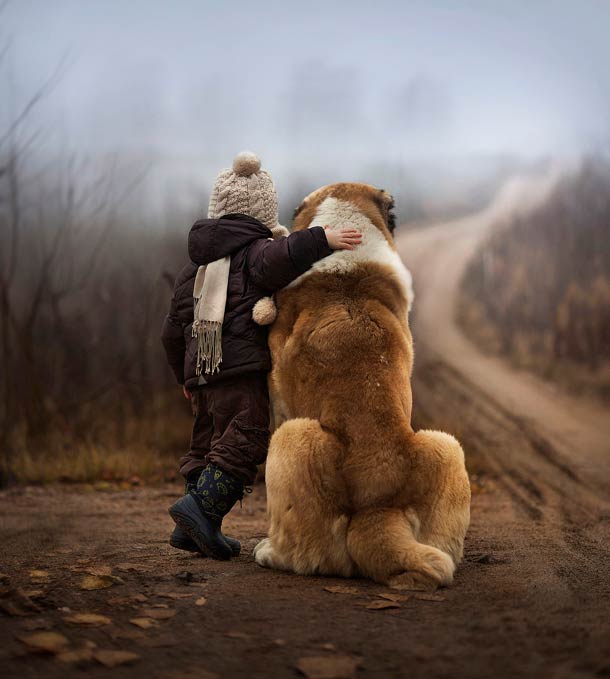
Short and sweet today. Sometimes the photos on my Inspiration Board are there because they look like a good jumping off place for a new story, and sometimes they are there simply because they are so beautiful, and beauty is its own inspiration. Here are six favorites of mine. Hope they speak to something in you. 🙂

304d0d23963171_5632bc4a47c89

1682

ahermin21

Beautiful-Photography-By-Martin-Marcisovsky

Elena-Shumilova-photography-11

bestof-1500x1000

#FabulousFridayGuestBlogger @ThorneMoore

FFGB Graphic

Known Knowns and Unknown Unknowns

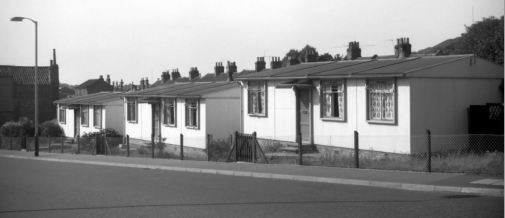
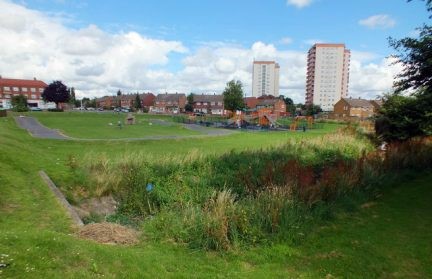
“Write about what you know” is useful advice. I thought it would be very easy to follow, when writing my latest book, The Unravelling, which will be published in July. First of all, I would be looking at the world as seen through the eyes of a 10-year-old, in the mid-1960s. She would be living in a town quite similar to Luton, on a council estate that was just beginning to replace the prefabs, which had been thrown up to provide quick emergency housing, after the war.

 I was a ten-year-old in the mid-1960s, living on the edge of a council estate in Luton, and, walking to school, I witnessed the demolition of the prefabs, including the one my grandparents had lived in. Simple.
Thorne1

Post war prefabs

It is remarkably easy to remember every little detail of my world, 50 years ago, from the cotton frocks our mothers made for us, to the pink custard served up at our seriously stodgy school meals. I remember the posters on the classroom walls, the smell of the corridors (a mixture, I suspect, of polish, vomit, urine and very strong disinfectant). I remember the streets, dark lanes and open parks I would walk through on my way, to and from school – a serious walk, but no one would have dreamed of being taken to school by car. I remember the shops, and the sweets they sold – sherbet flying saucers, fruit gums, penny chocolate bars. I remember the kitchen wallpaper my parents put up, as horizons began to expand, covered with exotic vegetables like aubergines (eggplants), courgettes (zucchini), chard and red peppers – vegetables we never saw in the shops, but rumour had it that foreign people ate them and may even had liked them.
thorne2

The estate where I grew up. I watched the tower blocks go up as I walked to school.

So much for the 1960s. I then had to look at the turn of this century. The Millennium. Equally easy, I thought. Everyone knows some of the events that happened then, and others are easy to check. It was only 15 years ago, and I lived through it as a mature adult. Surely I can remember just how it was. Wrong. It is next to impossible for the memory to keep pace with the technological changes that are sweeping past us, establishing themselves so quickly and firmly that we can’t believe they haven’t been around for at least 30 years.

How did you search for someone, in 2000, as my heroine has to do? You use the internet, of course. Except that, in Britain, broadband connections only began in 2000, and nearly everyone was reliant on impossibly slow dial-up modems, with rocketing phone bills and shouts of fury from other people in the house who wanted to use the phone. Have I really only had proper access to the World Wide Web for 12 years? Then, finding someone today, you might try Facebook. But there was no Facebook. Or you could Google them. But back then, Google was a new boy on the block and everyone used Yahoo, or Alta Vista, and the chances were, you wouldn’t find anyone anyway. People didn’t have an on-line presence. You want to trace a marriage that happened 30 years ago? Today you do it with the click of a mouse. In 2000, you got on a train.

I used my own early researches into family history in my first book, A Time For Silence, in which my heroine tries to track down details of her grandfather and aunt. Now I know that today, you simply go to Ancestry.com or FreeBMD, and have it all at your fingertips in minutes. When I first started researching my family history, there was no internet, and searching meant getting on a train to London, to trawl through huge tomes of indexes. Not so bad, when I only lived 30 minutes from London. When I moved to Wales, I found that the National Library of Wales, in Aberystwyth, had similar records, and I spent many happy hours going blind, trying to decipher blurred microfiche and microfilm records. I gave my heroine the same pleasure.

thorne3

My eyes hurt, just thinking about it

However much I use my own experiences to write, some research is nearly always needed. In A Time For Silence, I had to write about life in rural Wales in in the 1930s and 40s. Before my time, but there were plenty of people around me who could remember it well enough, and I was able to trawl through local newspapers of the time. That was so absorbing, I couldn’t resist letting my heroine do the same.

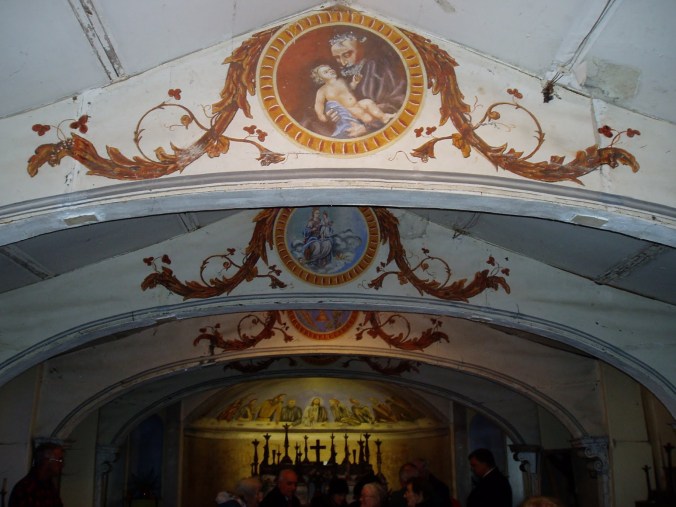
But the trick, with research, is to know how much of it not to use. It’s so tempting, when you become immersed in a fascinating topic, to want to filter it all into your story. A Time For Silence features a German prisoner of war, and I wanted to know more about the POW camp, which was set up a few miles from where I now live. I knew, as everyone round here knows, that it began as a camp for Italian prisoners, who decorated one of the Nissan huts as a Catholic Chapel, which had been preserved.

But after the surrender of Italy, the camp was used for German prisoners, many of whom worked on the local farms. I needed some basic facts for my story, such as when exactly the camp closed, and who was kept there, so I finished up appealing for any information about Henllan Camp from the National Archives. What I received was a huge collection of official inspection reports for the War Office, which give a riveting insight into army and bureaucratic behaviour.

The site remained open until the spring of 1947, and many of the German prisoners were rounded up and taken there after the war. The function of the camp was to assess how Nazified they were. They were allowed to apply for repatriation and then they were classified as white, grey and black Nazis. The white were simply Germans caught up in the war, with no ideological commitment, and could be allowed home. The grey were believers who were open to persuasion that they had been deceived, and could go home as soon as they were sufficiently re-educated. The black were committed Nazis, who would never be swayed in their beliefs. They were to be kept.

At regular intervals, the government sent inspectors to report on conditions in the camp, number of prisoners, state of discipline etc. This was obviously a box-ticking exercise. Each inspector reported that the camp was well run by its commander, accounts were properly kept, and order was smoothly maintained by a splendidly efficient sergeant major. Then, just before the camp closed, a new inspector arrived – one who was less of a box-ticking pen-pusher and more of a perceptive psychologist. His report explained that while the commander loftily fulfilled his duties, blithely unaware of any trouble, the sergeant major, who dealt personally with the prisoners, was a rabid German-hater, looking for revenge for his brother, who had been killed in North Africa, and he had been systematically destroying the prisoners’ written requests for repatriation.
thorne 4

The Italian chapel at Henllan

 This was a great story, that I just had to use – but I didn’t, because it wouldn’t have been relevant to my story. The key to using research is to know which bits of it matter to my characters and to get details right, when they are needed, but to let the bulk of it lie beneath the surface, just out sight. And there’s always the possibility of another book that might put my research to deeper use.

thornemoore
Author Thorne Moore

Thorne Moore was born in Luton, near London and the sludge of the Thames estuary, and now lives in Pembrokeshire on the Atlantic coast, with a lot of hills (small, but we call them mountains), woods (we call them forests) and villages (other people would call them road junctions with a house or two). No cities anywhere near.

She was advised to study law, so she studied history instead, in order to avoid a future career as a lawyer, as she was obviously going to be a writer. Since it took her forty years to get published, she filled in the time working in a library, running a restaurant, teaching family history and making miniature furniture (Pear Tree Miniatures). Her first book, A Time For Silence, was published in 2012. Motherlove followed in 2015, and her third, The Unravelling, will be published July 2016. She lives in a Victorian farmhouse, which occupies the site of a Medieval mansion. Several cats share the house and several woodpeckers share the garden.

Mlcover     Timeforsilence

Motherlove (Amazon UK)
Motherlove (Amazon.com)

A Time For Silence (Amazon UK)
A Time For Silence (Amazon.com)

Thorne’s Amazon Page
Website
Facebook
Twitter
: @ThorneMoore


#MidWeekPOV – #wwwblogs Small Miracles

wood-stork-xxximg_0222mw
Wood Stork on the Wing

Some years ago (too many to count), I developed a little habit I call “looking for the miracle.” It started as a small superstition that if I saw something truly beautiful or uncommon at the start of a long car trip, it was a sign all was well in the world, and I’d get where I was going, unscathed. Yeah, I know it was silly, but it made me feel surprisingly good, and you know what else? I found that when I was actively watching for them, small miracles showed themselves to me nearly everywhere I looked.

bald_eagle_stock_by_crystalsm

Of course, with my long-established love of nature, I often looked for special birds or wildlife along the roadside, as an omen of good luck. I’d spot a bald eagle soaring overhead (always an inspirational sight), and say to myself, “There! That’s this trip’s miracle.”

0052-121-800-750-80-wm-right_bottom-20-DougLittle-255-255-255-20

Or I’d see the summer’s first swallowtail kite, my very favorite bird of prey, and feel so happy, I just knew it was good omen, and my trip would go smoothly.

B9317081945Z_1_20150422173109_000_G4IAJ4HG4_1-0

Over the  years, I’ve spotted all sorts of interesting animals and birds along the highways and byways of my travels. A flock of wild turkey is always a good sign, to me . .  .

10b-1101

. . .  and my first Florida sighting of a half-grown black bear made me smile for the next twently or thirty miles.

3572680404_ca66aba192_z

Over time, I saw other things that I counted among my miracles. Rainbows are always good, and double rainbows mean my trip home will go well, too.

phlox_10-04-0718

A solid purple field of wild phlox takes my breath away as it announces its miracle status in no uncertain terms.

CrestedCaracara14

A crested caracara sitting in a tree,

grazing2

deer grazing in a field,

bunch-of-baby-donkeys-600x350

a baby donkey standing in the front yard of a farmhouse–all have given me a sense of the magical, the beautiful, the miraculous, at one time or another.

You may count other things as your good omens, but whatever speaks to you in that way, I promise if you make it a point to look for the miracles around you, you’ll find them. And whatever you’re doing at the time will suddenly seem happier, taking on new significance.

Miracles abound, if we but open our eyes. Try it. You just might be amazed.