What are your writing rewards? (And a keyword bonus)

Writing notebookWe all live for those days when the virtual ink is flowing so fast it seems to stain our fingertips as we pound away on the keyboard. But what about the slow days when you think you’re stuck and your novel is never going to get itself finished? What about when you’ve written through the glow of the first quarter and are still climbing that story-telling mountain? Or how about (my personal problem for much of this past summer) if you’ve promised your fans a sequel…and you just can’t figure out where to start?

Ever since I was a kid, a brand new notebook has seemed like one of the best presents imaginable. There’s so much potential on those blank pages — I could almost write a novel about the stories that call to my pen. The first word I place on the first blank page fills my heart with so much glee, I often have to open up a word processor so the words can come out of my head as fast as they go in.

Of course, I’m a total cheapskate, so I buy my writing rewards in bulk. That’s right, I haunt back-to-school sales and pick up a dozen one-subject notebooks at five for a dollar. (Of course I opt for the one-subjects — more gleeful beginnings for the buck!) Then I hoard my stationary as if I could never afford another notebook, and when times get really tough, I pull out a new notebook and get to work. (Finally, if all else fails, there’s always chocolate….)

How about you? What do you use to unstick your wheels when you seem to be mired in the mud? Or how do you reward yourself when you reach your daily word count?

Supercharge Your Kindle Sales(As a side note, when I started this post, it was totally going to be a keyword followup. But I realized I didn’t have enough to say, so here’s the cliff notes version:

  • Supercharge Your Kindle Sales includes more nitty-gritty information than I’ve seen anywhere before on the topic of keywords for ebooks. I knew most of it, though, so am glad I only borrowed rather than bought.
  • The author’s method of determining whether enough readers are searching for your keyword phrase involves typing in the beginning and seeing if Amazon autofills. No autofill = nobody cares.
  • As my husband also told me after I set him to work harvesting new keywords for my books, you can find new autofill suggestions by starting with one word on amazon, adding a space, then running through the alphabet. For example, type in “werewolf a” and they’ll suggest “werewolf academy,” “werewolf b” and you’ll get “werewolf books for teens,” and so forth.
  • Finally, from my husband only and not from the book, try using Google’s autofill feature as well. You might find a phrase that will carry over well to Amazon!)

So, there you have it, two posts accidentally merged into one. Clearly, I should have read Ned’s eye-test post more carefully!

And, as a final P.S., don’t forget to go borrow your copy of my sweet billionaire romance! It’s on a roll, but could use more eyes!

My new release, a sweet billionaire romance

Despite the Billionaire's RichesI’m excited to share my newest book with you! Despite the Gentleman’s Riches: A Sweet Billionaire Romance just went live, and I’m keeping the ebook price at 99 cents for the first two weeks so friends and family can get a good deal. If even that sounds like too much, all of my books are enrolled in KDP Select, so you can borrow them for free if you subscribe to Amazon Prime or Kindle Unlimited. I hope you’ll consider making my launch a success by downloading a copy!

Here’s what a couple of my early reviewers had to say:

“I read the whole book in one sitting because I could not leave it unfinished.” — Sharon H. McConathy

“This book is staying on my Kindle as a “LOVED” story, and I will re-read again and again.” — S. Chia

Several others told me that I made them cry, which I guess is a good thing….

I’ll be back next week with some more helpful information, but now I’m off to relentless self-promote elsewhere. Thanks for reading!

(Oh, but before I go, is anyone else joining NaNoWriMo? I didn’t mean to, but went ahead and set up an account last weekend…and have since written 10,000 words. I guess it’s pretty effective after all! If you do join, I’d love it if you add me as a writing buddy so we an spur each other on.)

What I learned from erotica writers

Amazon keywords

I know, I know — that subject line is totally unfair. Except that I did learn everything in this post from reading the thoughts of erotica writers on kboards..then I decided to try out their techniques in my far-from-erotic works.

The hot topic among erotica authors at the moment is keywords. Remember typing in those seven words or phrases on Amazon when you were publishing your ebook? I’ve added a screenshot at the top of this post to jog your memory.

If you’re like me, you probably went for the obvious and perhaps also added in keywords that Amazon uses to put your book into categories you can’t choose out of the dropdown menu. This latter technique is especially useful for new authors like me, who can only dream of selling enough books to make it into Amazon’s Paranormal Fantasy category…but who can find some new readers in New Adult Fantasy in the meantime.

But, beyond getting me into book categories, I have a feeling the rest of my keywords were a total waste of my time. Why? When you search on Amazon for “werewolf,” 32,920 results pop up. Who’s going to page through those endless covers and stumble upon my book? Nobody!

Amazon search resultsWhich brings me back to those wily erotica authors. I’m not going to mention some of the keywords they suggest because I think I need to wash my brain out after reading them and don’t want to share the joy. But here’s the G-rated version. Rather than using the keyword “werewolf” for my book, why don’t I try out something like “werewolf kindle unlimited”? That phrase only turns up 504 results, or 20 pages of books. Someone who has enrolled in kindle unlimited and is looking for a werewolf novel to read just might pick up Shiftless if I was listed under that keyword phrase, so I decided to give it a whirl.

Adding “kindle unlimited” to one of your keywords is a no-brainer if you’re enrolled in KDP Select, but should you go all-out and add the term to all of your phrases? Probably not. Amazon will mix and match words from different keyword phrases when indexing your book, so you’d probably be better off choosing other terms entirely so you get more bang for your keyword buck. After all, you do only get to choose seven phrases for your book, so it’s best to make each one count!

Now, let’s talk numbers. What’s the sweet spot in terms of keyword search results — are you looking for a phrase that turns up as few results as possible or as many as possible? The answer is: neither. As I mentioned above, if your keyword phrase is too vague, you’ll get lost in the shuffle. But, at the other extreme, a keyword so specific that only five other books turn up is totally useless if no one searches for “basket weaving with werewolves.” This is where keyword choice becomes an art, but as a rule of thumb, I generally aim for phrases with 50 to 500 results, hoping specifically to find those that clock in around 100 to 300 books.

One erotica author swears that you can make $100 in your first week with an unpublicized 5,000-word erotica short if you get the keywords right, and while I suspect less-sensational fiction won’t get you that far, it can’t hurt to play with those keywords and see how far they’ll help your book rise in the rankings. I’ve just updated Shiftless‘s keywords and will keep you posted about the results, and I’d also love to hear from other authors who have gotten more scientific with Amazon’s keyword options. Have you found keyword phrases that helped your undiscovered book see the light of day?

Making indie audiobooks

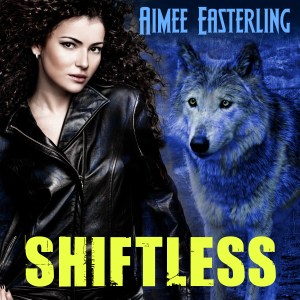
Shiftless AudiobookWhen Kindle Unlimited was rolled out, I read the fine print and realized that subscribers can download audiobooks as well as ebooks for free (with the author receiving about $1.50 per borrow and possibly gaining new fans).  Since there are about 700,000 ebooks enrolled in Amazon’s lending library but only about 2,300 audiobooks, I decided I wanted to swim in that much smaller pool.  Was it possible for an unknown indie?

The answer is a resounding yes, but like most aspects of self-publishing you’ll need to spend some time and possibly money on the endeavor.  ACX is Amazon’s audio wing, where authors hook up with narrators to make independent audiobooks happen.  You can choose to pay up front for your narration (a process that will likely cost $1,000 to $5,000), or you can opt for the revenue-sharing possibility as I did.  Revenue-sharing costs the author nothing up front, but you split all future audio royalties fifty/fifty with the narrator after the audiobook is produced. Although that sounds like a lot of money to give up, your revenue-sharing narrator does have a vested interest in making your audiobook soar and might help you sell more.  On the downside, though, you will have to make your project look very enticing to potential narrators if you want to find a really top-notch voice actor in this scenario.

As you might guess, I used the royalty-share option to produce my first audiobook (which is now available on Amazon, Audible, and (soon) iTunes).  I learned a huge amount on the process, too, namely:

Be patient while you wait for auditions.  At first, narrator auditions trickled in, but after a week, Amazon chose my project to be eligible for an ACX stipend and they featured the book in their newsletter to producers.  That meant that even though I chose the revenue-sharing feature, the narrator would also be paid $100 per audio hour up front.  In other words, the stipend made my project look very enticing and attracted some higher-end narrators.  (You are most likely to get the stipend if your ebook is already selling very well.)

Stay in touch with your narrator as they work.  My narrator and I got our wires crossed and she thought the audiobook was due three weeks later than the date I’d set in the dashboard.  Don’t assume your narrator read all the fine print!  Send them a message every week or so and make sure you’re both on the same page.  And, before you start, make a list of any strangely pronounced names or words in your story as a sort of cheat-sheet for the narrator.  (I didn’t know to do this either….)  Help make their job as easy as possible!

Consider the pay-up-front option.  One of my recent time-sinks has been lurking on kboards, where indie authors share what has and hasn’t worked for them.  A few authors there note that they’ve been making as much per title with audiobooks as with ebooks lately, but their method of success involves paying up front for top-notch narration.  I’m still not sure whether I’m willing to sink such a huge sum of money into my next audiobook, but if Shiftless does well, I might go that route with book two.

Tell your fans about Audible’s free trial.  Audible gives revenue-sharing authors $25 each time someone signs up for a new membership and downloads your book as their first audio adventure.  This is a relatively easy sell since your fans probably want to listen to your story and will love the idea of getting a copy for free.  So push those free trials!

If you’ve got any questions about audiobooks, feel free to leave them in the comments below.  Although it’s taken a bit of time, I’ve vastly enjoyed the experience of turning Shiftless into an audiobook, in large part because hearing my words narrated has made them feel more real.  Go listen to the free sample and see what you think!  (And, while I’m mentioning free things, I’ve set the ebook version of the prequel short story free at the moment as well, so be sure to snag your copy!)