How and why to cross-promote with other authors

SFF sale

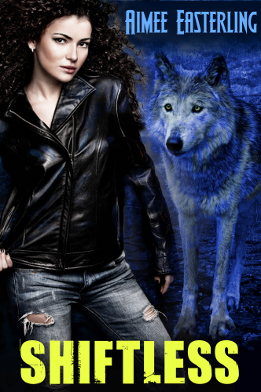
I’m taking part in a sale today organized by another author. Shiftless and 46 other science fiction and fantasy novels are marked down to 99 cents for New Year’s, and each author is spreading the word to his or her readers. Who knows if Shiftless will get lost in the shuffle or whether the extra outreach will boost sales, but the idea is a good one — team up with authors who write in your genre and reach new readers.

“But aren’t those other authors your competition?” my father asked me when I started to explain indie cross-promotion. “Not really,” I replied. After all, none of us can write fast enough to sate the average reader, so why not recommend books by authors your fans might also enjoy…especially if those authors are also spreading the word about your titles? Best-case scenario, the result can be that everyone involved ends up with new fans, which means more sales for everybody.

The holy grail of indie author cross-promotion is using bundles of novels marked down to 99 cents to break the USA Today bestseller list, while also reeling in thousands of new fans for other books in the series. Organizing this kind of bundle is probably beyond the abilities of most of us (taxes alone can be a huge headache), but if you hang out on kboards long enough, chances are you’ll find several bundles your book might fit into. I’ve applied to take part in a paranormal box set (although it’s pretty competitive and I might get rejected) and will also be included in an indie-author cookbook, all thanks to networking through kboards.

What’s your favorite method of cross-promoting with other authors? Do you have a success story to share or big plans for 2015? I’d love to hear your own experiences in the comments section.

When to go wide

KDP Select

One of the thorniest decisions in self-publishing today is — enroll in Amazon’s KDP Select program (which requires that your book remains exclusive to Amazon) or go wide and try out all of the different publishers. So far, I’ve used the first approach, which has lots of benefits:

  • 5 free days or 1 countdown deal every three months, which (if done right) can really increase your exposure to new readers while also keeping the rank of your book high
  • Eligibility for being borrowed via Kindle Unlimited, which helps with exposure and can also increase your income (although the amount you get per borrow has been dwindling rapidly in recent months, from $2 to $1.50 to $1.33 and some authors report lower overall income as a result)
  • Keeping all of your eggs in one basket means that all readers have to go to Amazon to buy your book, which means your book is likely to have a higher rank than if some of your readers bought elsewhere
  • Simplicity, with only one file to upload, one system to learn, etc.

On the other hand, you’re obviously eliminating the possibility of making sales on other retailers if you go all-in with Amazon. And, while the majority of indie authors find that Amazon is the much easier nut to crack and thus that they make most of their money on Amazon even if they go wide, you might just be the exception to that rule. I hear rumblings now and then of authors who sell more books on non-Amazon sites, particularly All Romance Ebooks (if you write romance), Google Play (for children’s books and perhaps some other genres), and Barnes and Noble (for erotica and romance).

And then there are international sales. While Amazon does have branches nearly worldwide, if you appeal to a Canadian market, you’re shooting yourself in the foot by staying out of Kobo, the dominant Canadian ebook retailer. Similarly, iBooks and Tolino are reported to be big in Germany, where Amazon only has 40% of the ebook market according to Joanna Penn. Of course, once you start branching out beyond English-dominant countries, you also have to start considering whether it’s worthwhile to get your books translated, which is fodder for another post. But 7% of my Amazon income last month came from outside the U.S., making me wonder if I could turn a couple of hundred dollars a month into much more if I learned to leverage other platforms.

Burgling the DragonThe final point in favor of going wide with your book distribution is perma-free. The accepted method of getting a book listed for free on Amazon is to list it through Smashwords or Draft2Digital (both of which distribute to many of the non-Amazon retailers), setting the book at a price of $0 through the distributor and waiting for Amazon to price match. But if you’re going to have the first book in your series up for free on other platforms while keeping the other books in the series only on Amazon, you’re spitting in reader’s faces. I know that if I was a nook user, if I downloaded and loved a free book, and then I found out that I’d have to change devices in order to read the rest of the series, I wouldn’t be very pleased.

Which is probably why most of the self-publishing heavy-hitters recommend going wide once you have more than one or two books in your arsenal. I thought long and hard about that decision as I prepared to launch Pack Princess, the second book in my Wolf Rampant series, and I’ve decided to stay in KDP for now…at least until I publish book three. At that point, I might decide that making the first book perma-free is the best way to get exposure for the growing series, making it worthwhile to pull out of KDP Select and explore other retailers.

In the meantime, I’d love to hear your thoughts on the topic. Are you in KDP Select? Why or why not? And, if you’re still reading, I hope you’ll take a minute to snag my middle-readers fantasy novel, Burgling the Dragon, which is free today. (Gotta take advantage of those KDP Select benefits!)

Preorders make sense for series

Preorder ebook

I wrote previously about my trials and tribulations with preorders, so I thought it was only fair to post again with the results of a much more successful preorder experiment. I decided to put the second book in my Wolf Rampant series up for preorder because the first book had gained so much attention, selling 4,000 copies since March in addition to giving away thousands more over two free runs. Both in reviews and in emails, I kept hearing from readers who wanted book two. So I was confident that at least a short-term preorder would make sense.

I didn’t want to get in trouble with Amazon if delays occurred during the holiday season, so I set the preorder release date to January 15 on December 4…even though the book just needed to pass through my copy editor’s computer and then enjoy one more read-through of my own. I emailed my list and immediately sold nine preorder copies, then managed to move about one copy per day over the next few days just by having the book available on Amazon.

Also Boughts

At that point, my copy editor got back to me much sooner than expected and I had a final copy of the book ready to go, so I moved the launch date back to today (December 15) on December 12. When I did so, I noticed that I’d sold enough copies of Pack Princess that the also-bought section of the book page had populated, which meant my book began showing up on other titles’ pages (although not within the first six, so readers would have to hit the scroll buttons to see my title). This combination of factors (without any extra shout-out on my part), meant that my preorder sales increased to about two per day (a 21% sell-through rate from Shiftless, the first book in the series).

A kind fan let me take part in a facebook giveaway this past weekend, which sold a few extra preorder books and helped move the book up the charts. As a result, even without any reviews in place yet, the preorder book went into its launch period already ranking in the top 100 in its two smallest categories (Women’s Fiction Fantasy and Women’s Adventure).

What’s my takeaway? If you have a popular series, you’re losing money by not setting up a preorder (which you can do up to 90 days before the book’s launch date). In fact, I noticed that Shiftless saw a moderate uptick in sales after the preorder page for Pack Princess appeared, suggesting that the second book was serving as an advertisement for the first. My goal at the moment is to have book three ready to publish in June, which would mean a preorder in March — stay tuned for more updates on this further experiment in the months to come!

Preparing for the post-Christmas rush

Bloodling WolfWith my newest release at the copy editor, I’ve been spending a few days cleaning up my backlist in preparation for the post-Christmas kindle craze. Here’s what I’m doing:

Updating keywords. Supercharge your Kindle Sales is the best book I’ve found so far on this topic.

Cleaning up blurbs. Gotta Read It! is really helping me get a handle on writing blurbs that sell books.

Checking on back matter. I’m busy adding buy links to all of the titles I mention in the back of my books and am checking to make sure my email-list call-to-action is also clear and easy to follow.

Changing out covers. All of my covers were originally homemade, so I’m spending a bit getting replacement covers for a few titles that needed it the most. For example, take a look at my new cover for Bloodling Wolf to the right.

Planning a sale. I’m running a free period for a couple of my books the week before Christmas, hoping they’ll get in the public eye and be higher in the rankings once they go back to the paid store. I’m also thinking of a countdown deal right after Christmas, although I suspect everyone else will be doing the same, so that might not be a realistic time to try to move up the rankings.

I’d be curious to hear from others. What do you typically do to put your best foot forward for the Christmas season?

A pack of wolves

ShiftlessMe: I’m here today with the cast of Pack Princess. We thought you might need a bit of a reminder on who’s who before diving into book two of the Wolf Rampant series. Terra, do you want to start us off?

Terra Wilder: Okay, if you really want me to. I’m Terra, and I’m pack leader of clan Wilder at the moment. And, um, I guess I’m the heroine too.

Wolf Young: You are the heroine. [Takes Terra’s hand.] I’m her mate, Wolf Young, although everyone who knows me calls me Wolfie. I run my own pack of slightly damaged werewolves.

Justin Young: Slightly damaged — that’s a joke! Halfies, meat, and misfits is what you have in that so-called pack of yours.

Me: Do I need to separate you two? [Justin gets up and stalks to the other end of the room, taking his folding chair with him.] Ooookay, I guess I do. Anyway, that was Justin, who’s Wolfie’s sibling and the leader of the pack that both brothers grew up in. How about we move to Cricket next?

Cricket Wilder: It was so nice of you to invite us all here, today, Aimee. Do you want some tea?

Me: [Mumbling under my breath] It’s always the nice ones that I lose control of. [Raising my voice so I can speak to the whole room.] No tea for me, thanks, Cricket, but do you mind introducing yourself?

Cricket Wilder: How silly of me! I’m Terra’s stepmother, and this great big wolf by my side is my husband, Chief Wilder, Terra’s father. He used to be in charge of clan Wilder. Now he just…um…consults.

Unnamed Uncle Wilder #1: Consults! Ha! I don’t see why we can’t go back to the good old days when men were men and…

Hawk: What my brother-in-law is trying to say is that some of us aren’t so keen on our new alpha. But we don’t all feel that way. I’m another one of Terra’s uncles, but I’m her mother’s brother, which makes me a bit less…um….[throwing a glance at his brother-in-law, then lowering his voice]…never mind….

Bev: Well, I’m Hawk’s sister, and the young man looking all doe-eyed beside me is my son David.

David: I…

Drew Walker: [Nudging his cousin sharply in the side.] Shut up, your mommy already introduced you. I’m Drew, Terra’s cousin. And you can see one of her other cousins, Milo, guarding the door. There are a slew of us running around…but I’m the best!

Wade: Right. So, that’s it for the Walkers for the moment, since we couldn’t cram any more of them into the room. I’m part of Wolfie’s pack, but I’ve been living here with Terra for a while to help keep things on more of an even keel. Wolfie calls me and my friends the yahoos. That includes [pointing to the next three shifters down the row] Glen, Blaze, and the beautiful Fen.

Fen: Don’t make me hit you.

Me: Okay, see, this is supposed to be a cordial introduction, not a pitched battle. Sarah, how about you tell us who you are next?

Sarah: You know, I really don’t think I should tell you who I am. But you can call me Trouble if you want to.

Dr. Dale Baker: You’re not really as much trouble as you think you are. But since I can tell that Aimee wants us to stay on track, I’ll introduce myself next. I’m Dale, Terra’s brother-in-law and the only human in the room….

Pack PrincessKeith Baker: Well, except for Aimee, of course. Unless she’s a closet werewolf. Dum dum dum dum!

Me: Thanks, Keith. Way to get rumors started. That was Dale’s son and Terra’s nephew, for those of you who are keeping track at home. And, since we’re running out of time, I’ll just name the other pack leaders present quickly and let you go. The tall, older man is Thomas Bell, the youngster beside him is Gavin Griffin, and then Chad Walker is the third pack leader down the row. Beside Chad is his mate Camilla, who is also the daughter of the Reed pack leader and a distant cousin to Terra. And, on that note, I’ll let you get back to your regularly scheduled reading. Thanks for dropping by!

Cricket: Now, who wants cookies?

Keith: Oooh, I do! Unless they’re oatmeal. I hate oatmeal.

Wade: This would be a good time to fade to black….

Me: Don’t forget to pick up your copy of Pack Princess today! Oh, and yes, I’ll take a cookie, thanks.

[Fade to black]

Me again: The savvy reader will notice that I decided to try out preorders one more time. I’ll report back in about a month once I know whether a preorder in an established series makes more sense than a standalone preorder in a new genre. Thanks for reading!

Paid book promotions worth their salt, part 2

Despite the Billionaire's RichesIf you missed my first post on the subject of paid book advertising, head over here first to get caught up. The short version is: the most sure-fire way to advertise books is to get your title included in one (or more) of the email lists that go out to thousands of readers on a daily basis. My previous post mentioned a few websites that will list your book for free, while this second installment will delve deeper into the paid sites that are most likely to provide a return on your investment.


The big dogs

If you hang around with other independent authors for long, you’ll soon hear them singing the praises of Bookbub. Although this advertising service costs hundreds of dollars a pop, most folks find that Bookbub provides a positive return on your investment, and if you play your cards right, your book might even end up in the top 100 in Amazon’s store after being listed! Unfortunately, there are big hoops you need to jump through to be eligible, and Bookbub rejects a lot more submissions than they accept. So, if you can’t get into Bookbub (or can’t afford their high fees at the moment) where do you turn next?

In Write. Publish. Repeat. the authors explain: “We’ve had the most luck with BookBub.com, EReaderNewsToday.com, and FKBooksAndTips.com’s 99-cent promotion programs. We’ve also had lesser but substantial success with Bookblast.co (.co, not .com) and BookGorilla.com.” Let’s Get Digitial Author David Gaughran weighs in as follows, “After BookBub, the next biggest sites are Ereader News Today, Pixel of Ink, BookSends, and Kindle Books & Tips,” before warning that the value of promotional opportunities changes fast, and to do your research before plunking down any money. Sure enough, Pixel of Ink is not currently accepting submissions at this time.

There are also a lot of smaller advertising sites that I’ll mention later, but the smart thing to do if you’re committing to a paid promotion is to combine several promotions in short succession in an attempt to move up the ranks and stick there. The accepted wisdom is that you should first try to bring one of the big dogs on board, then you should plan the other services around the main event.


Preparing for the sale

Now it’s time for a healthy dose of “do as I say, not as I do.” The reports I’m going to present below are based on a promotional push I ran around the launch period of Despite the Gentleman’s Riches, and, with twenty-twenty hindsight, I’d do a lot of things differently. All of my previous books have been in the fantasy genre and (in contrast) Despite the Gentleman’s Riches is a contemporary romance, so I wasn’t prepared for my fans’ complete lack of interest (or outright disdain) for the new book. Previously, I’ve emailed my list to find interested readers a couple of weeks before launching a new title, had sent out review copies when I got the manuscript back from the copy editor, and had been able to count on at least 15 reviews averaging about 4.5 stars trickling in during the first week. Since you have to plan your promotions at least 14 days in advance, I just assumed similar reviews would appear on my new book in time for the blitz. Instead, several of my advance reviewers gave the book three stars, one of my preorder fans gave it one star (ouch!), and I went into the promotional period with a 4.2-star ranking. That doesn’t sound bad, but there’s a big visual difference between only four stars filled in versus four and a half, and fewer glowing reviews meant my new book had less perceived social capital. So, lesson 1 — don’t assume that you’ll have a great-looking product page soon after launch. A better idea would probably have been skip soliciting reviews from my fantasy-loving fans entirely, to let the book build reviews organically, then to pay for a promotional period at a later date when the book’s perceived social capital was high.

Similarly, I should have managed my pricing so that I was eligible for a countdown deal during the promotionary period. Most sale sites won’t accept your book unless it’s marked down to 99 cents, which you can either do manually or with a countdown deal, the bonus of the latter option being that for the five days of the countdown deal, you’ll receive a 70% royalty on the reduced-price book. However, since I’d been trying to get fans to consider a title outside their main genre during the preorder period, I launched the book at 99 cents, meaning that I had to make twice as many sales to break even with each ad (due to the 35% royalty). Again, raising the price to $2.99, waiting for the 30 days Amazon requires between price change and countdown deal, and then setting up a real sale would have been a better bet. As an added bonus, the countdown deal would have shown the higher price with a slash through it, so the customer would have known they were getting a great deal.

Summary: More patience on my part would have made this sale period go much more smoothly!


My experiences

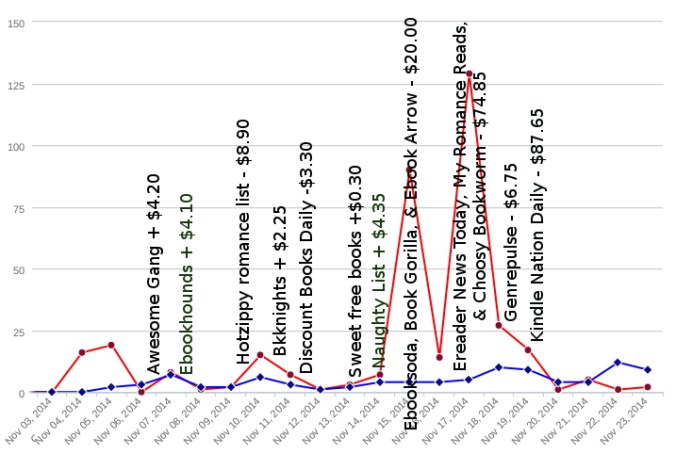
Mistakes aside, my paid promotions are still likely to break even by the end of the month. I chose 13 paid promotional sites spread out across 13 days, paid $370.50 for the privilege, and (if borrows bring in $1.33 like they did in October), I will make $260.51 for the first 18 days that the book has been live. I could have brought in quite a bit more, though, if I’d focused on the winning sites and avoided some expensive losers, so I thought I’d report my results to keep your own costs down. (Of course, keep in mind that the results of each promotional site is likely to be genre specific, and that some sites probably attract readers who were more turned off by my lack of perfect reviews than others. But, still, this should help you get started.)
Results of paid book promotions

Okay, the chart above might look a little daunting, so let me give you a quick text rundown. The two sites listed in green (Ebookhounds and Naughty List) were both free, but their results were quite good, so I added them to the chart. The other advertisers were all paid, and I listed the net earnings from each, using the assumption that I wouldn’t have sold any other books that day without their help (not a big stretch since the book basically started at nothing). As you can see, some of the cheaper promotions — Awesome Gang ($10), Bkknights ($5), and Sweet free books ($5) did better than the more expensive options. I added the little guys on at the last minute as a way of bringing up the rank of the book before the supposed big dogs hit, since Amazon is supposed to reward slow, organic growth of a book’s sales better than a spike in the rankings from one big advertising blitz. (The former results in a good sales rank that is supposed to stick around longer than the latter.) But now I’m starting to think that lots of these little guys might be a better financial investment than a few of the supposed big dogs!

Because, unfortunately, I was much less impressed by the more expensive promotions that I paid for. I stacked most of the big dogs together, so I have to guess which ones were and weren’t worth the money, but I’ll give you my informed opinions here. Having tried two different $15 promotions through Hotzippy on two different books and lost money on both, I’m now relatively convinced that Hotzippy is not a good use of money (for me at least). I also suspect that Book Gorilla and Kindle Nation Daily (both by the same company) are too overpriced at $50 and $100 respectively to be worth the cash. Finally, since so many people sing the praises of Ereader News Today, I’m going to assume that the expensive My Romance Reads ($75) that I layered on the same day is why that period’s advertising didn’t break even.

And, finally, here’s the cheat-sheet version of the advertisers I at least tentatively recommend:

Ereader News Today — Prices range from $15 to $45 at the moment, depending on genre. Sometimes called “the little Bookbub”, ENT is pretty choosy but is usually considered to be worth the price tag.

Free Kindle Books and Tips — 99-cent books cost $25 to advertise. They do waive their review restrictions for new releases, but they only send out new-release notices on weekends. I didn’t sign up for these guys because I didn’t notice the new-release option when I was first researching, so I have no first-hand data to report.

Booksends — Costs $10 to $50 for a 99-cent book depending on genre. They rejected me, so I can’t report any results.

Awesome Gang – $10

Bknights – $5.50

Fussy Librarian – $5 to $14, depending on genre. I somehow got my wires crossed on setting up my ad for this particular book, but have used them before and broken even.

Sweetfreebooks – $5


The good news of a “failed” promo blitz

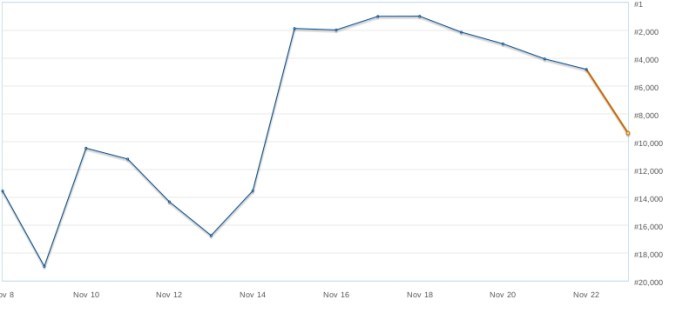
Even though I came out a hundred bucks in the hole, I would definitely repeat this experience, with all of the caveats listed above (and a few more that I’ll mention in a minute). I’ve had nine new subscribers join my email list during the promo period, have already landed two new reviews (a four star and a five star — so my book doesn’t suck after all!), and the book seemed to be sticking pretty high in the rankings for at least a while after the promo period ended. Plus, more borrows have been landing in my dashboard daily, suggesting that I’ll be raking in the results of the sale-period visibility for at least a few more days to come.
Sales rank during a promotional period

Aside from dressing my book in its Sunday best before the promo, doing a countdown deal, and skipping the overpriced advertisers, what else would I do differently? Paid promotions are most likely to actually make money rather than just break even if you advertise the first book of a completed series. I’ll try out this hypothesis on Shiftless once Pack Princess comes out in about a month, and for this second experiment I’ll see if Bookbub will take my novel to the prom.

That said, I’m starting to think that a free period might have been a less expensive way to get Despite the Gentleman’s Riches off to a good start…and without spending a penny! So, perhaps the moral of the story here is to be patient, to use a free period early on to give your book legs, and to save the 99-cent advertised promotions for later in the life of a book.

Okay, I know this post got way too long (again!), but if you’re still with me, I hope you’ll leave a comment with your own advertising results. Do you agree on which promotions are and aren’t worth your money? Did you advertise a book in a different genre and see different results? Let us know so we can all save some cash next time around!
Paid book promotions worth their salt, part 1

ShiftlessI started to write this post last week…and it quickly grew way too long and never got published. So, I’ve decided to break my rundown in half. This first post will cover why and how you might choose to pay for book advertising, and the next post (whenever I once again need a break from my work in progress) will dive deeper into the nitty gritty of specific advertising platforms that have and haven’t worked for me. So, I apologize in advance for any questions you might still have unanswered when you hit the bottom of this page! More is to come.

Why pay for advertising?

I should start this post by telling you that I’m a skinflint (if you haven’t already figured that out). So, when I started reading kboards and heard everyone going on about paid promotions, my first thought was, “No way am I spending money on book promotions.” My my second thought was equally unkind: “And isn’t that gaming the system?”

Results of a free run

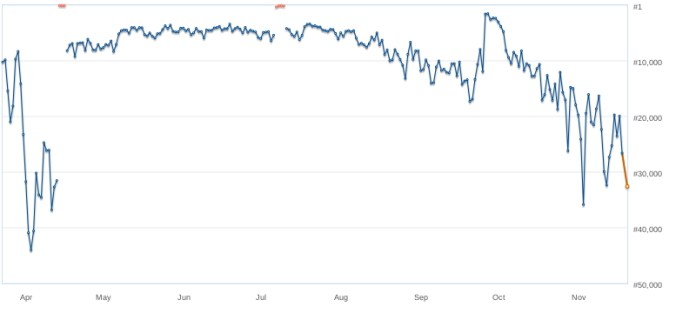
But the truth is that the old-fashioned method of gaining exposure — setting your book free and then notifying unpaid websites that report on free books — is starting to show diminishing returns. The chart above shows my excellent results for a free period  (orange dots) during Shiftless‘s early days. Pre-promo, the 99-cent ebook sold a few copies, but quickly drifted down in the rankings. But I notified a few sites before my free period, gave away several thousand copies, and suddenly Shiftless started taking off organically. With no further promotion, the book began ranking around 5,000 in the Amazon store and stayed there (with the help of another free run) until I raised the price to $2.99 in August. (I may change my mind about that price hike, especially now that I almost have another book in the series nearly ready to go…but that’s fodder for another post.)

Anyway, to cut a long story short, free periods used to be golden…but their efficacy is much more hit or miss lately. Part of the problem is that Amazon’s affiliate program now reduces earnings for affiliates who send too many free-book buyers their way, so fewer and fewer sites are willing to list free books pro bono. Also, once you’ve had one or two really good free periods, you’ve somewhat saturated the market, and you’re less likely to spike into the top-100 free, meaning that you’ll catch many fewer eyes and won’t get as much of a boost from the promo.

So, what’s the solution? Well, writing more books is key since each launch will boost sales of previous books. But we can only write as fast as we can write, so many authors turn to paid promotions in the interim.

How (not) to pay for advertising

Watermelon SummerWhen I talk about paying for advertising, you  may think of buying a billboard or signing up with google ads. But most readers find books via word of mouth, so these untargeted advertising campaigns don’t seem to work very well. (That said, one kboarder reported having great results with a very specific facebook advertising campaign, which might be worth a try if you spend a lot of time on facebook and want to leverage what you know.)

So, what does work? Book recommendation email lists. As a reader, I’ve signed up for several, but have settled on using Bookbub as my primary way of finding free books worth reading — something about Bookbub’s method of choosing titles seems to select for quality, and it’s much easier to comb through three daily freebies in the genres that I enjoy than to browse the entire Amazon free lists. Bookbub also lists books reduced in prize to 99 cents (or, sometimes to $1.99 or $2.99), and I assume the less skinflinty readers use my same methodology but actually pay money for these sale books.

Bookbub is the big dog in the book-recommendation world (and I’ll write about them more in a later post), but there are many smaller options for those of us with less ready money. In fact, some of the email lists will showcase your book for free…although you often get what you pay for. Here’s a sampling of the top services that will list sale books without asking you for a dime:

Awesome Gang — I actually paid for their $10 option, which I’ll report on in my next post, but they have a free option as well.

Books on the Knob — Didn’t list me.

Discount Books Daily — Charges for some genres. I paid and will report on them in my next post.

Ereader Cafe — Didn’t list me.

Ebook Hounds — Free until January 2015. I had quite good results from their listing — 8 sales and 1 borrow in 24 hours. While this doesn’t sound like much, nine units moved in a day can give a new book a leg up in the rankings.

Ebooklister — I was listed but sold 0 books.

Manybooks — Didn’t list me.

The Midlist — I’ve heard great things about the results of this free service, but I kept getting rejected at first. I do have a listing scheduled with them for January, though, so I’ll report back then. Although free, The Midlist is considered to be one of the medium-sized dogs — it’s worth changing your promotion date to match their openings if you can get one.

The Naughy List — Despite the name, this service lists all flavors of romance, including sweet, and they have given me quite good results – 5 additional buys and two borrows in 24 hours.

Reading Deals — I’ve never tried them because they require you to tweet first, and I don’t have a twitter account. But some kboarders consider them to be in the middle to upper tier in terms of quality. Edited to add: I either got my wires crossed when I first wrote this (most likely), or Reading Deals has changed their twitter policy. During a promotion in December 2014, a free Reading Deals listing resulted in 1 additional borrow.

SciFiFantasy Freak —  Will start charging in January 2015. I think their list is very small at the moment, though, because I didn’t see any sales at all from their ad on Shiftless (although I also hadn’t reduced the price).

Okay, I suspect that’s enough for you to digest, so I’ll finish up this rundown on paid promotions in a second post. Stay tuned for Part 2: How to decide if you’re ready to pay, and who to pay. And, in the meantime, thanks for reading!

You know you’re a bit groggy from NaNoWriMo when…

…you refresh your own stats rather than those of your writing buddies. Perhaps I was trying to figure out how much I’d written in my sleep?

Sadly, no matter how many times I hit refresh, my word count remained the same. Guess I’d better go fix that….

Preorders: Boon or bane?

Submitting a book for preorder on Amazon

If you’ve been publishing on Amazon lately, you probably noticed a new feature rolled out this summer — preorders. In a nutshell, indie authors can now join the big dogs and sell copies of their books before release. Unfortunately, while this technique is a major bonus for established authors, my three experiments have suggested that small-scale authors might be shooting themselves in the foot by taking advantage of preorders. But before I got into the bad, let me start with the good.

A review from the preorder period.Preorders are very handy as a launch-management tool. You can create your book page up to three months before your title goes live, which makes it simple to write blog posts and emails with the correct links in preparation for the big day. In addition, if you design a paperback version of your book using createspace, you can get the paperback and ebook to link before launch day. Even better, reviewers can start leaving reviews on your paperback right away, and those reviews will show up on your ebook page (although not as verified purchases). Which all means that you can go into your launch-day buzz with reviews already in place, making people more likely to take a chance on your new book!

Doesn’t that sound splendid? No wonder I tried preorders three times before telling myself I really shouldn’t do it again. Why the change of tune? Well, if you don’t have a big following, people are significantly less likely to take a chance on your book during the preorder phase. Not only does the potential buyer have to wait to download their purchase (no immediate gratification!), they also can’t look inside and see if the book is worth a read. Which is why I seem to only be able to garner 20 to 30 preorders even over a couple-of-month preorder period.

But those are 20-to-30 sales I wouldn’t have gotten otherwise, right? So I should clearly stop complaining! Well, not so fast. Unlike most retailers, Amazon doesn’t save up your preorder sales and give you a big spike in rankings on launch day, so preorders don’t help you move to the top of the charts. Instead, small-to-mid-sized authors will find that preorders start you off at a low rank and then dilute your launch-day boost. Remember how people are less likely to take a chance on a preorder than on a published book? That means my one sale every other day or so resulted in Despite the Billionaire’s Riches hitting launch day with two months of 150,000 rankings to dig its way out of. And, since I’d already emailed my list about the book and a few people had preordered, I didn’t get as many purchases on day one as usual, which again dragged the ranking down. In my opinion, your primarily goal during the launch period is to get enough sales so your book hits a top-100 list and sticks there, and preorders seem antithetical to that process.

Preorder sales rank

So, will I never use the preorder feature again (at least until I quadruple my fan base)? Maybe. I’ve yet to try a preorder period with the second book in a series, which should see higher preorder rates than a standalone in a different genre like my previous experiments. And I’ve yet to try a short, two-week preorder, which should make the lowered-rank effect less striking. Plus, if you get creative like Jennifer Meltzer and built buzz throughout your preorder period, you might come out ahead. (Jennifer, please do keep us posted about how your experiment works out!)

So, maybe I’ll try preorders one more time… But I recommend you do as I say, not as I do — if you’re not moving a hundred or more books per day, eschew preorders for the foreseeable future.

And if you did preorders and want to dig yourself out of that hole, stay tuned for a post in a week or so about paid promotions.

Write one, edit two

Despite the Billionaire's RichesMy copy editor and beta readers tell me I write clean. Ha! What they don’t know is that I’m an obsessive editor who tends to go over every chapter with a fine-tooth comb approximately three (sometimes four or five) times before I let anyone else see what I’ve written.

The first editing pass is meant to clean up my far-too-quickly-written prose. I write the way I read — fast — which means that I leave out connecting words, explanatory sentences, and sometimes whole paragraphs. It’s all in my head — can’t you see it too? So, the first time I edit a chapter, the task takes nearly as long as it took to write the chapter in the first place, and I tend to add about 10 – 20% to the length in the process. (Yes, this makes me a putter-inner instead of a taker-outer). The result is pretty much like a normal writer’s first draft — still rough, but at least now the sentences flow and make sense.

For the last couple of novels, I’ve been editing the previous day’s chapter before starting to write the current day’s chapter, which works well since I’ve only 20% forgotten what I meant to say by that point. In a perfect world, I edit before/during/after breakfast, then walk the dog to figure out what I’m writing about next, and finally settle in for a relaxing morning of writing (my reward for pushing through the daily edit). But, with my current work in progress, I’ve been trying out a new method, where I edit the previous two days’ chapters before starting to write. This does result in cleaner work (and will hopefully mean that the agonizing first full edit will go more smoothly), but the technique has the unfortunate side effect of giving the dog time to go off and start hunting snakes before I get around to starting her walk.

Pack PrincessEditing round three will come once the first draft is fully completed. This is where I read the whole book through at once, fixing big-picture problems and once again cleaning up the flow. Then, after getting corrections back from the copy editor, I read through one more time on KDP’s previewer window just in case there’s something my nearly-as-anal-as-me editor missed, and then I finally let the book go out into the world alone.

While I’m still on the fence about the write one, edit two method, I highly recommend write one, edit one. A writing book I read recently reminded me that editing is a learned skill just like writing and that we get better at it by practicing every day. Maybe in a few years, I’ll be fast enough to get all of my editing done before my dog gives up hope and starts rustling up her own breakfast?

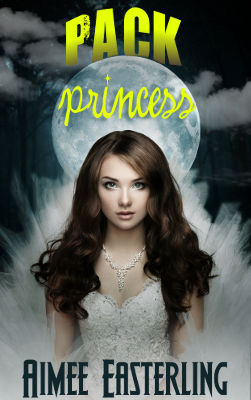
(As a side note, how do you like the new cover for my upcoming novel, Pack Princess? I decided to outsource this one to a pro, and I love the result! But it can still be tweaked, so if you hate it, please let me know.)