Yes, it’s time for another wonderful Weekly Round-Up from Sally Cronin at Smorgasbord blog! This one is really jam-packed with good stuff and friends old and new. And whatever you do, be sure to check out the videos! The one with the dogs and the baby kitten is amazing! Once you’ve enjoyed everything included this week, be sure to pass it along so others can as well, thanks. And thanks to Sally yet again for another super week full of goodies! (Should I say it, folks? Oh, why not! Sally, you ROCK!) 😀 ❤

#FirstLineFriday Submissions Are Now Closed! Here’s the Answer to Our Quiz
Submissions for #FirstLineFriday are officially closed now. My thanks to all who emailed me with their guesses. I knew this one would be difficult, but I had hoped one or two of you would get it. Alas, no one did this week, so without further ado, here’s the answer to today’s quiz:
“The stranger came early in February, one wintry day, through a biting wind and a driving snow, the last snowfall of the year, over the down, walking as it seemed from Bramblehurst railway station, and carrying a little black portmanteau in his thickly gloved hand” is the opening line from The Invisible Man, a science fiction novel written by H. G. Wells in 1897.
Originally serialized in Pearson’s Weekly in 1897, it was published as a novel the same year. The Invisible Man the title refers to is Griffin, a scientist who has devoted himself to research into optics and invents a way to change a body’s refractive index to that of air so that it neither absorbs nor reflects light and thus becomes invisible. He successfully carries out this procedure on himself, but fails in his attempt to reverse it. An enthusiast of random and irresponsible violence, Griffin has become an iconic character in horror fiction.
While its predecessors, The Time Machine and The Island of Doctor Moreau, were written using first-person narrators, Wells adopts a third-person objective point of view in The Invisible Man. The novel is considered very influential, and helped establish Wells as “the father of science fiction.”
Wells said that his inspiration for the novella was “The Perils of Invisibility,” one of the Bab Ballads by W. S. Gilbert, which includes the couplet “Old Peter vanished like a shot/but then – his suit of clothes did not.”
The Invisible Man has a wealth of progeny. The novel was adapted into comic book form by Classics Illustrated in the 1950s, and by Marvel Comics in 1976. Many writers and filmmakers also created sequels to the story, something the novel’s ambiguous ending encourages. Over a dozen movies and television series are based on the novel, including a 1933 James Whale film and a 1984 series by the BBC. The novel has been adapted for radio numerous times, including a 2017 audio version starring John Hurt as the invisible man. The cultural pervasiveness of the invisible man has led to everything from his cameo in an episode of Tom and Jerry to the Queen song “The Invisible Man.”
EARLIEST FILM VERSION:
The Invisible Man is a 1933 American pre-Code science fiction horror film directed by James Whale. Based on H. G. Wells’ 1897 science fiction novel The Invisible Man and produced by Universal Pictures, the film stars Claude Rains, in his first American screen appearance, and Gloria Stuart. The film was written by R.C. Sherriff, along with Philip Wylie and Preston Sturges, though the latter duo’s work was considered unsatisfactory and they were taken off the project.
As an adaptation of a book, the film has been described as a “nearly perfect translation of the spirit of the tale” upon which it is based. The first film in Universal’s Invisible Man film series, it spawned a number of sequels and spin-offs which used ideas of an “invisible man” that were largely unrelated to Wells’ original story.
Rains portrayed the Invisible Man (Dr. Jack Griffin) mostly only as a disembodied voice. Rains is only shown clearly for a brief time at the end of the film, spending most of his on-screen time covered by bandages. In 2008, The Invisible Man was selected for the United States National Film Registry by the Library of Congress as being “culturally, historically, or aesthetically significant.”
PERSONAL NOTE: The image of the man covered by bandages (so you could see him) is why the phrase “thickly gloved hand” made me think of this movie as soon as I read the opening line. While I haven’t read the book, I’ve seen the early version of the movie (not when it was released in 1933, though. Even I’M not that old! 😀 ) and several adaptations over time.
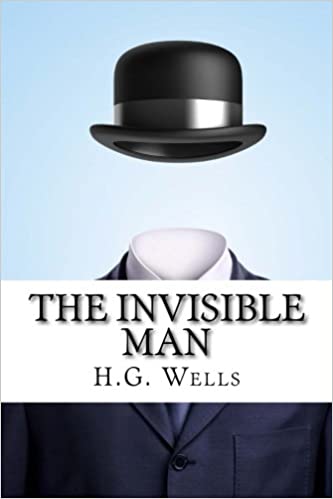
Buy The Invisible Man HERE
And that takes care of our #FirstLineFriday for this week. This was a tough one, and I’m not surprised that we didn’t have a winner. However, I hope you enjoyed taking a look at that extraordinarily long and comma-filled opening line, and contrasting it with what most of us would do today.
Thanks so much for taking part, and I’ll be back with another #FirstLineFriday quiz in a week or two. (Still catching up, here.) See you then!

Share this:

To Oxford or Not to Oxford?
Check out today’s Story Empire post, wherein Joan Hall discusses the use of the Oxford comma. It’s a great reminder of just how important punctuation is in our writing, especially when using it incorrectly can completely distort an author’s intent. Check it out, and then please consider passing it along to others, thanks, and thanks to Joan for another super post! 🙂 ❤

Hey, SE Readers. Joan with you on this Friday in May. Can you believe it’s the middle of the month already?
 My last few posts have been more on the “how to” level. Today I thought I would write something a little lighthearted, although the subject has become controversial among many writers.
I’ll be the first to admit I’m not the best at punctuation. For instance, those pesky little commas often get the better of me. It’s been a long time since I was in school, and English wasn’t my favorite subject. Do I always insert a comma before a conjunction? Or only when each part can be stand-alone sentences? Not to mention all the other rules that come with its usage.
But there is one thing I’m staunch about the use of, and that is the Oxford (or serial) comma. Consider the following:
- I invited my parents, John Lennon…
View original post 342 more words
Share this:
#FirstLineFriday #GiveawayContest #FreeDownloads

It’s Friday again, and though I’m not yet back to my normal weekly schedule, today has worked well for me to present you with another #FirstLineFriday quiz. As you know, this quiz is designed to help us appreciate some of the best opening lines in literary history. From the classics of long ago to the latest best-sellers, no matter how old or how recent, everything is fair game on #FirstLineFriday. Let’s see how many of you recognize (or can guess at) this one.
As always, the rules are simple:
- Be one of the first five people to email me before the game ends at 4:00pm, with the title and author of the correct book.
- Do not reply here on the blog. Email only: marciameara16@gmail.com
- Honor System applies. No Googling, please.
- Submissions end at 4:00 P.M. EST, or when I receive 5 correct answers, whichever comes first.
- Winners who live in the U.S. may request a free download of any one of my books for themselves, or for someone of their choice. OR, if they’ve read all of the offered books, they may request a free download of my next publication.
- Winners who live elsewhere may request a mobi or PDF file of the same books, since, sadly, Amazon won’t let me gift you from the site.
Remember, guesses are free and I am the only one who’ll know if you guess incorrectly, so go for it! And now, the moment you’ve been waiting for! Put on your thinking caps, because here is today’s opening line:
“The stranger came early in February, one wintry day, through a biting wind and a driving snow, the last snowfall of the year, over the down, walking as it seemed from Bramblehurst railway station, and carrying a little black portmanteau in his thickly gloved hand.”
Remember, email answers only, please. Thanks! And now off I go to await your guesses.

Share this:

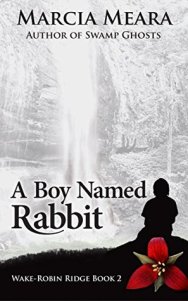
A Boy Named Rabbit (Wake-Robin Ridge #2) by Marcia Meara #bookreview #suspense #supernatural
Today started off on a super good note with a wonderful review of A Boy Named Rabbit by Teri Polen. Hope you’ll stop by her blog and check it out, and will consider passing it along, so others might learn more about this book, too. Rabbit will thank you, and so will I! And my heartfelt thanks to Teri for such a great review! 🙂 ❤

 “Evil’s comin’, boy…comin’ fast. Look for the man with eyes like winter skies, and hair like a crow’s wing. He’s the one you gotta find.”
The remote mountain wilderness of North Carolina swallowed up the ten-year-old boy as he made his way down from the primitive camp where his grandparents had kept him hidden all his life. His dying grandmother, gifted with The Sight, set him on a quest to find the Good People, and though he is filled with fear and wary of civilization, Rabbit is determined to keep his promise to her. When he crosses paths with Sarah and MacKenzie Cole, neither their lives nor his, are ever the same again.
The extraordinary little boy called Rabbit has the power to change the world for everyone he meets, and the resourcefulness to save himself from the one person his grandparents had hoped would never find him. His dangerous…
View original post 182 more words
Share this:
The Building Blocks of Story: Scenes
Another thought-provoking Building Blocks of Story post from Staci Troilo over on Story Empire today. This time, it covers the three basic elements each scene should have. Check it out and see if you’ve been using all three elements, or if you need to work on it a bit (like me). Super information here, so be sure to pass it along so others can learn, too. Thanks, and thanks to Staci for making me think! 😀 ❤

Ciao, SEers. Last time, we discussed Dwight Swain’s concepts of scenes and sequels. (If you missed that post, you can find it here.) Remember, a chapter’s scenes can be one of two things, a scene or a sequel. Today, we’re going to go deeper into the concept of scenes.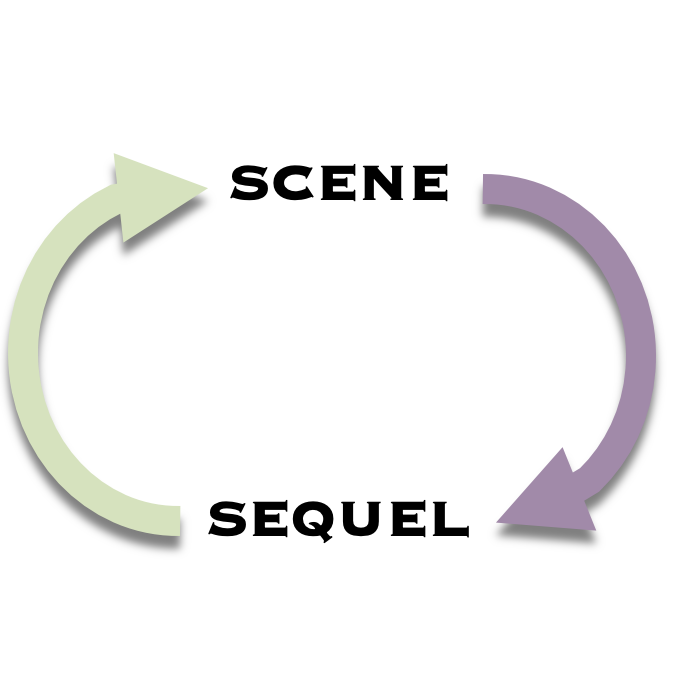
What are scenes?
Scenes are the “proactive” units of a story. They introduce and advance goals, conflicts, and disasters. Scenes should have all three items before advancing to the following sequel. Why must they include all three? Because all three are necessary for tension. And without tension, there’s no reason for a reader to turn the page.
Goals:
A goal is simply what your POV character desires. It could be:
- an object (the Holy Grail)
- a position (POTUS)
- a state of being (overcome an injury)
- a change in status (going from captive to freedom)
View original post 434 more words
Share this:
Hooray for SINGLE Digits! Only 9 More Weeks Until #PeaceTalks #DresdenFiles #HarryDresden #JimButcher

Harry and Thomas Ready to Do Battle With Fiends & Villains Everywhere!
(I believe this is another great piece done by Mika Blackfield)
Wizard Alert! Harry Dresden’s latest adventure is looming on the horizon! Yes, only 9 more weeks until the arrival of #PeaceTalks. That may seem like a long time, but after waiting more than SIX YEARS–did I mention that before?–a mere 9 weeks sounds like an instant. A long, drawn-out instant for sure, but still an instant. Everything is relative, after all. 😉
Cover of the Week
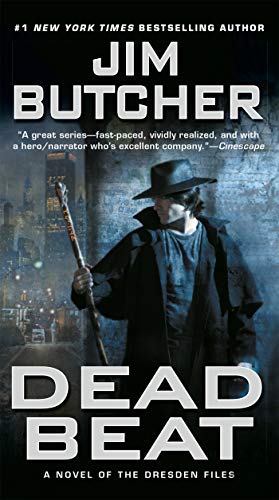
Another Chris McGrath Beauty
Last week, I promised to share a bit more about other characters in the Dresden books. I think I’ll start with one of my personal favorites, Bob the Skull.
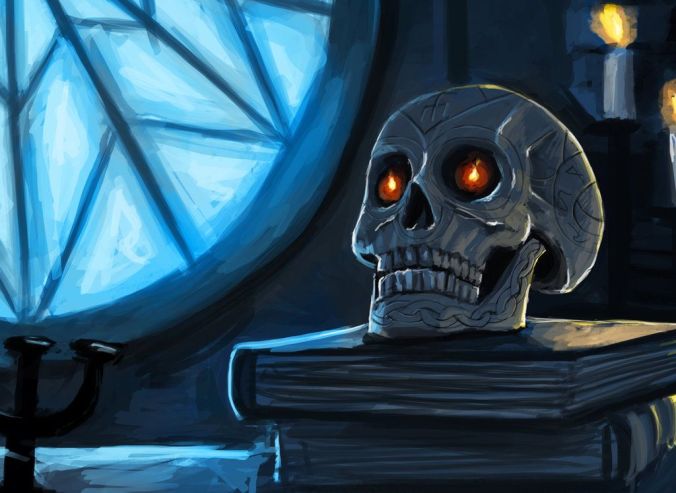
Bob resides on a bookshelf at Harry’s place, and gives out advice, liberally mixed with snarky comments. Of course, it isn’t really the skull, itself, chatting with (at?) Harry. It’s a vastly old spirit that has taken up residence in the empty cranium, as evidenced by the light glowing from the eye sockets. It can (and does) vacate the skull from time to time, swooshing out the door on errands for Harry, or whenever Harry rewards him by letting him visit places where he can read adult novels of dubious literary value.
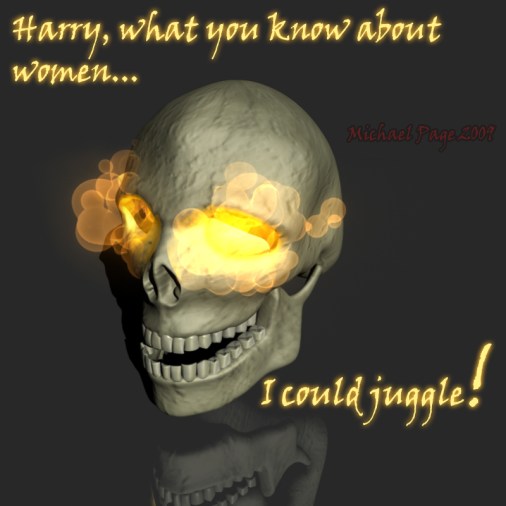
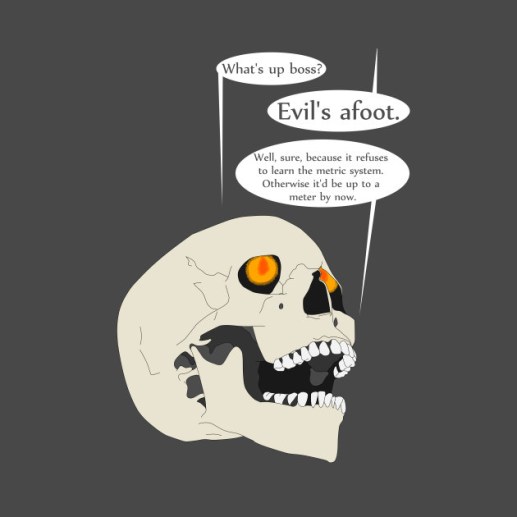
Here are a few memes featuring Bob’s snarky (and often corny) comments and jokes.


And one more just for PURTY! (If you have a weird sense of what purty is!)
😀

Those of you who are up to date on the series might be as worried about Bob’s welfare as I am, but I’m trusting Jim Butcher to right all wrongs and take good care of him for now. (Don’t make me come UP there, Jim!!)
~~~
Next week, we’ll focus on another of my favorite characters, Michael Carpenter. In the meantime, let’s let Harry have the last word:


Stay tuned, Folks and keep counting the weeks! And remember, when it doubt:

Pre-Order Peace Talks HERE
Pre-Order Battle Ground HERE
Share this:

Character Archetypes: The Shadow
Start the week off right with a stop by Story Empire to check out Craig Boyack’s last post in his fabulous Character Archetype series. Today, he talks about the Shadow, and it’s well worth the visit to learn more about this intriguing character. Hope you’ll enjoy the post as much as I did, and will consider passing it along far and wide, so others can find out more, too. Thanks, and thanks to Craig for this excellent post in a truly interesting series! 🙂

They say all good things must come to an end, and here we are at #8 of the Character Archetypes. This series is (was, small tear here) a breakdown of the main Character Archetypes of basic story structure.
Our character today is a fun one, but I find them difficult to write. He’s known as The Shadow. (Dun, dun, DUNNNN!)
This is almost always your antagonist, but there’s a lot more that goes into him than simply making him thwart the hero at every turn. He’s called the shadow for a reason. He is a reflection of the weaknesses and darker parts of the hero himself. This makes the mission of your hero much more difficult.
One of the things to consider when crafting this character is that with a few different turns along the way, your hero could become the shadow himself. It’s likely that your hero might have…
View original post 718 more words
Share this:
Smorgasbord Weekly Round Up – 3rd – 9th May 2020 – New York, Houston, Waterford, Sri Lanka, Asparagus, New books, Reviews, Guests and Laughter
Time for another fabulous Weekly Round Up from Sally Cronin’s Smorgasbord blog. Lots of wonderful goodies this week, including some excellent videos. Check it out, and please remember pass it along so others can as well, thanks! And thanks to Sally who, as always, ROCKS! 🙂 ❤
Share this:
Book Promo – GRINDERS – by C.S. Boyack…

Craig Boyack’s latest book, Grinders, is currently being showcased over on The Story Reading Ape’s wonderful blog. If you haven’t read Grinders, you don’t know what you’re missing. Check out the post to see for yourself, and then pass it along, if you can, so others can find and enjoy this truly imaginative, fun book. Thanks!
Book Promo – GRINDERS – BY C. S. Boyak

 The Write Stuff