To Oxford or Not to Oxford?

Check out today’s Story Empire post, wherein Joan Hall discusses the use of the Oxford comma. It’s a great reminder of just how important punctuation is in our writing, especially when using it incorrectly can completely distort an author’s intent. Check it out, and then please consider passing it along to others, thanks, and thanks to Joan for another super post! 🙂 ❤

Joan Hall's avatarStory Empire

Hey, SE Readers. Joan with you on this Friday in May. Can you believe it’s the middle of the month already?

My last few posts have been more on the “how to” level. Today I thought I would write something a little lighthearted, although the subject has become controversial among many writers.

I’ll be the first to admit I’m not the best at punctuation. For instance, those pesky little commas often get the better of me. It’s been a long time since I was in school, and English wasn’t my favorite subject. Do I always insert a comma before a conjunction? Or only when each part can be stand-alone sentences? Not to mention all the other rules that come with its usage.

But there is one thing I’m staunch about the use of, and that is the Oxford (or serial) comma. Consider the following:

  • I invited my parents, John Lennon…

View original post 342 more words

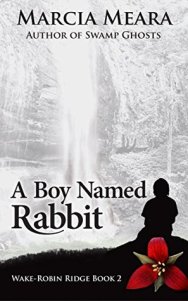
A Boy Named Rabbit (Wake-Robin Ridge #2) by Marcia Meara #bookreview #suspense #supernatural

Today started off on a super good note with a wonderful review of A Boy Named Rabbit by Teri Polen. Hope you’ll stop by her blog and check it out, and will consider passing it along, so others might learn more about this book, too. Rabbit will thank you, and so will I! And my heartfelt thanks to Teri for such a great review! 🙂 ❤

Teri Polen's avatarBooks and Such

“Evil’s comin’, boy…comin’ fast. Look for the man with eyes like winter skies, and hair like a crow’s wing. He’s the one you gotta find.”

The remote mountain wilderness of North Carolina swallowed up the ten-year-old boy as he made his way down from the primitive camp where his grandparents had kept him hidden all his life. His dying grandmother, gifted with The Sight, set him on a quest to find the Good People, and though he is filled with fear and wary of civilization, Rabbit is determined to keep his promise to her. When he crosses paths with Sarah and MacKenzie Cole, neither their lives nor his, are ever the same again.

The extraordinary little boy called Rabbit has the power to change the world for everyone he meets, and the resourcefulness to save himself from the one person his grandparents had hoped would never find him. His dangerous…

View original post 182 more words

The Building Blocks of Story: Scenes

Another thought-provoking Building Blocks of Story post from Staci Troilo over on Story Empire today. This time, it covers the three basic elements each scene should have. Check it out and see if you’ve been using all three elements, or if you need to work on it a bit (like me). Super information here, so be sure to pass it along so others can learn, too. Thanks, and thanks to Staci for making me think! 😀 ❤

Staci Troilo's avatarStory Empire

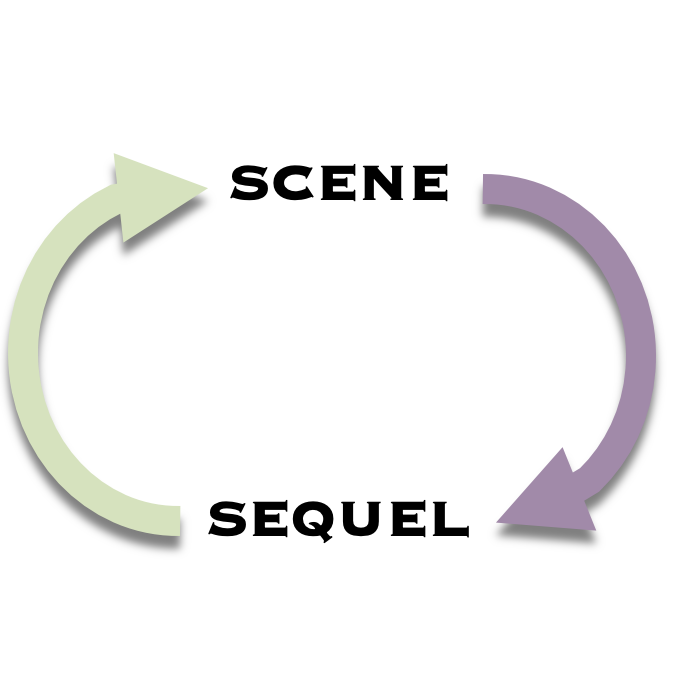
Ciao, SEers. Last time, we discussed Dwight Swain’s concepts of scenes and sequels. (If you missed that post, you can find it here.) Remember, a chapter’s scenes can be one of two things, a scene or a sequel. Today, we’re going to go deeper into the concept of scenes.

What are scenes?

Scenes are the “proactive” units of a story. They introduce and advance goals, conflicts, and disasters. Scenes should have all three items before advancing to the following sequel. Why must they include all three? Because all three are necessary for tension. And without tension, there’s no reason for a reader to turn the page.

Goals:

A goal is simply what your POV character desires. It could be:

  • an object (the Holy Grail)
  • a position (POTUS)
  • a state of being (overcome an injury)
  • a change in status (going from captive to freedom)

View original post 434 more words

Character Archetypes: The Shadow

Start the week off right with a stop by Story Empire to check out Craig Boyack’s last post in his fabulous Character Archetype series. Today, he talks about the Shadow, and it’s well worth the visit to learn more about this intriguing character. Hope you’ll enjoy the post as much as I did, and will consider passing it along far and wide, so others can find out more, too. Thanks, and thanks to Craig for this excellent post in a truly interesting series! 🙂

coldhandboyack's avatarStory Empire

They say all good things must come to an end, and here we are at #8 of the Character Archetypes. This series is (was, small tear here) a breakdown of the main Character Archetypes of basic story structure.

Our character today is a fun one, but I find them difficult to write. He’s known as The Shadow. (Dun, dun, DUNNNN!)

This is almost always your antagonist, but there’s a lot more that goes into him than simply making him thwart the hero at every turn. He’s called the shadow for a reason. He is a reflection of the weaknesses and darker parts of the hero himself. This makes the mission of your hero much more difficult.

One of the things to consider when crafting this character is that with a few different turns along the way, your hero could become the shadow himself. It’s likely that your hero might have…

View original post 718 more words

Smorgasbord Weekly Round Up – 3rd – 9th May 2020 – New York, Houston, Waterford, Sri Lanka, Asparagus, New books, Reviews, Guests and Laughter

Time for another fabulous Weekly Round Up from Sally Cronin’s Smorgasbord blog. Lots of wonderful goodies this week, including some excellent videos. Check it out, and please remember pass it along so others can as well, thanks! And thanks to Sally who, as always, ROCKS! 🙂 ❤

How to Publish with KDP: Part Eight

Today, Harmony Kent’s post on Story Empire deals with setting up a KDP account, and I truly wish I’d had her step-by-step instructions (with screen shots) when I started out. Hope you’ll check out this excellent post, even if you aren’t new to the process, and will pass it along to others so anyone confused by it all will know just what to do. Thanks, and thanks to Harmony for this very helpful series of posts on self-publishing. 🙂

Harmony Kent's avatarStory Empire

Image courtesy of bigstock.com

Hello SErs. Harmony here.  As promised, here is  part eight in the post series dedicated to taking a step-by-step look at how to get your finished manuscript from your computer and on sale on Amazon in both ebook and paperback.

If you’d like to take a look back at the previous posts in this series, please click on the links below:

Outline: https://wp.me/p7OGru-29c

Part 1 (Software for Writing) : https://wp.me/p7OGru-29t

Part 2 (General Formatting Necessities) : https://wp.me/p7OGru-29J

Part 3 (Ebook Conversion) : https://wp.me/p7OGru-2ah

Part 4 (Paperback Formatting) : https://wp.me/p7OGru-2eS

Part 5 (Image Software for Making Book Covers) : https://wp.me/p7OGru-2gi

Part 6 A (Using Amazon’s Cover Creator Tool for eBook) : https://wp.me/p7OGru-2gQ

Part 6 B (Making your own ebook cover to upload to Amazon) : https://wp.me/p7OGru-2hQ

Part 7 A (Using Amazon’s Cover Creator Tool for Paperback) : https://wp.me/p7OGru-2jY

Part 7 B (Making your own PDF book cover…

View original post 542 more words

Finding a Critique Partner

Mae Clair has an excellent post on Story Empire today on working with Critique Partners. If you’ve considered doing this, but were on the fence, you should check this out. And if you do use critique partners and/or beta readers, you’ll be interested in this one, too. Please don’t forget to pass it along as well, so other writers can consider this option. Thanks, and thanks to Mae for a great post! 🙂

Mae Clair's avatarStory Empire

Hi, SEers. You’re with Mae today with a subject that’s been discussed before. Even so, I hope this post brings something new to the table, as the subject is one I feel strongly about.

Critique partners are different than beta readers, and both have value. Some writers use both, but most use one or the other. For me, it’s always been critique partners. Finding a good CP, or several good CPs, is not easy—especially when they may not turn up where you expect them.

An open Macbook on a table with a cup of coffee and writing paper

I met Karen, my first critique partner, online. We both loved writing and reading but didn’t know that about each other at the time. Instead, we connected on a site devoted to a short-lived TV show we both enjoyed. We developed a friendship first, one that went beyond the show. From there we realized we both loved books, and—shock—writing.

Karen was more of a plotter. She’d…

View original post 867 more words

Smorgasbord Blog Magazine – Weekly Round Up 26th April – 2nd May 2020 – Music, Hoisin Sauce, Humour, Books, Reviews, Health and Guests.

Lots of great stuff on Sally Cronin’s Weekly Round-Up Post, Folks. Do yourself a favor and check it out, then pass it along so others can, too. You don’t want to miss it, trust me. 😀 Thanks, and thanks to Sally, as always, for such an entertaining assortment of stories and videos. 🙂 ❤

The Sixth Sense

If you’ve been following along with Joan Hall’s Story Empire posts on using the five senses in writing (and even if you haven’t), you’ll want to check out today’s post, for sure. She’s covered the standard senses of sight, smell, etc, and is now talking about what’s known as the Sixth Sense. Call it what you will, it’s intriguing to consider ways to use this one in your books, too. Head on over to see for yourself, and please pass the post along as well, so that others can enjoy this idea. Thanks, and thanks to Joan for another great post! 🙂

Joan Hall's avatarStory Empire

Hey, SE Readers. Joan with you today. Over the past few weeks, I’ve written a series of posts about using the five senses in writing. If you missed any of them, you can read by clicking on the following links:

Today, I’m going to talk about what many refer to as a sixth sense. I swear my mother had it. I became aware of her “gift” when I began junior high school. How else could she have known my boyfriend and I kissed on the school bus?  Oh well, that’s a different story.

Seriously, we’ve heard the sixth sense called many things—a gut feeling, instinct, premonition, ESP, clairvoyance.

Whatever your thoughts on the subject, I believe, to a degree, we all have a sixth sense. Some of us are more in tune or aware. Have you ever been driving to work and suddenly have an…

View original post 458 more words

The Building Blocks of Story

Are you a right-brain kinda person or a left-brained one? Do you know that you use both for different tasks while writing? Staci Troilo has a very interesting post today on Story Empire. I highly recommend checking it out. It’s really got me thinking! Please consider passing it along so others can check it out, too, thanks, and thanks to Staci for such a cool topic! 🙂

Staci Troilo's avatarStory Empire

Ciao, SEers. I’m currently wrapping up edits on a full five-book series. It’s hard to revise all day, every day—especially when it’s your own work instead of a client’s—so sometimes, creative breaks are necessary. They actually serve two purposes.

  1. They let your analytical brain take a rest, so you’re less likely to make editing mistakes due to mental fatigue.
  2. They give you fodder for your next work.

And, let’s face it. If you’re a writer, you’re probably not a one-and-done artist. You’ve got a lot of stories to tell. There are no shortcuts. If you want to write multiple books, you have to write multiple books. So, while you’re doing the post-work on your soon-to-be-released masterpiece, you might as well also be thinking about your next one.

I’ve got a pretty cool concept for my next series. It’s combining two genres I love plus lore that I adore. (Sorry…

View original post 610 more words