#BonusGuestDay – Featuring Author #TonyRiches – #NewRelease

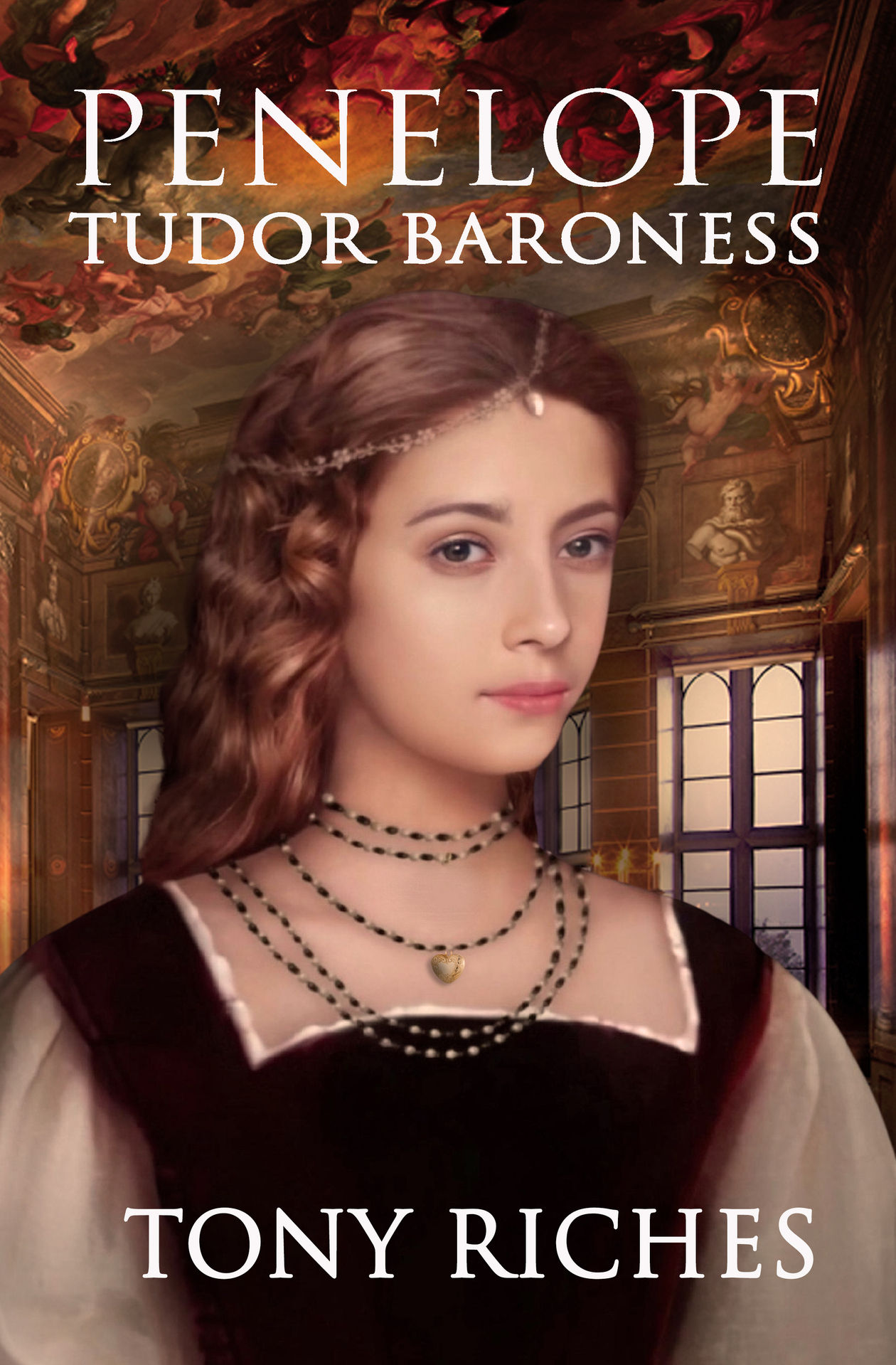
It’s been a few years since today’s guest has visited us here on The Write Stuff, so I’m very happy to welcome Tony back again to share a bit about his latest release, Penelope- Tudor Baroness, Book 4 of The Elizabethan Series. This one sounds every bit as fascinating as Tony’s earlier Elizabethan books, and I know many of you will want to check it out.


Book cover

Lady Penelope is one of the most beautiful and sought-after
women in Elizabethan England. The daughter of the queen’s
nemesis, Lady LeAce Knollys, Countess of Essex, she
becomes the stepdaughter of Robert Dudley when he
marries her mother in secret.

Penelope’s life is full of love and scandal. The inspiration for
Sir Philip Sidney’s sonnet Astrophel and Stella, she is
inevitably caught up in her brother Robert’s fateful rebellion.
A complex and fascinating woman, her life is a story of love,
betrayal, and tragedy. Discover how Penelope charms her
way out of serious charges of treason, adultery, and forgery,
and becomes one of the last truly great ladies of the Tudor
court.

A maid of honour to Queen Elizabeth, Penelope outlives the end of the Tudors with the death of the old queen and the arrival of King James, becoming a favourite lady-in-waiting to the new queen, Anne of Denmark.

“This is the story of a woman who lived life on her own terms, and one that will stay with you long after you finish reading it.”


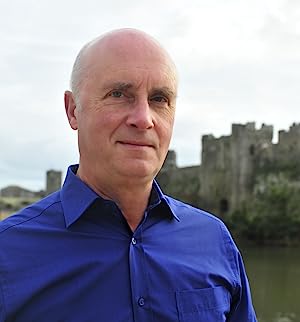
Author Tony Riches

Tony Riches is a full-time UK author of Tudor historical fiction. He
lives with his wife in Pembrokeshire, West Wales and is a specialist
in the lives of the early Tudors. As well as his new Elizabethan series,
Tony’s historical fiction novels include the best-selling Tudor trilogy
and his Brandon trilogy, (about Charles Brandon and his wives). For
more information about Tony’s books please visit his website
tonyriches.com and his blog, The Writing Desk and find him on
Facebook and Twitter @tonyriches


Find Tony on Social Media HERE:
Website 
Writing blog
Twitter
Facebook
Podcasts 
Goodreads 


Buy Links for Penelope – Tudor Baroness HERE:

Amazon US
Amazon UK 
Amazon CA
Amazon AU 

#LetsTalk – #Marketing

Happy Moon’s Day, Everybody! Hope your day is going well, and that at least some of you are in the mood to talk a bit about marketing today.

Confession time: I have never marketed my books anywhere but on my blog or at my local wildlife talks, and I think it’s way past time to change that. The question I’m posing today is, what inexpensive marketing have you tried, and how did it work for you?

I’m not in a position to do something as costly as Book Bub, though I’ve heard it’s well worth every penny, but there are quite a few smaller, less expensive alternatives out there that would likely be far better than not doing any at all. (Fussy Librarian comes to mind, but I know there are other affordable options around, too.)

Have you used any? Were they worth the effort? What did you like/dislike about them? I really need some help in deciding which ones I should try first, and I thank you for any suggestions you can offer. Any and all comments would be appreciated.


LET’S TALK!


#ThankYou and a Quick Health #Update

Just wanted to thank everyone who commented on Dennis’s wonderful butterfly post yesterday. So glad you enjoyed it, and I’m sorry I was unable to respond to comments. I’ve run into complications from my last dental procedure and have had to start a course of antibiotics, along with some pretty potent pain medication. I may be a bit scarce for a few more days, but hopefully, I’ll be back to my regular routines soon.

If all goes well, Dennis and I will continue with our #WildlifeWednesday series as time permits, too. Between us, we have lots of goodies we we want to tell you about, and we’re both looking forward to doing so. In fact, I have a post coming up on July 12 that I hope you’ll enjoy, featuring one of my favorite wading birds. Looking forward to sharing it with you. 

In the meantime, don’t worry if I’m pretty quiet for another week or two. I’ll be back before you know it!


See you soon!

#WildlifeWednesday – #ButterfliesForTheRestOfUsPart2 – Featuring #DennisBurnette

It’s #Wildlife Wednesday again, folks, and I’m happy to say that my friend Dennis Burnette is back to visit us with Part 2 of his very informative Butterflies for the Rest of Us post. I know you’ll enjoy learning more about these interesting insects and seeing lots of fabulous photos. And now, without further ado, I’m turning the floor over to Dennis!  Take it away, my friend!


Thanks, Marcia!


Butterflies for the Rest of Us Part 2


PLEASE NOTE:
All photographs in this post were taken by and belong to
Dennis Burnette. Thank you for respecting that.


In Part 1 I explained that I’m active in a butterfly group. We’re similar to a bird-watching group in that we enjoy watching and identifying them but not harming them. As a retired educator, I enjoy presenting programs on butterflies for nature-oriented groups.

As I said in the last installment, I get a lot of questions. Biology isn’t my academic discipline, but in the 25 years or so that I have been watching and studying butterflies, I’ve learned some interesting facts about them.

Probably this is the most common question I hear: What’s the difference between butterflies and moths? I gave some answers to that one last time. Here are some additional questions people ask:

How old can butterflies get?

The process of metamorphosis usually takes several weeks, the exact time depending on the species of butterfly and external factors such as weather. Once metamorphosis is complete, the adult emerges and seeks out mates. Keep in mind that it’s still a butterfly whether it’s an egg, a caterpillar, a chrysalis, or an adult, so the butterflies we see flying are in their fourth stage of life. They’re elderly bugs! Some butterflies live for a few weeks as an adult. Others may live more than a year. Generally speaking, most butterflies tend to live a few months from egg through adulthood. Butterfly species that migrate tend to live longer than those that don’t. Storms, attempted predation, strong winds, and obstacles encountered in flight eventually wear out an old butterfly’s wings.

A very old and battered Common Buckeye butterfly.

Can a butterfly sting or bite you?

Butterflies do not have stingers at any stage of metamorphosis. When a butterfly is a caterpillar, its mouthparts are designed to chew leaves. It doesn’t have teeth, pincers or any other structure that would allow it to bite a person. In the chrysalis stage the cells are rearranged so that the mouth becomes a tube (proboscis) similar to a drinking straw to allow it to drink nectar from flowers. When it isn’t using the tube, it keeps it curled up under its head. There is nothing about the drinking tube that could hurt a person.

Butterflies spend part of their lives as caterpillars, but not all caterpillars are butterfly larvae. In addition to moths, other organisms such as beetles and flies may spend time as caterpillars or caterpillar-like forms. A few of these have stinging hair-like structures on their bodies. It you find a critter that looks like a hairy or fuzzy caterpillar, it’s best not to touch it to avoid getting stung unless you know for sure what it is.

What do butterflies do during cold or rainy weather?

Most butterfly species prefer warm temperatures and sunny skies. When the weather turns cooler than they’re used to, they have trouble making their muscles work. They’ll find a crevice in tree bark or rocks, a brush pile, or other protected place to hide until the temperatures get warmer. Likewise, if it’s raining, even in warm weather, often they will find a place to hide. It isn’t uncommon to find butterflies hanging upside down under a large leaf during and just after rainstorms.

Cabbage White butterfly sheltering under a leaf.

Should I set up a butterfly house to help butterflies in my neighborhood?

People see boxes somewhat like bird nesting boxes for sale in some gift shops and garden centers that are labeled “butterfly house.” Often they’re brightly painted with images of butterflies and flowers. These may look attractive in a garden as garden art. However, they aren’t likely to attract butterflies. They rarely (or never?) are used by butterflies, although theoretically they could use them to get in out of the rain. I’ve never heard of that happening, however.

Butterfly houses aren’t likely to attract butterflies but
could make pretty garden ornaments.

Where do butterflies go in winter?

The flight period for most butterfly species is during some part of the warmer months. The life expectancy for most species of North American butterflies is measured in weeks and months. Most are no longer flying in winter in all but the warmest parts of this continent. That being said, some butterflies migrate. You may already know about Monarch butterflies and their long migration of almost 3,000 miles between central Mexico to southern Canada, and there are other migratory butterfly species, as well. Also, there are a few butterflies that are hardier in cold weather than most so they have a longer flight period, and a few species that stay put but hibernate. If they stay put, a few spend the winter as adults, but most spend the winter hidden from predators as chrysalises.

Sanctuary for migrating Monarch butterflies in Mexico.
(NOTE: For those who may not realize this, every one of those little orange “leaves” in this picture is actually a monarch butterfly. )

Butterflies may be pretty, but what good are they?

We often hear the term “ecosystem.” Butterflies are part of it. If you’ve ever seen a house being built, you already understand the concept of a system of components. Beginning with the foundation, different pieces are connected to form the flooring and “bones” of the house, each piece different in form, function, and materials but becoming interconnected. An ecosystem is made up of the living and nonliving elements of the environment, the living organisms, soil, water, and weather, within a particular geographical area.

Butterflies are pollinators. While they aren’t quite as efficient as honeybees, they are important pollinators for many plant species. For instance, some early native azaleas are pollinated almost exclusively by a species of swallowtail butterfly. Butterflies also are a food source for other organisms such as birds as part of the food chain. Further, for humans concerned about the environment, butterflies are an indicator species. A healthy butterfly population signals a healthy ecosystem.

Black form Eastern Tiger Swallowtail carrying
pollen on its body.

Do you have other questions about butterflies? Feel free to ask them in the comments.


NOTE: Due to a very busy schedule, Dennis may not always be able
to respond to comments  immediately, but he will do his best to get back
to you within a day. Thanks for your understanding!


Dennis Burnette
Birding on Great Abaco Island in the Bahamas

Dennis Burnette is a retired college professor currently volunteering as a nature educator, focusing on birds, butterflies, and native plants. He does numerous presentations and field trips for nature organizations, master gardeners, garden clubs, church groups, scouts, etc. He is active in and has held elected office in several nature organizations. He has looked for native plants and other wildlife in 11 countries. Recently he received North Carolina’s Order of the Longleaf Pine in recognition of volunteer service to the state.


Some Additional Interesting  Info About Dennis

*Past president of local Audubon Society chapter and currently on
the local Audubon board.

*Past board member of the statewide NC Native Plant Society.

*Past president of the Piedmont Bird Club.

*Past vice president of Carolina Bird Club.

*Founded the Carolina Butterfly Society in North and South Carolina
about 25 years ago; CBS now has about 200 members
in the Carolinas and surrounding states.

*Former member of the Guilford County Open Space Program Committee.


Enjoying a cruise on the Cape Fear River

in Wilmington, North Carolina


Hope you’ve enjoyed learning a bit more
about butterflies today. Stay tuned for additional info
on future visits from Dennis, featuring wildlife of all sorts!

#ShareAReviewDay – #SwampGhosts – Reviewed by Author Marlena Smith

I was absolutely delighted to see this review on author Marlena Smith’s website, Scribblings of a Southern Belle, and decided I’d like to share it here on The Write Stuff. Hope you enjoy reading what Marlena though of my second novel, Swamp Ghosts: Riverbend Book 1.

Marlena, thank you so much!


Review by Marlena Smith:

My Thoughts: In one word, WOW. This book is such a great read! I had to force myself to stop reading so I could go to work. I also had to remind myself I was only reading a story because I was pulled so deeply into the book.

Swamp Ghosts has a lot to offer. Suspense, humor, romance. And you read from multiple points of view, and for this story and what’s going on, it works so well. There are quite a few surprises along the way, and you’re left wondering what will happen next. Definitely some edge-of-your-seat moments!

The characters are well-written. You can’t help but fall in love with a few of the main ones, like Maggie and Gunn. Even the side characters have their charms.

Overall, I loved reading Swamp Ghosts. I highly recommend giving it a look if you enjoy the mixture of suspense and romance.


You can Buy Swamp Ghosts HERE


BLURB

Wildlife photographer Gunnar Wolfe looked like the kind of guy every man wanted to be and every woman just plain wanted, and the St. Johns River of central Florida drew him like a magnet. EcoTour boat owner Maggie Devlin knew all the river’s secrets, including the deadliest ones found in the swamps. But neither Maggie nor Gunn was prepared for the danger that would come after them on two legs.

On a quest to make history photographing the rarest birds of them all, Gunnar hires the fiery, no-nonsense Maggie to canoe him into the most remote wetland areas in the state. He was unprepared for how much he would enjoy both the trips and Maggie’s company. He soon realizes he wants more than she’s able to give, but before he can win her over, they make a grisly discovery that changes everything, and turns the quiet little town of Riverbend upside down. A serial killer is on the prowl among them.


 Author Marcia Meara

Marcia Meara lives in central Florida, just north of Orlando, with her husband of over thirty years and four big cats.

When not writing or blogging, she spends her time gardening, and enjoying the surprising amount of wildlife that manages to make a home in her suburban yard. She enjoys nature. Really, really enjoys it. All of it! Well, almost all of it, anyway. From birds, to furry critters, to her very favorites, snakes. The exception would be spiders, which she truly loathes, convinced that anything with eight hairy legs is surely up to no good. She does not, however, kill spiders anymore, since she knows they have their place in the world. Besides, her husband now handles her Arachnid Catch and Release Program, and she’s good with that.

Spiders aside, the one thing Marcia would like to tell each of her readers is that it’s never too late to make your dreams come true. If, at the age of 69, she could write and publish a book (and thus fulfill 64 years of longing to do that very thing), you can make your own dreams a reality, too. Go for it! What have you got to lose?

Buy Marcia’s Books Here

Novels
Wake-Robin Ridge: Book 1
A Boy Named Rabbit: Wake-Robin Ridge Book 2
Harbinger: Wake-Robin Ridge Book 3
The Light: Wake-Robin Ridge Book 4

Swamp Ghosts: Riverbend Book 1
Finding Hunter: Riverbend Book 2
That Darkest Place: Riverbend Book 3

Riverbend Spinoff Novellas
The Emissary 1
The Emissary 2 – To Love Somebody
The Emissary 3 – Love Hurts

Poetry
Summer Magic: Poems of Life and Love

Reach Marcia on Social Media Here:

Blog: The Write Stuff
Facebook
Email: marciameara16@gmail.com

#ThorsDaySmile – #AmLaughing – #Humor

It’s full-on SUMMER here in Florida, and for a Norseman, it’s miserably hot, especially given that heavy-metal suit of armor Thor has to wear. He’s complaining about the summer temps around here all day long. Of course, so am I, and I’m a Florida native, so I guess I should cut him some slack. Therefore, here are a few summertime memes to cheer him up. Hope you get a few smiles from these, too! 😀


And that’s a wrap, Folks!
Remember … Stay COOL out there!

(If you can.)

#WildlifeWednesday – #ButterfliesForTheRestOfUs – Featuring #DennisBurnette

Today, it’s my great pleasure to introduce my very good friend and wildlife lover, Dennis Burnette. Some of you may remember I mentioned having reconnected with Dennis recently, after more than 60 years. (We were friends in high school, waaay back then). In addition to just the pleasure of hearing from him, it was great fun to find out he loves wildlife as much as I do, and has spent many years photographing and documenting all sorts of things about the birds and other creatures we share the world with. Naturally, I immediately asked Dennis to share some of his knowledge with us here on The Write Stuff, and he agreed. I know you guys will make him feel welcome, and will enjoy his visits, so let’s get started! Dennis, the floor is yours. Take it away, my friend!


NOTE: Somehow, I managed to forget to give Dennis credit for all photos in this post! I had a little blurb written up to go with that info, too, but I can’t find it now. So, for any of you who are wondering, all of today’s photos were taken by, and belong to, Dennis Burnette. Thanks for respecting that! 😀


Marcia asked me to write a few words about my experiences with wildlife. I’m honored; thanks, Marcia. I’ll try to do you proud.

Butterflies for the Rest of Us Part 1

I titled this first entry “Butterflies for the Rest of Us” because there are artistic and creative people who love the colors and patterns of what some folks call “flying flowers,” and there are people who make a career of serious scientific studies of butterflies. I know from experience that there are many of us who enjoy learning about wildlife as part of our overall love of nature. I think of these folks as “the rest of us.”

It’s odd how the mind works. I just wrote the sentence, “I’m active in a butterfly group.” That raised an image in my mind of me standing around at a cocktail party interacting with a bunch of butterflies. That led to me wondering if an actual group of butterflies (as opposed to a fantasy group at a cocktail party) is called anything in particular, like a flock or even a herd.

That led me to the Internet where I found an answer to that question. It may be AN answer, but I’m not convinced that it is THE answer. On a website I’ve never visited before called BeingHuman.org I found the following: “A group of butterflies is a kaleidoscope. They’re also known as a swarm, flutter, flight, rabble, or a wing of butterflies.”

I have been interested in butterflies as an amateur naturalist for at least 25 years.  (I’ve never collected butterflies, although I love to photograph them.) In all that time I have heard only one collective term for a bunch of butterflies, and it wasn’t kaleidoscope or any other term on the above list.

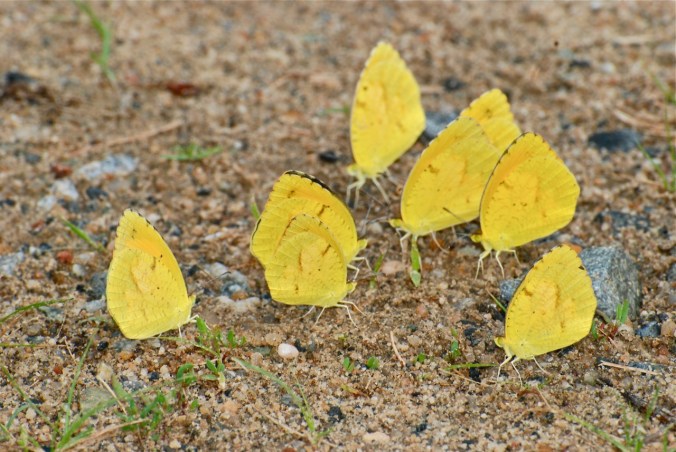
That’s because butterflies generally don’t form up into groups like a flock of birds or a herd of bison. Sometimes butterflies will be drawn to a patch of damp soil such as on a dirt road. Experts on butterfly behavior say that they are seeking minerals that they can’t get in flower nectar.

Often it’s just one butterfly, but occasionally other butterflies find the same damp spot. I have seen more than a dozen individuals of different species congregating on the same patch of damp soil. Butterfly watchers call these conglomerations “puddle parties.” A butterfly engaged in that behavior is said to be “puddling.”
At any rate, I’m active in a butterfly group. We don’t collect them or otherwise harm them. We enjoy watching them, and some of us like photographing them. I also do programs on butterflies for nature societies, garden clubs, and other nature oriented groups.

Consequently, I hear a lot of questions, often the same ones repeatedly. I don’t claim to be an expert. Biology isn’t my academic discipline, but I’ve learned a thing or two about butterflies so I feel okay about answering the most common questions.

There are specialists who study butterflies scientifically (called lepidopterists). Then there are the rest of us who are curious about these insects but aren’t inclined to make a career in science to study them. Here are some interesting tidbits about butterflies for the rest of us:

Butterflies and moths are closely related, and they share some physical features and behaviors in common. Like many other insects, both go through a series of bodily changes called metamorphosis. Let’s take a look at the process via the monarch butterfly.

The female lays eggs, which contain larvae (caterpillars) that emerge
when they’ve grown enough.
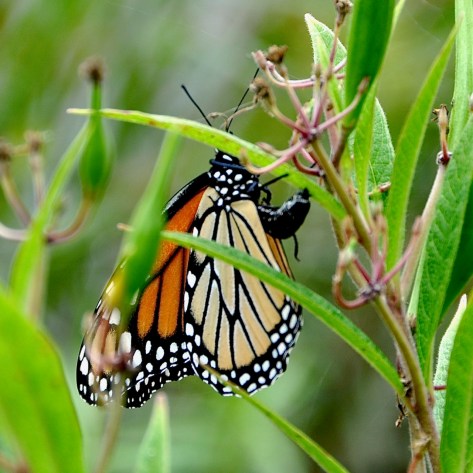
The caterpillar’s main job is to eat and grow.
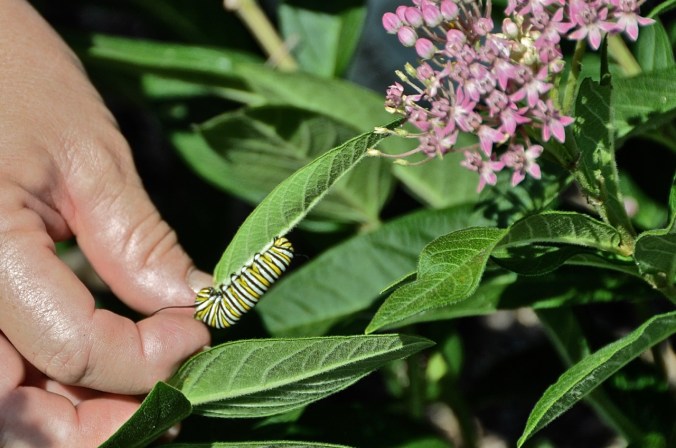
When they get as big as they’re going to get, they find a safe place to avoid predators where they go through another dramatic change by becoming
a pupa (cocoon for moths or chrysalis for butterflies).

The cells in the body go through yet another dramatic change by rearranging to become the creature with wings that emerges as an adult butterfly or moth,
in this case, a beautiful adult male monarch butterfly.

What’s the difference between butterflies and moths?

I’m going to use the phrase “tend to” a lot because when we talk about the differences, the majority of butterflies and moths may share common characteristics but almost always there are exceptions. For instance, butterflies usually fly during the daylight hours whereas moths mostly fly at night. However, there are exceptions.

Butterflies tend to be sleek whereas moths tend to be plump and fuzzy. Moth flight tends to be floppy and erratic, whereas butterfly flight tends to be direct and seemingly purposeful. Butterflies tend to be colorful and/or distinctly marked, while moths tend to be muted in shades of gray, tan, and brown.

Again, there are exceptions with some moths being large and dramatically marked. Both moths and butterflies have antennae, which are sensory organs, but moth antennae tend to have a feathery look while butterflies usually have slender wire-like antennae with a bump or “knob” at the tip.

In Part 2 I’ll answer more burning questions about butterflies. Do you have any such questions? Feel free to ask them in the comments.
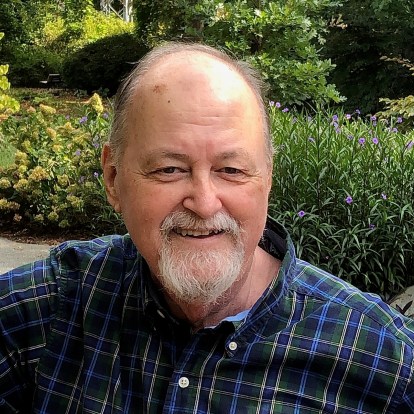

Dennis Burnette

Dennis Burnette is a retired college professor currently volunteering as a nature educator, focusing on birds, butterflies, and native plants. He does numerous presentations and field trips for nature organizations, master gardeners, garden clubs, church groups, scouts, etc. He is active in and has held elected office in several nature organizations. He has looked for native plants and other wildlife in 11 countries. Recently he received North Carolina’s Order of the Longleaf Pine in recognition of volunteer service to the state.


Some Additional Interesting  Info About Dennis

*Past president of local Audubon Society chapter and currently on
the local Audubon board.

*Past board member of the statewide NC Native Plant Society.

*Past president of the Piedmont Bird Club.

*Past vice president of Carolina Bird Club.

*Founded the Carolina Butterfly Society in North and South Carolina
about 25 years ago; CBS now has about 200 members
in the Carolinas and surrounding states.

*Former member of the Guilford County Open Space Program Committee.


Dennis’s wife Lynn is a birder, butterflier and great travel companion.

Dennis and Lynn Burnette


HOPE YOU’VE ENJOYED THIS INTRO TO BUTTERFLIES. 
BE SURE TO STOP BY ON JUNE 28 WHEN
DENNIS WILL BE BACK WITH 
LOTS MORE GOOD STUFF!
SEE YOU THEN!
#GuestDayTuesday Featuring Author #LizaGrantham

It’s #GuestDayTuesday again, folks, and I’m happy to announce that we have Liza Grantham visiting us today. Liza has a brand new book out, and it looks like another winner to me, so without further ado, I’m going to turn to floor over to her. Liza? Take it away, my friend! 😀


Hi, Marcia! It’s great to be back as a guest on The Write Stuff – thank you so much for having me here today!

Since I shared my ‘Ten Things’ with you back in February I’ve been very busy; not only coping with the usual fun and frolics of rural life, but also adding the next instalment to the Mad Cow in Galicia memoir series.

The series tells the ongoing saga of how my hubby, Gary, and I traded the sun, sea, and sands of Gran Canaria for a home in Galicia, one of the coldest, wettest parts of Spain. Living in an old stone house surrounded by fields and forests might sound idyllic, but our rustic lifestyle wasn’t quite as tranquil as we’d planned. Menacing cheeses, reports of hyenas, cows running amok, a bloodthirsty cockerel and a morning when the sun didn’t rise were amongst the many shocks and surprises that rural life had in store.

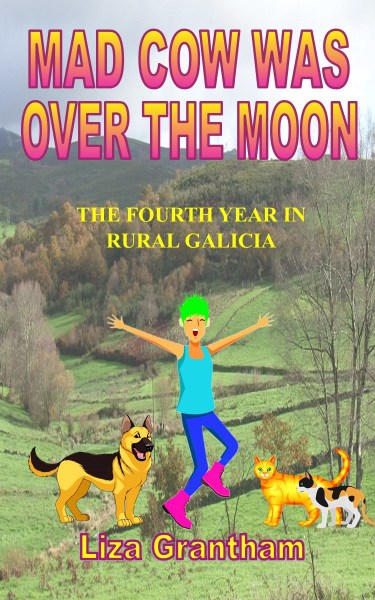
The fourth book in the series, Mad Cow Was Over the Moon, was released in March. It’s another madcap romp through the Galician countryside and guaranteed to raise a smile.


BLURB:

After three years in Galicia, Liza knows that truth can be stranger than fiction. As she heads into the fourth year, who knows what the future will bring?

Spring is in the air and Lenda’s no longer a puppy—will the ugliest dog in Galicia claim her for his bride?

When Gary visits the Ghost House he’s struck by a mystery illness—is it just a coincidence or is he a man possessed?

A chilling prophecy casts doubts over the future, but Liza gets crafty and the fur starts to fly.

JOIN LIZA AND GARY FOR ANOTHER YEAR OF
COUNTRY CAPERS IN RURAL GALICIA.

Buy Mad Cow Was Over the Moon HERE


Liza Grantham was born in 1965 in the brewery town of Burton-on-Trent, UK. She taught for over 20 years in primary schools in the UK and Gran Canaria. In 2011, she and her husband Gary decided to try their hands at a self-sufficient lifestyle in Galicia, northern Spain.

Liza is a published poet and author of the Amazon best-selling Mad Cow in Galicia memoir series in which she recounts, with honesty and humour, the countless adventures that are part of her madcap country life.


Buy Liza’s Books HERE:

Mad Cows and Englishmen 

How Now, Mad Cow? 

’Til Mad Cows Comes Home

Mad Cow Was Over the Moon


Reach Liza on Social Media HERE:

  AllAuthor

  Goodreads

Facebook