Don’t worry: I’m not shirtless on my book cover

image By Ned Hickson
We’ve all heard the adage about not judging a book by it’s cover. And while that’s a terrific sentiment when it comes to people, let’s be honest in admitting the cover of a book is the first thing we judge. There’s a reason the heroine on a romance novel looks like a hair products model and not someone from an anti-drug campaign. Taking it a step further, from a woman’s perspective, would you want to thumb through the latest issue of Playgirl if Pee Wee Herman was on the cover?

OK, fine. Two of you would. Obviously, choosing a book is the least of your problems.

However, after conducting a random poll of 10 women in our office, they unanimously agreed, given a choice, they would rather see ME than Pee Wee Herman — which doesn’t really say as much about my masculinity as it does about our need for better vision coverage. Regardless, I will claim that as a victory.

Getting back to book covers… I was going to be on one last October. I’d like to tell you it was on a Harlequin Romance novel because they said they were looking for the next Fabio, “except without all the rugged good looks and muscles that distract from a book’s title. If less is more, Ned Hickson gives us more than we imagined possible.”

That’s what I’d like to tell you. But the fact is it’s MY book and, because it’s humorous, the publisher felt my face would be the perfect selling point. For obvious reasons, I was concerned that my anti-Fabio-ness would indeed prove so compelling that no one would notice the title. Or the book, for that matter. Kind of like those really funny commercials during the Super Bowl that no one remembers what was being advertised.

“I saw a book with this guy on the cover. MAN did he look funny!”
“That sounds great! What was the book?”
“Wa-huh…?”

Because of this, I think we can all agree deciding on a book cover design is one of the most crucial decisions you’ll make as an author, right along with your book’s title, what photo to use for the author bio, and whether to wear socks with your Penny Loafers during book readings. (For the record, as an Oregonian, I wear hiking boots 90 percent of the time. The rest of the time I am sleeping. However, I keep my hiking boots next to the bed just in case I sleepwalk.)

Obviously, the objective of any book cover is to catch the eye and distinguish itself from the hundreds of titles on the same shelf or eBook scroll bar. In the end, it really comes down to two main decisions:

Font
Graphic/image

While there are literally a bazillion different kids of fonts out there (seriously, I counted them), they boil down to six main categories. The basic rules with fonts are 1) never use more than one font from the same category, and 2) always use two different fonts on your cover. This will ensure clear distinction between the title and the author’s name or tag line. Using three different font styles begins to look confusing. Especially when translated into Chinese; particularly if you don’t read Chinese.

Choose fonts that capture the feel of your book but that also compliment each other by distinguishing themselves from each other. In short, when picking font styles, you’re looking for the Kim Kardashian and Kanye West of the font world.

Next comes deciding between an illustration or photo image for your book cover. Again, it really depends on the feel or “mood” you are trying to evoke. Romance covers tend to look dreamy with handwritten-type fonts from the Script and Old Style families. Images are generally graphic illustrations that leave something to the imagination of the reader. Young adult designs are edgier, with stark color contrasts and crisp font styles from the Decorative or Modern families. The main focus of YA covers leans toward a strong female image. This is opposed to Romance covers, which almost always feature a muscular, shirtless male looking as though he just found a woman while making the bed.

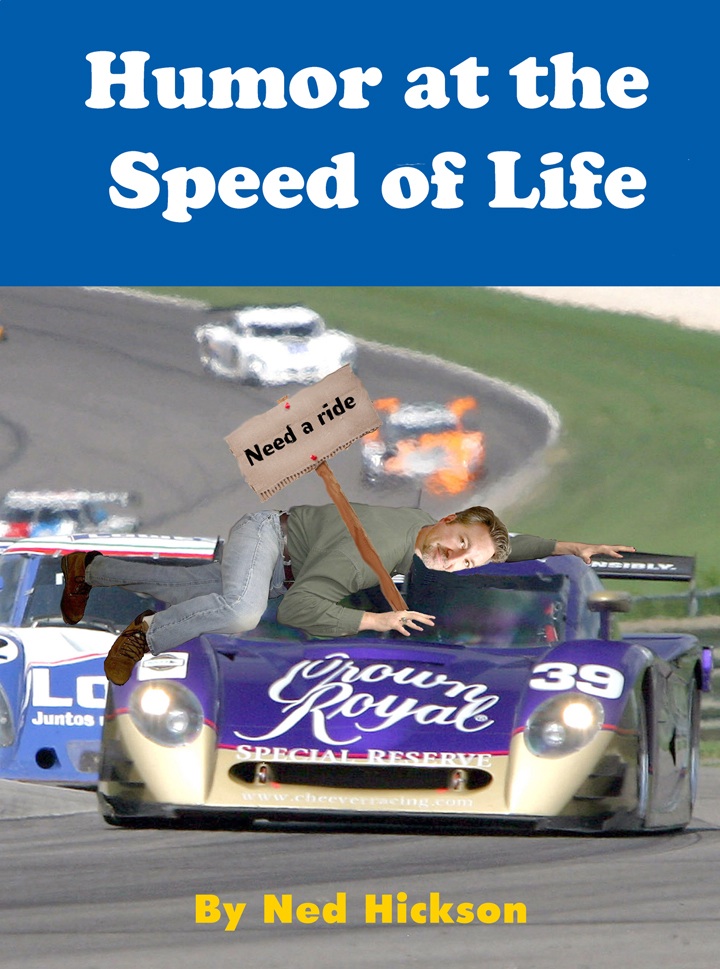
In my case, I have decided against going shirtless on the cover. Nor was I going be holding a woman wrapped in any kind of lacy robe or bed sheet. Given that the title is Humor At the Speed of Life, we originally decided to go with a photo, taken at a local speedway, where I was poised to race a pair of dragsters with my mini van. Probably while pushing it. That pretty much sums up the top speed of my life.
image

Would that be eye-catching enough? Would it stand out from the other books out there? I can’t say for sure because we changed the cover to this:

image

Why?

Because we eventually decided the kid with the goofy expression was not only more eye catching than me, but is probably going to grow up to be better looking. It’s actually a photo I took several years ago of my son’s friend while they were at the carnival. That’s the back of my son’s head in the foreground. He gets asked for autographs all the time now from people standing behind him in line. Another reason we went with that cover design is because it’s the same image that’s on my blog header, which hopefully readers would recognize if they saw it in a store, online or passing by their prison cell on a library cart. We also changed the font a bit to make it more clean, as well as changed the color scheme to match those in the photo.

The end result is a more vibrant, clean cover with an image that never fails to make people chuckle or even laugh out loud. Not that my being shirtless wouldn’t have the same effect.

Now if you’ll excuse me, I’m going to see if I can get Fabio to help push start my van…
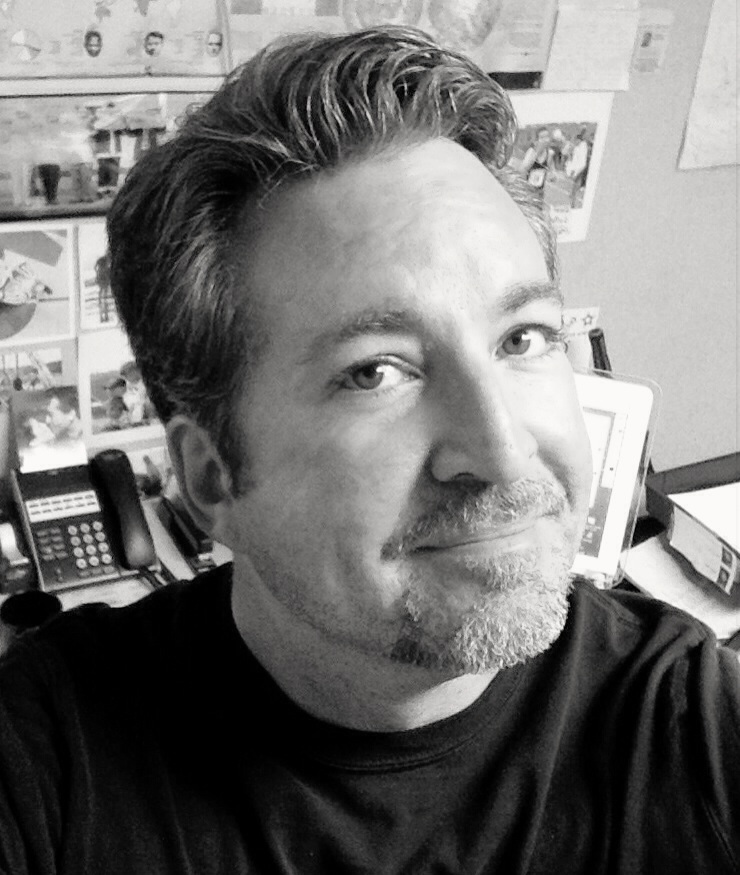
imageNed Hickson is a syndicated columnist with News Media Corporation. His first book, Humor at the Speed of Life, is available from Port Hole Publications, Amazon.com or Barnes & Noble.

Building a Local Audience

SH4small
Captain Jeanne Bell’s Ecotour Boat, the Naiad

I’m wondering how many of you have had an opportunity (or created one) to meet and greet with local readers in your own cities and communities? I confess, I hadn’t given this much thought until recently, and what brought it all to my attention was what happened when I gave my friend, Captain Jeanne Bell, a signed copy of Swamp Ghosts.

Now Captain Jeanne is the reason I wrote Swamp Ghosts. She runs the Naiad, an eco-tour boat on the St. Johns River, along with her husband, wildlife photographer Doug Little. I’ve been on this tour many times, and it was always a relaxing and beautiful way to spend an afternoon. Once, after coming home from an especially interesting trip, filled with sightings of birds, manatees, alligators, and all-around scenic beauty, I got the idea that an eco-tour boat operator would make a great heroine for a romantic suspense novel, and Swamp Ghosts was born. When Jeanne read the finished book, she loved it, and I got a message from her that she had been promoting the book to various local visitor centers and small attractions. Lo and behold, three of them immediately wanted to carry my book in their gift shops, and two have already asked me to do presentations for them. (Jeanne and Doug have a few more places in mind, too, so who knows what might happen?) They have also mentioned the possibility of doing a Meet The Author event aboard the Naiad. How much fun would that be?

I don’t know about you guys, but this seems to me to be a very good thing. The first place I’ll be visiting is a nature preserve adjacent to the DeBary Library, and I can give my talk and have a book signing, plus they are likely to stock my book. The second is at an historic home near Lake Monroe, where they have a fantastic guided tour, a gift shop, and a fun theater (complete with revolving seats) that gives an overview of the history of the home and the paddlewheel boats that plied the river in the 1800’s. I’ve also been invited to take part in an Author Symposium & Book Signing  in St. Cloud in January. Not sure exactly how big this will be, but I’m excited to attend my first one of this type.

Many of you have probably done tons of bigger signings at prestigious book stores and so forth, but I’m wondering if any of you have also tried working the local shops, libraries, and the like. Since Swamp Ghosts is set in a small, fictional town that I squeezed in between two real central Florida towns, and since it features many scenes on the St. Johns River, there are a lot of things local readers will recognize in the book (which is going to be a series), so I’m thinking building a local readership could really be a good thing.

I plan to post here about each event, as they take place, and let you know how it went, and what I learned along the way, and I’d love to hear if any of you have tried something of this nature, and if so, how it has worked for you?

5336974089_45f8c73b06
Purple Gallinule
One example of the kinds of birds seen while cruising on the Naiad.

Making indie audiobooks

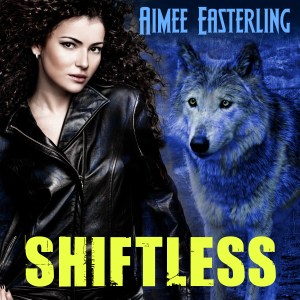
Shiftless AudiobookWhen Kindle Unlimited was rolled out, I read the fine print and realized that subscribers can download audiobooks as well as ebooks for free (with the author receiving about $1.50 per borrow and possibly gaining new fans).  Since there are about 700,000 ebooks enrolled in Amazon’s lending library but only about 2,300 audiobooks, I decided I wanted to swim in that much smaller pool.  Was it possible for an unknown indie?

The answer is a resounding yes, but like most aspects of self-publishing you’ll need to spend some time and possibly money on the endeavor.  ACX is Amazon’s audio wing, where authors hook up with narrators to make independent audiobooks happen.  You can choose to pay up front for your narration (a process that will likely cost $1,000 to $5,000), or you can opt for the revenue-sharing possibility as I did.  Revenue-sharing costs the author nothing up front, but you split all future audio royalties fifty/fifty with the narrator after the audiobook is produced. Although that sounds like a lot of money to give up, your revenue-sharing narrator does have a vested interest in making your audiobook soar and might help you sell more.  On the downside, though, you will have to make your project look very enticing to potential narrators if you want to find a really top-notch voice actor in this scenario.

As you might guess, I used the royalty-share option to produce my first audiobook (which is now available on Amazon, Audible, and (soon) iTunes).  I learned a huge amount on the process, too, namely:

Be patient while you wait for auditions.  At first, narrator auditions trickled in, but after a week, Amazon chose my project to be eligible for an ACX stipend and they featured the book in their newsletter to producers.  That meant that even though I chose the revenue-sharing feature, the narrator would also be paid $100 per audio hour up front.  In other words, the stipend made my project look very enticing and attracted some higher-end narrators.  (You are most likely to get the stipend if your ebook is already selling very well.)

Stay in touch with your narrator as they work.  My narrator and I got our wires crossed and she thought the audiobook was due three weeks later than the date I’d set in the dashboard.  Don’t assume your narrator read all the fine print!  Send them a message every week or so and make sure you’re both on the same page.  And, before you start, make a list of any strangely pronounced names or words in your story as a sort of cheat-sheet for the narrator.  (I didn’t know to do this either….)  Help make their job as easy as possible!

Consider the pay-up-front option.  One of my recent time-sinks has been lurking on kboards, where indie authors share what has and hasn’t worked for them.  A few authors there note that they’ve been making as much per title with audiobooks as with ebooks lately, but their method of success involves paying up front for top-notch narration.  I’m still not sure whether I’m willing to sink such a huge sum of money into my next audiobook, but if Shiftless does well, I might go that route with book two.

Tell your fans about Audible’s free trial.  Audible gives revenue-sharing authors $25 each time someone signs up for a new membership and downloads your book as their first audio adventure.  This is a relatively easy sell since your fans probably want to listen to your story and will love the idea of getting a copy for free.  So push those free trials!

If you’ve got any questions about audiobooks, feel free to leave them in the comments below.  Although it’s taken a bit of time, I’ve vastly enjoyed the experience of turning Shiftless into an audiobook, in large part because hearing my words narrated has made them feel more real.  Go listen to the free sample and see what you think!  (And, while I’m mentioning free things, I’ve set the ebook version of the prequel short story free at the moment as well, so be sure to snag your copy!)

Do publishers really give a [Tweet] about a writer’s social media presence?

image By Ned Hickson

Welcome to this week’s writing tip, which is advice 50 Shades author E.L. James has called “My literary yardstick, which I’d like to break over someone’s…”

But enough accolades!

This week’s writing topic was actually suggested by talented writer, mom and blogger Michelle at MamaMickTerry, who asked:

Dear Mr. Hickson: Does having a blog help or hinder getting published?

She followed this up a short time later, after what I’m guessing was a glass or two of wine, with a more specific question:

Listen here, Neddy-O: Do you think publishers really give a [TWEET] about a writer’s social media presence? DO you? And hey, is it just me or does Thor’s hair need some de-tangler?

The short answer to Michelle’s question is that, while there are certainly arguments for and against the merits of the exposure one gets from traveling between worlds, most women wouldn’t care if Thor was bald. Ok, no woman really cares.

The long answer, as you might’ve guessed, is a little more complicated and actually has nothing to do with Thor’s choice of hair products. Though I realize that most women have stopped reading this post to Google Chris Hemsworth — Fine, all women — I still plan to answer Michelle’s question regarding the value of social media in the eyes of publishers who, coincidentally, almost never look like Thor.

On the surface, the advantages of establishing a blog and linking it to social media outlets like Facebook, Twitter, Tumbler, MySpace and others seems pretty obvious. The bigger your presence in the cyberworld and the larger your following, the more likely your book will catch on and be embraced in the world that truly counts: The buying world.

For those who thought I was going to say the world of “Asgard,” I really need you to close that Chris Hemsworth window on your monitor.

Keep in mind that, particularly for a writer without a previous track record, a large online readership can get a publisher or agent to at least raise an eyebrow after reading a well-written query letter or email about your book. For this reason, it’s always a good idea to include direct links to your blog and other active social media sites at the end of your query, as well as a link to a sample chapter online. Unless specifically requested, don’t ever include an attachment with your emailed query; emails with attachments that actually make it past SPAM filters are routinely deleted. Even if you know the recipient is a female and you type “Thor” in the subject line.

While having a large online presence certainly doesn’t hurt, publishers also know that pushing the “like” or “follow” button is fast becoming a conditioned response which, more often than not, happens without a visitor even thinking about it. This obviously doesn’t includes anyone who visits THIS site, but you get the idea: Having 5,000 followers does not translate into 5,000 book sales.

However, there is another “plus” to building an online presence that tends to get overlooked but can be especially encouraging to an agent. Sure, having a large readership may or may not be a true reflection of the number of actual devoted readers you have, but the quality of your writing and regularity in which you post will speak for themselves. Notice I didn’t say “frequency” in which you post. An agent or publisher isn’t as interested in how often you publish as they are about your adherence to posting quality work on a regular basis.

My blog is an obvious exception to this rule.

I’d like to thank Michelle at MamaMickTerry for suggesting this week’s topic. I’d also like to thank Chris Hemsworth for giving me yet another reason to keep my gym membership.

imageNed Hickson is a syndicated columnist with News Media Corporation. His first book, Humor at the Speed of Life, is available from Port Hole Publications, Amazon.com or Barnes & Noble.)

A Word On Tweeting

tweeties_free_twitter_icons1

Just went through and Tweeted everyone’s posts and promos, again, and I wanted to remind you to do the same, when you can. Remember, you can Tweet all of your posts here, especially your intros and/or promos, as often as you want. And when you’ve Tweeted yours, please remember to Tweet for some of our other authors, too. In addition to sharing resources and ideas, this is a great way to help each other get the word out. (You can also reblog, and post on FB or other social media, but Tweeting is the quickest and easiest, and I know you are all busy folks.)

Adding the hashtag #TheWriteStuff at the beginning or end of your Tweet would be lovely, but with or without it, the Tweets are a big help to our authors. So. Tweet your own posts, and then tweet a few others. You’ll be glad you did.

Authors Helping Authors. That’s what The Write Stuff is all about. You might say it’s our “AHA” moment. 😀

The Fussy Librarian

little-librarian

Got emails yesterday, confirming that both of my books, Wake-Robin Ridge and Swamp Ghosts, had been approved by The Fussy Librarian, so one step closer to trying out their service. They said they’d email me with the date for when they will each be listed, and I’ll keep you guys in the loop, as I try this one out. Going to try another one or two later today, if I finish my work on Chapter 29 of Rabbit’s story in time. Stay tuned! And be sure to jump in if you have thoughts on, or experience with, any of these services.

Self-Marketing Question

books2

Have any of you used services like Book Bub, Book Gorilla, Early Bird, eReaderIQ, or The Fussy Librarian to promote your work? I know BookBub is pricey, and while it might be worth it, it’s not in my budget. The Fussy Librarian has a circulation of 75,000 readers, over 60,000 signed up for notices in my genre. You can get a one-time mention for $9 per book. That’s something I can afford, and submitting a book for approval was a very easy task. So, I’ve done it. I’ll let you know how it works, what the display looks like when the email with my listing comes around, and whether or not I see an increase in sales afterward. I figured for $18, it was worth a shot, but we’ll see how it goes.

What experiences have you had? Let us hear what you have to say, good or bad.