From Pantser to Plotter, or Maybe Plantser? #FabulousFridayGuestBlogger

Marcia asked me to share this post with you all. It’s one I wrote recently for the Alliance of Independent Authors, on the need to occasionally revisit the pantser/plotter question as we progress through our writing careers.

From Pantser to Plotter, or Maybe Plantser?

by Kassandra Lamb

For eight years, I’ve been a die-hard pantser. No outline, no character sketches… just sit down and write.

But now I’m going over to the other side, or rather straddling the cusp.

I’ll always be grateful for my pantser roots. I didn’t successfully finish a manuscript until I realized I was a pantser. For years, I’d write the beginning of a story, outline the rest and then the whole thing would languish in my hard drive. I’d lost interest. The story had already been told.

In 2009, I sat down to once again tweak the opening of a novel I’d been playing with for fifteen years. (Yup, fifteen years!) But I couldn’t find the outline. Somehow I’d lost the file. So I started writing, and six weeks later the first draft was finished.
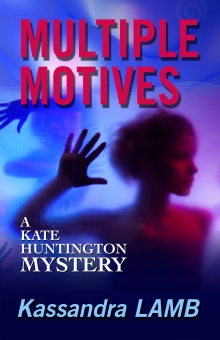
cover of Multiple Motives

My first finished novel, 15+ years in the making. Now it’s the permafree first book in a 9-book series.

Now it’s 2017. That book, Multiple Motives, is the first in a nine-book mystery series, and I’ve recently released Book 3 in a new series. But in recent years, it’s been like pulling teeth to get through a first draft.

While writing this last story (The Call of the Woof; Woof for short), I finally identified the problem. My motives for writing have changed.

Initially, the ideas arrived, the words flowed, and I wrote for the sheer pleasure of seeing what happened next.

Then the first-drafting process became more challenging. My editor said it was because I was a better writer. My stories were more complex, my characters had more depth, etc. She’s probably right, but something else was happening as well.

More and more, I was writing to a schedule, especially after I started the second series. If too much time passes without a new release, sales droop. The pressure is on to pump out more stories to keep readers interested.

Don’t get me wrong, this is good motivation. How can you not want to produce stories for your adoring fans?

But it wasn’t the same. I still loved the writing process—when the words were flowing. But all too often they weren’t. Before, the scenes would unfold in my mind as I went along. Now, I’d get to the end of a scene and think “What’s next?” And no answer would come. Often that would be the end of new words for that day.

With Woof, as I got closer to the end and had a clearer idea of what scenes still needed to happen, the writing pace picked up. Instead of forcing out a few hundred words a day, I was breezing through several thousand.

The story was flowing and I was having fun again!

Then I thought about the next project coming up, and felt nothing but dread as I faced the void between the opening and the climax. So I experimented with outlining. While Woof was “resting” before the editing process, I did a bare-bones outline for that next story.

And I’m excited about writing it! Indeed, I found myself stealing an hour here and there to pluck away at it, when I was supposed to be editing Woof (and I love editing).

With the plot points already thought out that will get me through the murky middle, all I have to do is enjoy the flow of the words.

I doubt I’ll ever be a full-blown plotter with character sketches and beat sheets (not even sure what those are) and such. But if I have a better idea of where I’m going, I think I will get there a lot easier and faster in the future.

And have more fun doing it!

k - IMG_0004 lighter-on1

Kassandra Lamb is a retired psychotherapist turned mystery writer who spends most of her time in an alternate universe with her characters. The portal to this universe, aka her computer, is located in North Central Florida, where her husband and dog catch occasional glimpses of her.

She is the author of the Kate Huntington psychological mysteries, set in her native Maryland, a new series, the Marcia Banks and Buddy cozy mysteries, set in Central Florida, and a guide for novice authors, Someday Is Here! A Beginner’s Guide to Writing and Publishing Your First Book.
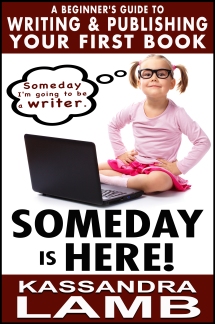
cover of book

This easy-to-read, how-to guide is full of both practical advice and emotional support. Psychotherapist turned successful mystery writer, Kassandra Lamb takes novice writers by the hand and walks with them on their journey, pointing out pitfalls along the way, some of which she discovered through stumbled-head-first-into-them experience.

From the decisions to be made before setting pen to paper to whether to submit to agents or self-publish, from the basics of writing craft to the nuts and bolts of copyrighting and ISBNs, from promotion strategies to the perseverance needed to make your writing business a success, this overview of the writing and publishing process is a must-read for new authors who aren’t sure what they’re getting themselves into.

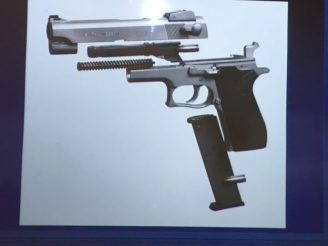
 

12 Crime Lab Tidbits

Taking Marica at her word. Here’s this week’s post at misterio press, which you all might find interesting.

12 Crime Lab Tidbits

by Vinnie Hansen

In March, I visited the Santa Clara Crime Lab because hey, that’s the kind of thing crime writers do on a lovely spring day.

My husband, Danny, went along. He enjoys police info, too. I guess you better if you’re married to a mystery author.

IMG_1420-624x468

We were disappointed to learn that we would not be able to traipse about the lab. Even though the event was advertised as a “virtual” tour, when Danny and I visited the FBI Crime Lab in San Francisco, our guide led us right up to the line of weapons waiting for rifling tests.

Read More…


Hope you feel better soon, Marcia!!!


To Write or Not To Write Short #amwriting

by Kassandra Lamb

Hi all!  Marcia and I thought you might find my guest post interesting. I’m over at Janice Hardy’s Fiction University today, talking about the pros and cons of writing short stories and novellas versus full-length novels.

Please check it out (and share if you are so inclined).

To Write or Not To Write Short?

a SomedayIsHere FINAL

Short stories, novellas, novels—what’s the best route to go as a fiction writer? Are there advantages to writing short?

This is a more complicated question than it may seem to be on the surface. There are several factors to consider:

● The definition of a short story vs. a novella
● The appeal of writing short for the author
● How readers feel about short stories and novellas vs. full-length novels
● The benefits of shorts for authors
● The bottom line: how much can you make off of shorts?

In order to give you more than just my take on writing short, I surveyed several authors from various genres. I’ve included their experiences along with my own, and in some cases, quoted them when they said it better than I could.

Definitions:

First let’s define our terms. A novel is considered to be full-length if it is at least 40,000 words. A novella is usually defined as 17,500 to 40,000 words. Technically, a short story is under 7,500 words.

There is this thing called a novelette that is 7,500 to 17,500 words, but the reality is that readers have rarely heard of this term. The 12K novelette I published several years ago is almost always referred to as a short story in reviews, and even my 25K novellas are sometimes viewed as short stories by readers.

So perhaps we should be defining short versus long differently. A “short” story, regardless of its length, is one with a simpler story arc, few if any subplots and simpler character arcs for its main character(s).

The Appeal of Writing Short:

To put it bluntly, it’s quick and easy… READ MORE

#GardenInspiration – Painted Bunting

It’s an absolutely picture perfect day here in central Florida today. Cool enough breeze to keep you from melting, but warm enough for shorts and t-shirts. And as if the weather isn’t enough reason to spend some time outside, this morning, a stunning male painted bunting visited our birdbath. He splashed and frolicked long enough for me to really enjoy his vivid orange, blue, and chartreuse coloring. I’m hoping he’ll be back later for a snack at the feeder, but when he finished his ablutions, he flew up into the bamboo, and became invisible.

You wouldn’t think a brightly colored bird like this, or our year round resident cardinals could vanish among solid green foliage, but they do. You can stand beneath, listening to the scarlet cardinals singing, and not see them to save your soul. Mother Nature is always interesting, and usually inspiring. Today, I was reminded of that once again.

Writers, when your muse has deserted you, go outside. Take a walk around your neighborhood, or a hike in the closest wooded area. Go for a canoe ride. Take an eco-tour. Or just sit on your patio with a  cup of tea, and see what flies or scampers by. You might be surprised. Even in a busy suburban area, with nearby shopping malls, and an interstate highway, I regularly see things like today’s painted bunting. And when I return to work, it’s with renewed energy and inspiration.


#MidWeekPOV #wwwblogs – Let’s Talk

lets_talk_century_gothic

Let’s get a conversation going this morning. I’ll start. 😀 I have a new mantra: It takes what it takes to tell the tale that needs tellin’. Bulky, yeah. Probably won’t look so great on a t-shirt. But I’ve finally realized that it embodies the way I write.

My beloved beta readers often ask me how many chapters will be in a book I’m working on. My answer is, I don’t have the slightest clue. I don’t work out the number of chapters at the start of my draft, because I never know where the story might take me. I know what it will be about, in general–where  it will start, and where it will end. As for all the stuff that happens in between, not so much.

I may have one or two things I know must occur, but overall, the characters tell me what they want to do and why. And I let them. Not because it’s how it should be done, but because it’s the only way I, personally, can travel from point to point. I turn my characters loose in a setting and see what they decide to do, and write it down. They almost always surprise me.

In my current WIP, That Darkest Place, all I knew going in was that I’d left one of my characters from Finding Hunter in a horrible mess, and another one unharmed, but unhappy. I knew what I needed to do to fix the first one, and that the second one needed to find an HEA by book’s end. And that’s all I knew. As the story began to grow, the details came pouring into my mind, and the overall theme of the book came to me:

“There are dark places in every heart, in every head. Some you turn away from. Some you light a candle within. But there is one place so black, it consumes all light. It will pull you in, and swallow you whole. You don’t leave your brother stranded in that darkest place.” (Hunter Painter)

That Darkest Place is a book about brothers–how  they stand together in the worst of times, and help each other make it out of those black holes of despair. As I wrap up my draft, and get ready for editing, I hope I’ve been able to tell their story in a way that will resonate with readers everywhere. But whether it works out that way or not, I’ve been true to who the characters are, and how they relate to each other, in good times and in bad. I’ve told the tale that needed tellin’, and I hope I’ve done it well.

Now. Your turn. How do you do it? Do you work out every scene in advance, or go with the flow? Do you have an overall theme in mind when you begin, or does it grow out of the story in a more organic way? I’m hereby inviting you to share your thoughts and ideas today, so we can enjoy getting to know more about each other, and possibly learn a few new tricks along the way.

Let’s talk!


Making the Case for Indie AND Traditional Publishing (For Writers and Readers)

(Part II… again sharing here with Marcia’s permission. Did I leave anything out?)

by Kassandra Lamb

I envy writers under thirty. Not for their youth, but because they have never known a publishing world where indie publishing wasn’t a viable alternative.

But I’ve heard even some younger writers make comments that indicate they think indie is what you do if you can’t get a traditional publishing contract. In other words, it’s a second choice.

Actually, for some of us, it was a first choice.

And sadly there are a few traditionally published authors who like to judge indies from the other side of the fence. (See Part I of this series: Creativity, Sensitivity, Laziness and Courage.)

For the newbie authors out there (or those considering jumping the fence), I will try to spell out the differences between the two paths. Also, I want to mention the pros of each for readers, the most important people in this whole arena!

I will try to be balanced, but I’ll warn you all up front, I am biased toward the indie path, since that’s the one I chose. To help counter that bias I’ll let trad publishing go first. And I’m trying to stay positive by focusing on the “pros” of each (the cons are mostly implied).

K.B. Owen, one of my sister authors over at misterio press, generously offered the graphic she developed for a presentation on publishing she gave recently. It gives us a great jumping off point.

chart of pros of each

(Chart created by K.B. Owen, (c) 2016)

TRADITIONAL PUBLISHING PROS

Validation: The author can feel confident that their story idea is worthy and that their writing is good. Trad publishing gives it the stamp of approval of the industry.

For the reader, this means the odds are good that you will enjoy reading this book, that it will abide by the expectations for its genre and will only have the good kind of twists and turns, not the kind that leave you thinking “Huh?” or have you dangling off the edge of an unexpected cliffhanger.

READ MORE

An Interesting Concept for Releasing a Series/Trilogy

One of my sister authors at misterio press is doing an all-at-once release of a new trilogy. Thought you all might be interested in how she’s doing it.

Binge Reading – No, It’s Not What You Think

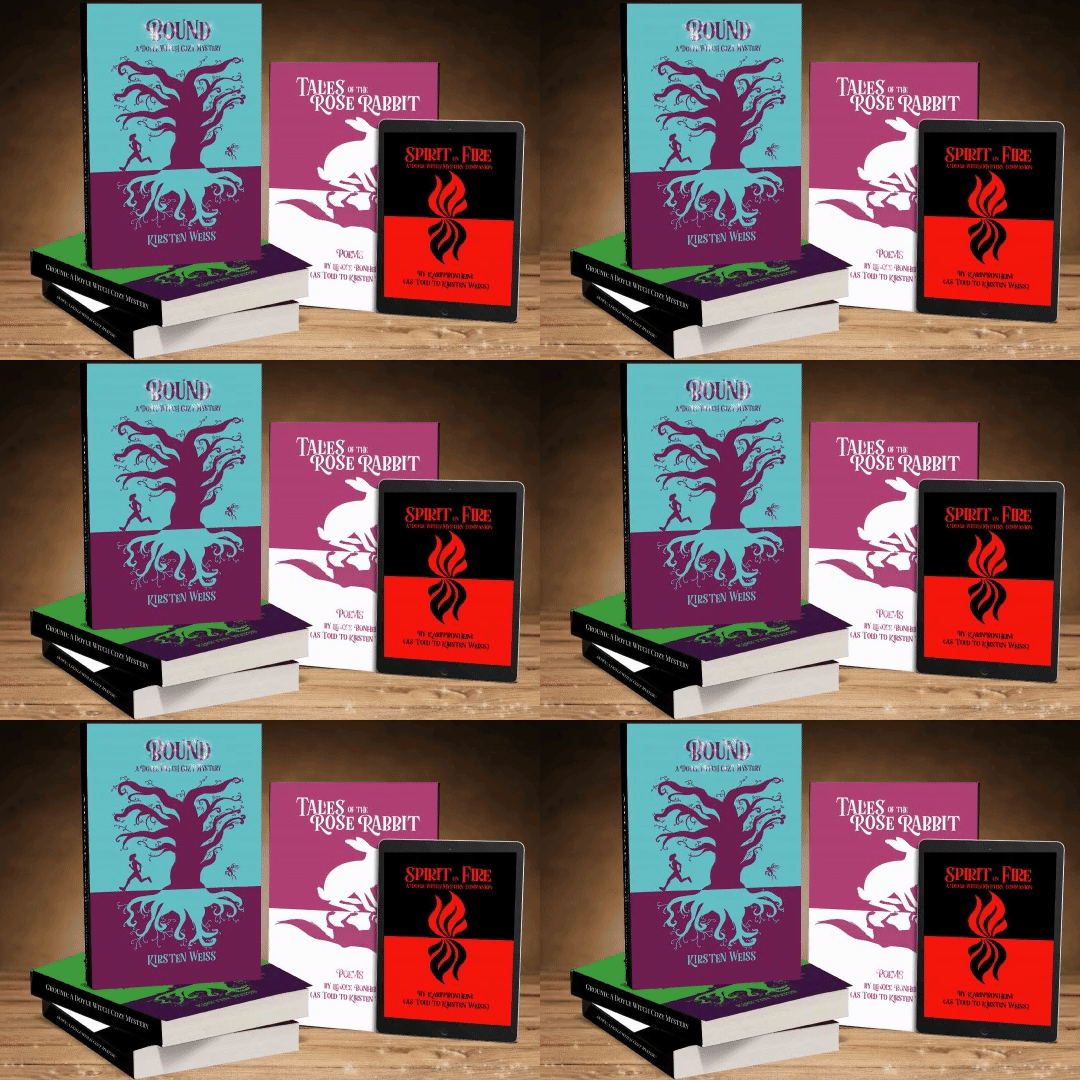
by Kirsten Weiss

Call it the age of Netflix.

It’s spoiled us for the wait – no longer do we have to hang on an aching seven days to find out what comes next on our favorite TV show. With shows produced by Netflix, we can now binge watch the entire season over a weekend. (And yes, I’m guilty of this – Longmire! Stranger Things!).

So when I heard about “binge reading,” I decided to take the plunge with my new Doyle Witch cozy mystery series. Fortunately, my patient editors at misterio press were willing to take this journey with me, because a lot ended up happening in a short span of time.

The concept is simple – launch all the books in the series at once… Read More

ezgif-com-video-to-gif


When & How Should Series End? — Guest: Kassandra Lamb

Hi, All! I’m guest posting today over at Jami Gold’s cyber home. She has an awesome following of authors for her writing oriented blog. Thought you all might be interested in this topic…

When (And How) To End A Series?

1ehdze

I’m currently writing Book 9—what I thought would be the last book—in my Kate Huntington Mystery series (Note to my readers: don’t panic; I think I’ve changed my mind—more on this in a bit).

When a writer sets out to write a series, often there’s no set number of books in mind. The vague thought is that we’ll keep writing as long as readers are reading and we’re still coming up with story ideas.

But everything has to come to an end some time.

When Should We End a Series?

When should a writer stop a series? Here are my thoughts on possible reasons to say “the end,” based on my own ruminations about winding down the Kate series. Read more…


#MidWeekPOV #ThorsDaySmile #FabulousFridayGuestBlogger

sick

The whole kit and caboodle at one time! That’s what happens when I’m under the weather for a few days, barely getting the necessities taken care of. Poor neglected blog! But I’m making up for it, all in one post, to wit:

#MidWeekPov

When you are sick, dishes pile up, laundry is ignored, and meals are whatever can be found in the pantry or fridge that isn’t covered in mold, like week-old bread. Tuna- Peanut Butter Surprise is the dish du jour. But the worst thing of all is having to accept that any brain activity more advanced than breathing or blinking becomes nearly impossible. That includes creativity. Enough congestion, and one simply does not have room inside one’s skull for a single, creative thought. Raise your hands if you have found this to be the case, yourself.

ThorsDaySmile

bc758a6bed50c8d3c1c2b7e35c1b38fc

#FabulousFridayGuestBlogger

Sadly, we don’t have an actual guest blogger today. Just me. So I’m sharing a scene from my upcoming book, Harbinger: Wake-Robin Ridge Book 3. In this scene, Rabbit is letting his best friend, Finn, know how he feels about Finn’s new nickname for him. As usual, he does so in his own, irrepressible manner, outmaneuvering Finn completely. Enjoy! (But do be prepared for Rabbit’s “raised in the wilderness,” mountain dialect.  He’s being home-schooled, but has a long way to go. Those aren’t spelling errors, I promise.)

***

Rabbit grinned. “You always know the right words, Daddy. That there’s just what I was tryin’ to say.”

“You said it good, Rab,” Finn chimed in. “I understood just what you meant.”

Studying his friend through narrowed eyes, Rabbit finally asked, “So is ‘Rab’ what you’re gonna be callin’ me from now on?”

Finn gave him a devilish grin, all dimples and straight, white teeth. “It’s my new nickname for you. What do you think?”

Rabbit pondered his answer, then he shook his head. “It don’t seem fair, you get a nickname to call me, and I don’t got one for you. Reckon with a name as short as Finn, onliest thing I can call you is Ffff.”

Finn’s mouth dropped open. “Ffff? What kind of nickname is that?”

“That’s the kind you get when your name don’t have but one of them ol’ syllables,” Rabbit announced, and changed the subject. “So, are you gonna eat that there sandwich, Ffff, or just keep starin’, like I grew me another head?”

“You can’t call me Ffff! It doesn’t make any kind of sense.” Finn sputtered with indignation. “It’s just dumb.”

“I reckon it ain’t no dumber than makin’ up a nickname for a nickname. Rabbit ain’t my for-real name, you know.”

Mac could almost see the wheels turning in Finn’s head. He wondered if the boys might be getting ready to have their first real disagreement, but he should have known better.

The two friends simply stared at each other in silence, and then Finn started to giggle. “Ffff,” he said, with a shake of his head, and another giggle.

The corner of Rabbit’s mouth twitched. “Yep. I reckon that’s what it’ll have to be. Just Ffff. Easy to spell, though, ain’t it?”

The dam broke, and the boys flopped on their backs on the dusty road, hysterical with laughter. Rolling from side to side, they clutched their stomachs, barely able to breathe. Raleigh and Mac grinned at the sight, and then the sheriff burst into full on laughter, as well.

“Mac, that boy of yours is just too much.”

“He is that, all right,” Mac agreed, and joined in with the rest of them.

When everyone had calmed down enough to catch his breath, Finn wiped his eyes, and gave Rabbit an arm poke. “Tell you what. If you promise never to call me Ffff in front of anyone else, I promise I won’t call you Rab in front of anyone, either.”

Rabbit pursed his lips, pretending to think it over. “Hmm. I got me a better idea. Let’s don’t call each other neither of those things ever, no matter whether anyone else can hear us or not. Deal?”

“Deal.” Finn held out his hand, and the boys shook on it, faces completely solemn. Then they both erupted in giggles, and the whole thing started up again.

Mac and Raleigh let them enjoy the moment. It was a release they all needed after their earlier fright, and they’d have to get serious again soon enough.

***

Freshly Tweaked Cover for Harbinger
(I made Ol’ Shuck’s eyes creepier.)

MyVersionofCoverat30%