#MidWeekPOV #wwwblogs – Let’s Talk

lets_talk_century_gothic

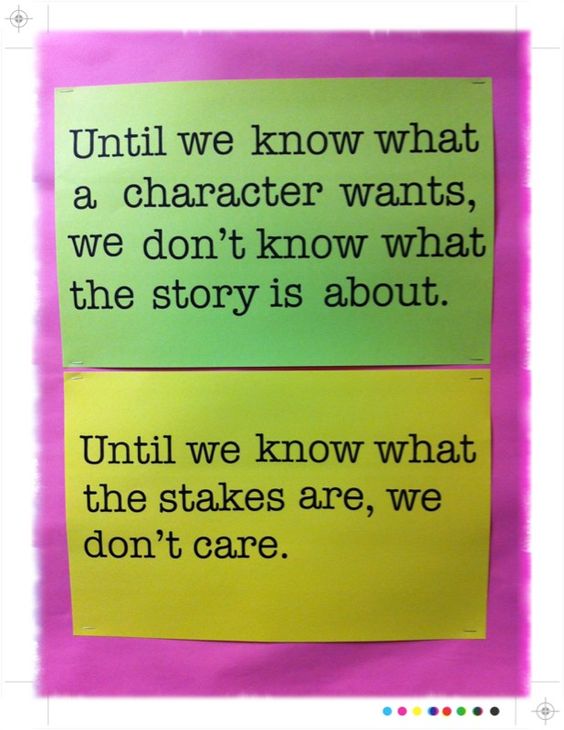
Let’s get a conversation going this morning. I’ll start. šŸ˜€ I have a new mantra: It takes what it takes to tell the tale that needs tellin’. Bulky, yeah. Probably won’t look so great on a t-shirt. But I’ve finally realized that it embodies the way I write.

My beloved beta readers often ask me how many chapters will be in a book I’m working on. My answer is, I don’t have the slightest clue. I don’t work outĀ the number of chapters atĀ the start of my draft, because I never know where the story might take me. I know what it will be about, in general–whereĀ  it will start, and where it will end. As forĀ all the stuff thatĀ happens in between, not so much.

I may have one or two things I know must occur, but overall, the characters tell me what they want to do and why. And I let them. Not because it’s how it should be done, but because it’s the only way I, personally,Ā can travel from point to point. I turnĀ my charactersĀ loose in a setting and see what they decide to do, and write it down. They almost always surprise me.

In my current WIP, That Darkest Place, all I knew going in was that I’d left one of my characters from Finding Hunter in a horrible mess, and another one unharmed, but unhappy. I knew what I needed to do to fix the first one, and that theĀ second oneĀ needed to find an HEA by book’s end. And that’s all I knew. As the story began to grow, the details came pouring into my mind, and the overall theme of the book came to me:

“There are dark places in every heart, in every head. Some you turn away from. Some you light a candle within. But there is one place so black, it consumes all light. It will pull you in, and swallow you whole. You don’t leave your brother stranded in that darkest place.” (Hunter Painter)

That Darkest PlaceĀ is a book about brothers–howĀ  they stand together in the worst of times, and help each other make it out of those black holes of despair. As I wrap up my draft, and get ready for editing, I hope I’ve been able to tell their story in a way that will resonate with readers everywhere. But whether it works out that way or not, I’ve been true to who the characters are, and how they relate to each other, in good times and in bad. I’ve told the tale that needed tellin’, and I hope I’ve done it well.

Now. Your turn. How do you do it? Do you work out every scene in advance, or go with the flow? Do you have an overall theme in mind when you begin, or does it grow out of the story in a more organic way? I’m hereby inviting you to share your thoughts and ideas today, so we can enjoy getting to know more about each other, and possibly learn a few new tricks along the way.

Let’s talk!


Making the Case for Indie AND Traditional Publishing (For Writers and Readers)

(Part II… again sharing here with Marcia’s permission. Did I leave anything out?)

by Kassandra Lamb

I envy writers under thirty. Not for their youth, but because they have never known a publishing world where indie publishing wasn’t a viable alternative.

But I’ve heard even some younger writers make comments that indicate they think indie is what you do if you can’t get a traditional publishing contract. In other words, it’s a second choice.

Actually, for some of us, it was a first choice.

And sadly there are a few traditionally published authors who like to judge indies from the other side of the fence. (See Part I of this series: Creativity, Sensitivity, Laziness and Courage.)

For the newbie authors out there (or those considering jumping the fence), I will try to spell out the differences between the two paths. Also, I want to mention the pros of each for readers, the most important people in this whole arena!

I will try to be balanced, but I’ll warn you all up front, I am biased toward the indie path, since that’s the one I chose. To help counter that bias I’ll let trad publishing go first. And I’m trying to stay positive by focusing on the “pros” of each (the cons are mostly implied).

K.B. Owen, one of my sister authors over at misterio press, generously offered the graphic she developed for a presentation on publishing she gave recently. It gives us a great jumping off point.

chart of pros of each

(Chart created by K.B. Owen, (c) 2016)

TRADITIONAL PUBLISHING PROS

Validation: The author can feel confident that their story idea is worthy and that their writing is good. Trad publishing gives it the stamp of approval of the industry.

For the reader, this means the odds are good that you will enjoy reading this book, that it will abide by the expectations for its genre and will only have the good kind of twists and turns, not the kind that leave you thinking “Huh?” or have you dangling off the edge of an unexpected cliffhanger.

READ MORE

Creativity, Sensitivity, Laziness and Courage

(Reblogging here with Marcia’s permission)

In which I make the point that it is horribly hard to send our “babies” out to agents and publishers, something I think is overlooked in the ongoing debate re: indie vs. traditional publishing… Would love to hear you all’s thoughts on the topic.

by Kassandra Lamb

Please note that this is not a post about the pros and cons of indie vs. traditional publishing per se (I will cover those in a later post). Rather this post is about the ā€œbetween a rock and a hard placeā€ spot where new writers often find themselves as they explore how to get their words in front of readers’ eyes.

The indie vs. traditional publishing controversy was resurrected in December, 2016, by a Huffington Post article with the rather obnoxious title, Self-Publishing: An Insult To The Written Word? by Laurie Gough.

Quite a few indie authors immediately responded with some eloquent replies. And then the Alliance of Independent Authors published their New Year’s post: Successful Indie Authors 2016: Part One.

These two posts, along with the responding comments, represent the two sides of this controversy, but I noted that one thing was missing from the discussion. Indeed, I have never heard this point made during debates about the issue.

Creatives are, by definition, sensitive souls.

Van Gogh

One of Van Gogh’s self portraits, this one with a bandage where his ear once was. Creatives’ sensitivity sometimes leads to madness. (public domain)

It’s a clichĆ© really—the tortured artistic poet/painter/musician/actor/author who drinks too much, uses drugs, suffers for their art with an angst-filled life, etc.

But like all clichƩs, this one has a kernel of truth at its core.

So why would we require that these sensitive souls endure months or years of rejection before they are allowed to show their work to the world?

The author of the Huff Post article calls literary agents and traditional publishers the ā€œgatekeepersā€ of the written word. Indeed, that term is bandied about a lot in the world of trad publishing. The implication is that they are saving the unwashed masses of readers from bad literature by carefully vetting new works of fiction.

In addition to the implied insult to readers, the reality is that all too often these days agents and publishers are not always as concerned about the quality of a story as they are about whether or not they think it will sell.

That’s not just my perspective; I’ve heard agents say this at conferences. With regret in their voices, because they know good stories are being rejected and good writers are being discouraged by those rejections.

No one deals well with rejection. And the more important an achievement or some aspect of ourselves is to us, the greater the blow to our spirits if it is rejected… READ MORE

6 Answers Writers Have for the Grammar Police

I thought you all would find this post interesting, and Marcia said today would be a good day to reblog it here. Enjoy, and I’m looking forward to hearing your thoughts.

1abdnh

One of the frustrations of being a fiction writer is the occasional need to defend ourselves when accosted by the Grammar Police.

Now, that’s not to say that we don’t sometimes become the Grammar Police ourselves. Most of us have had a lot of training in the use of language, including proper grammar. So we grind our teeth when we see flat-out errors (apostrophes in places they don’t belong is one of my pet peeves).

But often our own grammatical ā€œmistakesā€ really aren’t mistakes at all.

Certainly we writers do sometimes make boo-boos in our writing. Anytime one is feverishly typing — trying to get the words down before the muse snatches them away again — there is bound to be an occasional ā€œyourā€ slipping in where we meant ā€œyou’re.ā€ (That’s why it’s so important for writers to get fresh eyes to proofread their final work.)

But many of the things the Grammar Police see as horrific errors are more examples of literary license and/or the evolution of language.

Here are some examples of what I’m talking about:

1.Ā  Sentence fragments are okay in fiction. Honest! They are. For emphasis. They should be used sparingly, but it really is okay to leave out the subject, or even the subject and the verb, or some other component of a grammatically-correct sentence, when writing fiction.

Read more…