Active descriptions are key to believable characters; Activia descriptions are not

image By Ned Hickson

This is the second part of a two-part post about earning a reader’s trust through effective character dialogue and active description — and how earning that trust means the difference between a reader taking a leap of faith or a flying leap. Here’s a brief re-cap from the first part of this post, which focused on three forms of dialogue: Narrative dialogue, fictional dialogue based on a real person, and “real” dialogue from a fictional character…

1) When writing narrative dialogue, don’t allow yourself to fall into “lecture” mode. Do You HEAR ME! Oops, sorry. You can do this many ways, including throwing a question directly into your narrative like this:

See what I mean?

Narrative “dialogue” should be just that: Narrative that makes your reader feel included or acknowledged in the conversation, which builds trust.

2) Dialogue from a real person within a fictional context requires thinking of your dialogue as a caricature, making sure to include specific details of the person’s speech pattern — choice of words, cadence, vocabulary — that are recognizable as theirs. Just like how a caricature artists relies on key physical traits that distinguishes one individual from another, you must do the same when sketching out dialogue representing a famous person. Especially if they have big ears.

3) Writing character dialogue that rings true and earns a reader’s trust really comes down to one basic principle: Consistency. Though you’re writing about a fictional person, readers will recognize when you’re not being “true” to the character. That’s because, when we meet new people, we instinctively study them to determine how far the relationship will extend. Acquaintance? Confidante? The same goes for character dialogue. Readers study it and quickly form an opinion. If the character’s vocabulary isn’t consistent, or they speak in bullet points one minute then in long Shakespearian soliloquies the next, you’ll lose your reader’s trust.

‘Tis truth I speak.

Now that we have recapped three key points about dialogue, let’s talk about defining a character and building your readers’ trust even more through active description. So what is active description?

POP QUIZ! The term “active description” refers to:

a) When a writer who is seeking to lose weight and get published writes their novel while riding a stationary bike
b) Long paragraphs describing the sweat-filled pores of someone doing something exhausting.
c) Using a character’s subtle actions and habits to help define them and break up monotonous dialogue tags, such as “He said,” over and over again in a repeatedly repetitious fashion many times.

(Please explain your answer on the back of this blog.)

If you picked “C,” give yourself a gold star and bring this blog with you to the front of the class. If you picked either “A” or “B,” give yourself a gold star anyway because no one fails here. Unless it’s me doing a face-plant while pole dancing.

Active description is a way to add another level of believability in a character through the subtle nuances of how they move, their body language and actions. It’s also an effective tool in breaking up dialogue patterns that quickly begin to feel contrived. Lastly, it relays information about the character in ways that feel natural to us in actual conversation. Remember: What is being said is only half the conversation. The other half is the non-verbal communication happening at the same time. The more you can capture that feeling in your writing, the more believable your characters will be.

I realize that was an entire paragraph without a single quip or bodily function joke, but I assure you it’s really me talking. Which is why I can offer this snippet from my Long Awkward Pause “interview” with Kevin Spacey as a way to show how active description can help quickly sketch a character — fictional or otherwise — and establish a believable pace for their dialogue. For the “interview,” I met Spacey at a nacho bar called Casa de Papitas (House of Chips) in Hollywood…

He then graciously offered me a seat before settling into his, legs crossed, one arm resting on the chair-back, leaving the other free to rummage through the chips basket. It was clearly my signal to start the interview, which I opened with the question I’m sure is on every LAP reader’s mind.

“Why did you agree to an interview with us and be a guest on our upcoming podcast? I mean, it seems either one of those would be bad enough.”

Spacey smiled and examined a chip, then popped it into his mouth. “Did you ever see the movie Albino Alligator?” he asked, referring to his directorial debut, which grossed $339,000 and cost $6 million to make.

“I think we all did. Everyone at LAP thought it was great.”

“Bingo,” said Spacey.

Before I could ask my next question, a waiter approached the table for our order. Spacey, noted for his Hollywood impressions, chose to forgo the nacho bar and order from the small menu as Clint Eastwood.

“I know what you’re thinking,” said Spacey, who squinted and began speaking through clenched teeth. “Will he order the number six chimichanga platter or only five. In all this confusion I sort of lost track myself. So I gotta ask myself: Do I feel lucky?”

“Well — DO you, PUNK?!?” I chimed in, then immediately regretted it.

The waiter gave me a nervous glance.

“A man’s got to know his limitations,” said Spacey.

To establish believability in this mock interview with Spacey, I opened up with active description that establishes his natural intensity and self assuredness in order to add credibility and believability to his dialogue — which is quick and direct. Just like the way he would eat his chip; no tiny bites, but in one quick pop. Also, by describing the way he took to his chair, by crossing his legs and throwing one arm over the chair back all in quick succession, the impression is of a decisive man who already knows he wants to leave one hand free for chips long before he sits down.

For contrast, here’s a snippet from another “interview,” this time with Clay Aiken. Once again, setting the tone with his actions lends credibility to his dialogue — and builds the kind of trust you need with readers in order for them to buy your book take a leap of faith with you…

As I sat on the back of his bedazzled Vespa motor scooter, Aiken seemed to take pride in his city, as well as take corners so sharply I had to squeeze his waist. Though he formally announced his bid for Congress a week ago, Aiken told me more than once that he’s no politician.

“I’m no politician!” he shouted over his shoulder, then swerved to avoid a cloud of mosquitoes. “Woooo! Shields down!”

Some speculate that his run against Republican incumbent Renee Ellmers is a publicity stunt aimed at putting him back in the spotlight for the release of his next album, Aiken for Change, which coincidentally happens to be his campaign slogan. When asked about this, the American Idol star abruptly brought the scooter to a stop in a rundown South Raleigh neighborhood known for its high crime rate and low employment. He removed his helmet and raised a finger, prepared to reply with a well-thought rebuttal, then quickly put his helmet back on.

“Oh darn,” he whispered. “I didn’t mean to stop in THIS neighborhood!“

I hope this two-part tome has been helpful. If not, please blame Michelle at MamaMickTerry, who suggested this subject in an email when she asked, “Have you ever tried writing dialogue when you’re on pain killers…?”

imageNed Hickson is a syndicated columnist with News Media Corporation. His first book, Humor at the Speed of Life, is available from Port Hole Publications, Amazon.com or Barnes & Noble.

Convince your reader to take a leap of faith (instead of a flying leap)

image By Ned Hickson

Writing must ring true with readers for them to become emotionally invested. This is particularly important when it comes to fiction, where you are often asking readers to suspend their disbelief and buy into something — such as an eccentric character, over-the-top situation or random reference to the new iPad6® in hopes of getting a free one — that requires a leap of faith. In this case, your reader is making a “leap” over reality because they have faith that you, the writer, will keep them safely suspended until they land safely on the last page. Assuming, of course, your book doesn’t end with, “…Then there was a massive explosion and everybody died, including the basket of puppies.”

As with taking any kind of leap, you must first gain momentum through a series of confident and quickening footfalls along a solid foundation. This applies to your writing as much as it does, hypothetically speaking, to clearing the front fence of your home in order to beat your son to the restroom after a long car ride. Without the right amount of momentum, your reader could end up — again, hypothetically speaking — doing the splits on a picket fence.

The most effective way for a writer to build a reader’s momentum toward a solid jumping-off point is through writing that resonates with an underlying honesty. This doesn’t mean confessing how you re-named areas of Mrs. Flunkem’s 7th-grade world map with parts of the reproductive system. Although changing “Panama Canal” to “Fallopian Tube” is worth mentioning, hypothetically speaking of course. No, when it comes to honesty in fiction writing I’m referring to what I like to call the “Double-D” approach, and not for reasons you might think. In this case we’re referring to “dialogue” and “description” that ring true enough to establish believability — and lay the foundation of confidence your reader will need when asked to make that leap with you. This applies equally to completely fictional characters, real people written within a fictional context (such as my “interviews” with Kevin Spacey and Clay Aiken), and the persona we project on our blogs and social media sites.

Dialogue is used to convey many things, from mood to information, plot points to character profiles. Because writing dialogue is complex and deserves its own post, today I’m focusing specifically on ways to make your dialogue — whether character driven or as author narrative — ring true and build trust with your reader. In a later post, we’ll talk about the difference between “telling and showing,” avoiding too many “he said, she said” references and the common mistake of nonsensical “action” dialogue (“Then I’m LEAVING!” he yelled, slamming the door on her still-parted lips poised in reply…)

*rubs lips*

Also, for purposes of this post, the subject of “description” will be limited to building believability in your character by effectively describing their actions. We’ll save descriptive passages like “The sun was setting in the canyon like a giant navel orange into God’s fruit bowl…” for another time.

Dialogue: It’s one of the fastest ways to earn — or lose — a reader’s trust. Whether it’s your voice as a blogger or words spoken by someone in a story, you are essentially having a conversation with your reader asking them to “believe.” And just like that guy at your office who is always talking about his nights of crazy sex when, in fact, you took your kids to the dollar theater Friday night and saw him sitting alone watching “Frozen,” you know he’s full of Whoppers. The same goes for your readers.

Unless they’re too busy singing “Let It Go.”

Assuming they aren’t, possibly because they have been shot, here are three tips to writing dialogue readers can believe in:

1) When writing narrative dialogue, don’t allow yourself to fall into “lecture” mode. We don’t like it from our parents, teachers, bosses, ex-wives, etc., and readers don’t either. Always keep your reader in mind. Pause every few paragraphs or minutes, depending on how fast you type (total elapsed time for this paragraph: three days) and ask yourself, “If I was having this conversation on the street with a stranger, what would they be thinking right now? Would they have questions? What feedback would they have? If someone drove by on a motor scooter, would they yank them off and steal the scooter just to get away?” You are building a relationship with your reader and, as with any good relationship, the other person needs to feel acknowledged. You can do this many ways, including throwing a question directly into your narrative.

See what I mean?

It’s a way to break out of the lecture mode and invite them into the conversation. Another approach is specifically stating the question they might have…

I know what you’re thinking: Is he always this verbose, or is it the coffee?

Narrative “dialogue” should be just that: Narrative that makes your reader feel included or acknowledged in the conversation, which builds trust.

2) Dialogue from a real person within a fictional context is simultaneously easy and extremely difficult. I say this because, on one hand, you have the nuances of their dialogue pattern already established in television and magazine interviews; it’s simply a matter of studying the way they speak and incorporating it into the dialogue you are creating for them. On the other hand, if you get it wrong, every reader will know it immediately.

I’m not buying it. Angelina Jolie would never refer to her children as “My little sucklings.”

In this case, you have to think of your dialogue as a caricature, making sure to include specific details of the person’s speech pattern — choice of words, cadence, vocabulary — that are recognizable as theirs. Just like how a caricature artists relies on key physical traits that distinguishes one individual from another, you must do the same when sketching out dialogue representing a famous person. Even if you don’t regularly “interview” famous people like I do (at least until there’s an injunction), it’s a great writing exercise that forces you to analyze all the nuances of dialogue.

Or as Angelina Jolie would say, “Go ahead — Make my day.”

3) Writing character dialogue that rings true and earns a reader’s trust really comes down to one basic principle: Consistency. I purposely placed this after “famous person dialogue” because many of the same rules apply. Though you’re writing about a fictional person, readers will recognize when you’re not being “true” to the character. When we meet new people, we instinctively study them to determine how far the relationship will extend. Acquaintance? Confidante? If there are inconsistencies in their behavior, such as explaining how they own a Porsche dealership yet leave the bar driving a 1987 Ford Fiesta, we tend to question their honesty. The same goes for character dialogue. Readers study it and quickly form an opinion. If the character’s vocabulary isn’t consistent, or they speak in bullet points one minute then in long Shakespearian soliloquies the next, you’ll lose your reader’s trust.

‘Tis truth I speak.

So take time to determine the nuances of your character’s speech pattern in the same way you would with their physical appearance and backstory. Or backside. Or whatever.

This is officially the longest post of my life. If you’ve made it this far, I thank you for taking this leap of faith with me. If you didn’t make it this far, then I can call you a big jerk and you’ll never know.

Next week, we’ll continue with “Description,” and tips on how it can enhance dialogue and build trust with your readers that will make them want to take a leap of faith — instead of a flying leap.

imageNed Hickson is a syndicated columnist with News Media Corporation. His first book, Humor at the Speed of Life, is available from Port Hole Publications, Amazon.com or Barnes & Noble.

Every writer needs perseverance. And maybe an angry monkey

image By Ned Hickson

Since mid August, I’ve been working on a project collecting the last two years of my “Nickel’s Worth on Writing” posts into an eBook that is part writing tips, part writer’s survival guide. What some of you may not know is that I have the technological IQ of a chimp.

Ok, ALL of you knew that — and you’re probably right: I shouldn’t assume all chimpanzees are incapable of creating an eBook.

Regardless, the process has reminded me of how important perseverance is as a writer and how, as writers, having a chimpanzee capable of tearing apart a laptop with its bare hands could be really therapeutic.

I’ve come to see my eBook-creating experience as a smaller version of the trials and tribulations every writer goes through in the quest for publication (Except hopefully with less cursing.) Every writer begins with a manuscript: Pages with thousands of words, each specifically chosen through a painstaking process aimed at creating imagery, setting a mood and conveying information methodically doled out to establish the perfect pace. Does it make you any less a writer if it doesn’t get published?

Of course not.

That’s like saying you aren’t a singer if you only reach for those high notes while in the shower. It doesn’t matter what you do to hit those high notes, and I’m pretty sure the rest of would rather not know. The important thing is that you don’t need a recording contract to be someone who sings, any more than you need a published book to consider yourself a writer. If you spend time on a regular basis writing your thoughts down while searching for just the right words — whether in the form of a novel or personal observations — you’re a writer.

It’s that simple.

Although if you spend hours in the shower reaching for those high notes, it starts to get complicated.

That said, it’s the hope of every writer to share their words with others. While blogging has streamlined this process and allowed more people than ever to make their words accessible to the world, the printed word — virtually in an eBook or physically on actual paper — still holds a special significance. Admittedly, seeing the title of my first book in the Dewey Decimal System at the library was a thrill. It didn’t matter that I’d probably never be able to find it again by actually using the Dewey Decimal System, or that my identifier on the spine of the book is “HICKS” in all-caps.

Apparently, there are a lot of HICKS around here.

Apparently, there are a lot of HICKS around here.

To become an overnight sensation has taken me 15 years.

And counting, actually.

That’s because, aside from you and readers of my newspaper column, I remain virtually unknown in most parts of the world and to a select group of state law enforcement agencies (which I’d like to keep that way, thanks.)

Did having a book published make me more of a writer? Did it open the door to fame? Fortune? A table at Waffle House without a reservation? Yes! But only to that last one. Although I’m pretty sure you only need a reservation there if you ask for gluten free waffles or meatless sausage. Then there is a three-hour wait.

My point is, published or unpublished, overnight success or one-night wonder (I’d rather not get into that), a writer writes because it is part of who they are. It’s as second nature and as necessary as breathing and eating, although I should warn you that inhaling while eating a powdered donut can be dangerous. Did the fact that I once dropped face-first onto a table at Big Dog Donuts while choking on powdered sugar keep my from having another donut? No way. That’s because as writers we persevere. We brush off the proverbial powdered sugar dust and take another bite.

So as I keep cursing at diligently working on the eBook collection of my Nickel’s Worth on Writing, rest assured I will — like all of you — rely on my perseverance as a writer until it is complete.

Unless a monkey eats my donut.

image

Ned Hickson is a syndicated columnist with News Media Corporation. His first book, Humor at the Speed of Life, is available from Port Hole Publications, Amazon.com or Barnes & Noble.

Hello, 50K…

Today is day number fourteen in the NaNoWriMo calendar for 2014, and this morning I reached my first 50,000 words for the month of November.

I’m excited! Partly because I won NaNoWriMo, but mostly due to the fact that I made it halfway to my overall goal for November before the actual middle of the month. I set myself up to write at least 100,000 words because that’s just a little less than I like my short, quirky novels to be, and it felt like a reasonable goal to get the majority of the project I’m working on, Promises, Promises, as close to first draft fabulous possible before the end of November. 100,000 words would give me time to work on other things, like editing for clients, blogging, and promotion on my other books, while still granting me plenty of wiggle room to write all the words I wanted to write.

Because despite the chaotic, hectic spiral of my schedule sometimes, I have to write every single day.

She Hulk 2

Cover of She-Hulk (vol. 1) #1, textless variant. Art by Adi Granov. (From Wikipedia)

I set really high writing goals for myself every month because I go a little mad if I don’t put words to the page and give the voices in my head a trampoline to bounce around on. I feel edgy and raw, stir crazy and anxious. It starts to feel crowded inside my mind, and when it gets crowded in there, I get really stressed out. Getting stressed out means I don’t sleep, and not sleeping pretty much ensures grouchiness. Grouchiness leads to a really bad attitude that more or less turns me into She-Hulk, and people don’t like me very much when I get angry. They start shoving Snickers bars at me, which just makes me grumpier, and that’s no good.

This month feels really good. I feel like I have a good handle on my project, (though if you read through my daily NaNoWriMo blogs, it looks like I nearly threw the manuscript out the window.) The story feels strong to me, the characters compelling and I’m still super excited about it after more than 50,000 words. Huge bonus!

Do you write every single day? If so, what keeps you motivated? If not, is it because you don’t have time? I’d love to hear your thoughts in the comment section below.

If you’re a writer without a rejection letter, you’re doing something wrong

image By Ned Hickson

I’d like to open this week’s post on writing tips by sharing a few passages from the many rejection letters I’ve received from publishers over the years:

“You are a gifted wordsmith. Try somewhere else.”
(Were they saying I was overqualified?)

“We don’t publish new authors.”
(If all publishing houses felt that way, there wouldn’t be any new material since The Book of Genesis)

“We were close to accepting your submission but decided to pass. Good luck.”
(That made me feel so much better. Like that time I got that HILARIOUS winning lottery ticket that was fake.)

“Very good. Keep trying.”
(With what? Better stationary?)

“As Mr. Hefner’s attorney, I’ve been asked to order you to stop writing the girls. You’re only 14 and it’s creepy.”
(Oops! Wrong kind of rejection letter.)

I could go on and on with rejection letters, but it won’t change the fact that, even at age 14, I had a certain level of maturity which I think the Bunnies could recognize and…

I did it again, didn’t I? Sorry! Where was I?

Oh yeah: rejection.

I really do have a cabinet drawer at work full of rejection letters from newspaper editors and publishing houses. Many are for my column when I was first starting out. Others are in response to a murder mystery I wrote back in the late 1990s.

Here is my collection of rejection letter, which my "thumbs down" is pointing to.

Here is my collection of rejection letter, which my “thumbs down” is pointing to.

And one is from Miss October 1978.

In spite of the negative connotation a rejection letter conjures up in the mind of most authors — fine, every author — don’t overlook the more important aspects of what it represents.

To begin with, it means you’ve completed a written work. Given a choice between writing a 500-word essay or being tased in the buttocks, the average person would rather drop their pants than pick up a pen. The fact that you aren’t rubbing a bruised rear means you are a writer (Depending on your genre, of course). No number of rejection letters changes that. Regardless of whether its a 400-page novel or an 800-word opinion piece, you have honed and polished your words to the point you are ready to send it out to the world, either in the form of sample chapters, a query, or by pushing the “publish” button on your blog or website. And make no mistake: The “comments” section on your social media site is just another form of “acceptance” or “rejection” notices.

It’s also important to remember that actually receiving a rejection letter, by email or otherwise, means an editor or publisher thought enough of your work to take the time to respond. Even if it’s a letter saying “No thanks, we’ve already committed to publishing a book on Hobbit erotica, but keep shopping this around,” it says something about your writing ability. And maybe the need for professional help — and I don’t mean from an agent. Bottom line: Most editors and publishers are like us, overworked and understaffed. Sending a letter or email takes time and effort. It’s more than just a rejection; it’s also a compliment.

Occasionally, you may even receive some suggestions or advice in your rejection letter, such as “Blowing up the world and having everyone die at the end seemed excessive. I’d suggest finding a more satisfying end to your children’s book.” Keep in mind that I’m not saying you have to agree with any suggestions you’re given. Hey, it’s your novel, short story or magazine article, and you will always reserve the right to have the final word on how it appears in print. I’m just pointing out that if an editor or publisher was engaged enough in your submission to offer some insight, it’s quite a compliment. On that same note, if you keep receiving the same suggestion from different publishers, be willing to at least consider the idea of having “Sally” and “Stubs the Legless Gopher” steal a rocket and depart from Earth before it is reduced to space dust.

Lastly, don’t discard your rejection letters. Keep them somewhere safe as a reminder of your commitment as a writer — and eventually as testimony to what it took to get to where you are. As a father, I’ve shown all my kids my rejection file at some point. When they didn’t make the team; when they were turned down for the dance; when they didn’t get the grade they expected; after I’ve had too much to drink and go on a crying jag about why my mystery novel still hasn’t been published…

You get the idea. We’ve all heard the saying about how you can’t get to where you’re going unless you know where you came from. Or maybe I just made that up. Regardless, rejection letters are as much an indicator of that journey as seeing your work in print. It means you have sacrificed, persevered and believed in yourself. Possibly even threatened to run over an editor or two.

You know, on second thought, I might get rid of those letters. Just in case.

imageNed Hickson is a syndicated columnist with News Media Corporation. His first book, Humor at the Speed of Life, is available from Port Hole Publications, Amazon.com or Barnes & Noble.)

Why I Do NaNoWriMo Every Year

Hey everybody! I’m Jennifer Melzer. This is my first blog here at The Write Stuff, and since we’re about 1/3 of the way through the month of November, I want to talk about a topic near and dear to my heart: National Novel Writing Month, otherwise known as NaNoWriMo.

nanowrimo 2014I have a non-writer friend who rolls his eyes at me every October and asks, “Why do you do this ridiculous NaNoBlahBlah thing? It drives you crazy, stresses you out and makes you super grouchy. I think you should stop doing it, and just do the same thing you do every other month… Write.”

Maybe he has a really good point. I spend the other eleven months of the year writing until my keyboard smokes like it’s no big thing. Then November starts to draw near. I get a little itchy under the skin and start plotting mayhem because despite my ability to write like mad every other month, for some reason November is pure madness. I don’t know if it’s because of the impending holidays, maybe Daylight Savings Time, or some other rare cosmic alignment I’m completely unaware of, but it is really difficult to finish a short novel for National Novel Writing Month (NaNoWriMo).

edgelanders coverI know this, but every year I open up the site, start filling in the details about the novel I’m going to write and boom! It’s on like Donkey Kong. There’s hair pulling, tons of whining, flailing and even a few tantrums that are downright childish, but I almost always manage to push through it ahead of the game. In 2013, I changed novels midway through the month, throwing my entire word count out the window and starting from scratch. It was absolute madness, but in the last two weeks of November, I wrote just over 50,000 words. In 2012 I wrote the first 60,ooo words on my epic fantasy novel, Edgelanders, and shared it chapter by chapter while I was writing it. It was chaos, pure insanity every single day, but there was something about it that sang to my soul.

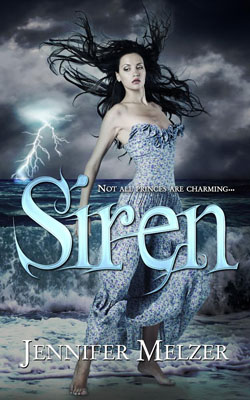
siren email promoI love writing under pressure. I love the weight of a deadline pressing down upon my shoulders while the muse yaps incessantly in my ear. This year it’s extra chaotic. I have editing clients I’m working with, I’m in the middle of promoting my upcoming novel, Siren (which is now available for pre-order on Amazon!),  there’s a game I’m really looking forward to playing coming out next week, I am in serious need of a haircut and it’s darn near time to cook a turkey, but I’m ahead of schedule on my NaNoWriMo novel. I’m moving right along, and I know I’m going to finish the requirements, and the first draft of my urban fantasy novel, Promises, Promises.

And THAT is why I do NaNoWriMo every year. Because I love, love, love the pressure and the chaos.

I blog about NaNoWriMo every single day in November! Drop by my site, subscribe to the feed and feel free to join in the conversation! I’d love to have you there.

The Best Writing Tips

One of my most popular blog posts included quotations by famous authors, so I thought I’d share them again on The Write Stuff. The original post (with pictures and more text) can be found here: Writing Tips

“You can’t wait for inspiration. You have to go after it with a club.” Jack London

“Don’t try to figure out what other people want to hear from you; figure out what you have to say. It’s the one and only thing you have to offer.” Barbara Kingsolver

“If you want to be a writer you must do two things above all others: read a lot and write a lot.” Stephen King

“Beginning writers must appreciate the prerequisites if they hope to become writers. You pay your dues—which takes years.” Alex Haley

“Writing a novel is like driving a car at night. You can see only as far as your headlights, but you can make the whole trip that way.” E.L. Doctorow

“Get it down. Take chances. It may be bad, but it’s the only way you can do anything really good.” William Faulkner

“You must want to enough. Enough to take all the rejections, enough to pay the price of disappointment and discouragement while you are learning. Like any other artist you must learn your craft—then you can add all the genius you like.” Phyllis A. Whitney

“Not that the story need be long, but it will take a long while to make it short.” Henry David Thoreau

“My aim is to put down what I see and what I feel in the best and simplest way I can tell it.” Ernest Hemingway

“I write as straight as I can, just as I walk as straight as I can, because that is the best way to get there.” H.G. Wells

“Good writers are those who keep the language efficient. That is to say, keep it accurate, keep it clear.” Ezra Pound

“No tears in the writer, no tears in the reader. No surprise in the writer, no surprise in the reader.”
Robert Frost

“Good writing is supposed to evoke sensation in the reader—not the fact that it is raining, but the feeling of being rained upon.” E.L. Doctorow

“As for the adjective, when in doubt leave it out.” Mark Twain

“Don’t tell me the moon is shining; show me the glint of light on broken glass.” Anton Chekhov

“Every character should want something, even if it is only a glass of water. Every sentence must do one of two things—reveal character or advance the action.” Kurt Vonnegut

“Cut out all those exclamation marks. An exclamation mark is like laughing at your own joke.” F. Scott Fitzgerald

“If you are using dialogue—say it aloud as you write it. Only then will it have the sound of speech.” John Steinbeck

“There is no satisfactory explanation of style, no infallible guide to good writing, no assurance that a person who thinks clearly will be able to write clearly, no key that unlocks the door, no inflexible rules by which the young writer may steer his course. He will often find himself steering by stars that are disturbingly in motion.” E. B. White

“When you get in a tight place & everything goes against you, till it seems you could not hold on a minute longer, never give up then, for that is just the place & time that the tide will turn.”  Harriet Beecher Stowe

“Shut down the internet, set a timer for 15 minutes, and write. Hopefully, when the timer goes off, you will be involved in your story enough to keep going.” Marcia Strykowski

Keeping your story focused is a lot like taking an eye exam

image By Ned Hickson

Each week, Marcia graciously allows me to share some of the the writing wisdom gained from 16 years as a newspaper columnist — knowledge which, until now, was only available by reading the yellow Post-It on my desk. And while all of you are certainly welcome to visit my desk at any time, I think we know that isn’t very practical. Especially since most of you probably couldn’t read my handwriting. In fact, I have a hard time reading my own writing. For example, today’s tip was almost about how finding your story’s focus is a lot like taking a colorectal exam. How I got “colorectal” from “eye” tells you just how bad my handwriting truly is.

Because I’m sure none of us wants to delve any deeper into this than we already have, I suggest we get to this week’s writing tip. Agreed? Yep, just as I figured; everyone except for the proctologist in the back row.

As for the rest of us, let’s talk about how the same steps taken in an eye exam can also help bring your writing into focus.

Ummmm… You three? we’re over here.

After this blog post, I want the three of you of you to promise me you will go directly to the nearest optometrist for an actual eye exam. You know who you are. If you aren’t sure, reach straight ahead. Feel that? It’s a microwave, not a computer monitor. I only point this out because, aside from the fact that I care, trying to shove a microwavable burrito into your monitor could be frustrating and potentially dangerous.

At this point I think it’s safe to assume some of you have probably forgotten why you’re here. I know I have. Ironically, this is the same feeling a writer gets when they realize they have lost focus with their story — or in some cases even a blog post. That’s when it’s time to stop and regain focus by giving yourself a simple, three-step “eye exam” in order maintain your story’s true vision.

Step one: Test your visual acuity.
We’re all familiar with the Snellen chart, which is the chart you stand 20 feet from while trying to decipher a series of letters which, as they get smaller, begin to resemble the ingredients listed on a bag of Cheetos. The objective is to determine how far a person can get from a particular point before losing focus. The same goes for writers. In the same way a person may not realize how bad their vision has become until they are using a urinal that’s actually a display refrigerator on the main floor at Sears, writers can slowly lose their story’s focus until it has become blurred by extemporaneous passages of description, too many characters, sub plots or dialogue that doesn’t advance the story.

How can you test to make sure your story’s vision is still clear?

Stand 20 feet away from your monitor. If you can still read it without squinting so hard it appears you’re having a stroke, forget writing and become a sharpshooter. In leu of that, follow the “20/20” rule of writing: If after reading every 20th paragraph in your story (or in the case of a short story, every 20th sentence) you still have a clear idea of what’s happening, who the central characters are and the major plot points, you’re writing’s vision is “normal.” If after several of these 20/20 paragraphs you begin to lose focus, stop and go back to where you lost sight; chances are your story began to blur somewhere between the first line and those Cheetos ingredients.

Step two: Test your peripheral vision. This is the part of the exam where your optometrist tells you to keep looking ahead while he moves an object from behind you toward the front of your head, at which point you’re supposed to acknowledge when you see it in your peripheral vision. Keep in mind that this is also when your optometrist stands behind you and makes faces or plays air guitar without you knowing it. Regardless, having good peripheral vision is important for writers, too. Your “writing peripherals” are those things that run parallel to the main action and include expendable characters, foreshadowing and some unanticipated secondary themes that develop through character interaction and plot development. This is all good stuff because, if done well, can add a sense of immediacy, spontaneity and unpredictability that keep readers invested in the story.

However, just like that optometrist playing air guitar behind your back, it’s easy to lose sight of what’s going on if you don’t keep your peripherals in check. In optometry, the ideal measurement is at least 70 degrees of vision in the horizontal meridian. From a writing standpoint, this means the peripheral elements of your story shouldn’t account for more than about 30 percent of your story development. Put another way: If you’ve written 70 pages and more than 30 of them revolve around the actions of secondary characters, themes or developments not directly related to your main characters, they are just playing air guitar. It’s time to re-evaluate the focus of your story, and whether the secondary characters/themes are becoming blurred with the main plot and characters.

Step three: Check for depth perception. Optometrists often check for this by tossing something at the patient, such as a Nerf ball, to determine binocular (two-eye) vision, which allows us to see in three dimensions. As a kid, I thought I had monocular vision because of how horrible I was at dodgeball. After a visit to my optometrist I was relieved to find out I was just really uncoordinated. In terms of writing, a 3D world is also important, although not having it won’t lead to bruising. Unfortunately, unlike the previous steps, there is no real “formula” to determine if you have created a three-dimensional world in your writing; you either do or you don’t. What I can tell you as that, as writers, we tend to fill in the blanks ourselves and, as a result, it’s easy to envision more on the page than is actually there.

So how can you see if your writing vision has depth? Take a chapter and eliminate all the dialogue. Then read it or, better yet, read it to someone. The objective has nothing to do with plot or character, it’s about whether or not your descriptive vision has made it onto the page. When you’re done, have the person describe what they saw. If it resembles what you envisioned, chances are you’re writing in three dimensions. If they can’t describe things clearly, then throw something at them. Ha! Just kidding! Get your optometrist to do it.

Then go figure out how to make your vision clear…

imageNed Hickson is a syndicated columnist with News Media Corporation. His first book, Humor at the Speed of Life, is available from Port Hole Publications, Amazon.com or Barnes & Noble.

Great Article on Killer Plot Twists!

tips

Check out this wonderful article on how to develop killer plot twists. And while you’re about it, you might want to consider subscribing to Writer’s Digest. I learn something from them just about every day!

4 Ways to Write A Killer Plot Twist