
Each week, Marcia graciously allows me to share some of the the writing wisdom gained from 16 years as a newspaper columnist — knowledge which, until now, was only available by reading the yellow Post-It on my desk. And while all of you are certainly welcome to visit my desk at any time, I think we know that isn’t very practical. Especially since most of you probably couldn’t read my handwriting. In fact, I have a hard time reading my own writing. For example, today’s tip was almost about how finding your story’s focus is a lot like taking a colorectal exam. How I got “colorectal” from “eye” tells you just how bad my handwriting truly is.
Because I’m sure none of us wants to delve any deeper into this than we already have, I suggest we get to this week’s writing tip. Agreed? Yep, just as I figured; everyone except for the proctologist in the back row.
As for the rest of us, let’s talk about how the same steps taken in an eye exam can also help bring your writing into focus.
Ummmm… You three? we’re over here.
After this blog post, I want the three of you of you to promise me you will go directly to the nearest optometrist for an actual eye exam. You know who you are. If you aren’t sure, reach straight ahead. Feel that? It’s a microwave, not a computer monitor. I only point this out because, aside from the fact that I care, trying to shove a microwavable burrito into your monitor could be frustrating and potentially dangerous.
At this point I think it’s safe to assume some of you have probably forgotten why you’re here. I know I have. Ironically, this is the same feeling a writer gets when they realize they have lost focus with their story — or in some cases even a blog post. That’s when it’s time to stop and regain focus by giving yourself a simple, three-step “eye exam” in order maintain your story’s true vision.
Step one: Test your visual acuity.
We’re all familiar with the Snellen chart, which is the chart you stand 20 feet from while trying to decipher a series of letters which, as they get smaller, begin to resemble the ingredients listed on a bag of Cheetos. The objective is to determine how far a person can get from a particular point before losing focus. The same goes for writers. In the same way a person may not realize how bad their vision has become until they are using a urinal that’s actually a display refrigerator on the main floor at Sears, writers can slowly lose their story’s focus until it has become blurred by extemporaneous passages of description, too many characters, sub plots or dialogue that doesn’t advance the story.
How can you test to make sure your story’s vision is still clear?
Stand 20 feet away from your monitor. If you can still read it without squinting so hard it appears you’re having a stroke, forget writing and become a sharpshooter. In leu of that, follow the “20/20” rule of writing: If after reading every 20th paragraph in your story (or in the case of a short story, every 20th sentence) you still have a clear idea of what’s happening, who the central characters are and the major plot points, you’re writing’s vision is “normal.” If after several of these 20/20 paragraphs you begin to lose focus, stop and go back to where you lost sight; chances are your story began to blur somewhere between the first line and those Cheetos ingredients.
Step two: Test your peripheral vision. This is the part of the exam where your optometrist tells you to keep looking ahead while he moves an object from behind you toward the front of your head, at which point you’re supposed to acknowledge when you see it in your peripheral vision. Keep in mind that this is also when your optometrist stands behind you and makes faces or plays air guitar without you knowing it. Regardless, having good peripheral vision is important for writers, too. Your “writing peripherals” are those things that run parallel to the main action and include expendable characters, foreshadowing and some unanticipated secondary themes that develop through character interaction and plot development. This is all good stuff because, if done well, can add a sense of immediacy, spontaneity and unpredictability that keep readers invested in the story.
However, just like that optometrist playing air guitar behind your back, it’s easy to lose sight of what’s going on if you don’t keep your peripherals in check. In optometry, the ideal measurement is at least 70 degrees of vision in the horizontal meridian. From a writing standpoint, this means the peripheral elements of your story shouldn’t account for more than about 30 percent of your story development. Put another way: If you’ve written 70 pages and more than 30 of them revolve around the actions of secondary characters, themes or developments not directly related to your main characters, they are just playing air guitar. It’s time to re-evaluate the focus of your story, and whether the secondary characters/themes are becoming blurred with the main plot and characters.
Step three: Check for depth perception. Optometrists often check for this by tossing something at the patient, such as a Nerf ball, to determine binocular (two-eye) vision, which allows us to see in three dimensions. As a kid, I thought I had monocular vision because of how horrible I was at dodgeball. After a visit to my optometrist I was relieved to find out I was just really uncoordinated. In terms of writing, a 3D world is also important, although not having it won’t lead to bruising. Unfortunately, unlike the previous steps, there is no real “formula” to determine if you have created a three-dimensional world in your writing; you either do or you don’t. What I can tell you as that, as writers, we tend to fill in the blanks ourselves and, as a result, it’s easy to envision more on the page than is actually there.
So how can you see if your writing vision has depth? Take a chapter and eliminate all the dialogue. Then read it or, better yet, read it to someone. The objective has nothing to do with plot or character, it’s about whether or not your descriptive vision has made it onto the page. When you’re done, have the person describe what they saw. If it resembles what you envisioned, chances are you’re writing in three dimensions. If they can’t describe things clearly, then throw something at them. Ha! Just kidding! Get your optometrist to do it.
Then go figure out how to make your vision clear…
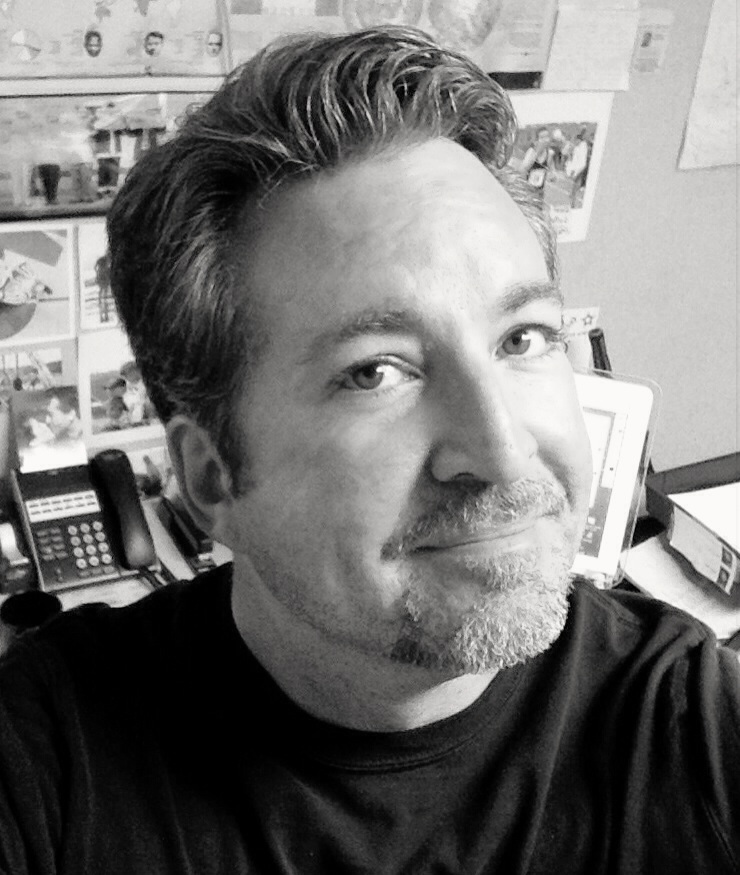 Ned Hickson is a syndicated columnist with News Media Corporation. His first book, Humor at the Speed of Life, is available from Port Hole Publications, Amazon.com or Barnes & Noble.


 The Write Stuff